MSC Dominates North Europe-Med Container Trade | Mariner News
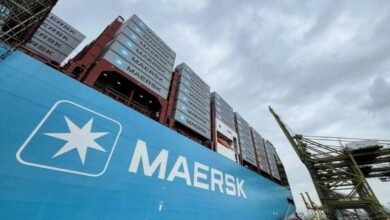
The shipping world is abuzz with recent findings indicating that MSC (Mediterranean Shipping Company) now holds a commanding position in the North Europe-Mediterranean container capacity. According to sector specialist Alphaliner, MSC controls nearly half of all container ship capacity operating between these two strategically vital regions, reflecting a significant consolidation of power in a crucial maritime trade lane. This impressive feat underscores MSC’s aggressive expansion and strategic prowess, as the carrier now boasts a 45.5% share of the deployed capacity as of May 1. This figure is particularly striking when contrasted with MSC’s global container capacity share, which stands at 21.6%. The disparity highlights MSC’s focused regional dominance and the strategic importance it places on the North Europe-Mediterranean route, a key artery for global commerce connecting diverse economies.
The Strategic Significance of the North Europe-Mediterranean Trade Lane
The North Europe-Mediterranean trade lane is far more than just a shipping route; it is a critical economic corridor linking the industrial powerhouses of Northern Europe with the dynamic markets of the Mediterranean basin, North Africa, and the Levant. This vital maritime artery facilitates the transport of a vast array of goods, from manufactured products and machinery originating in Northern Europe to agricultural produce, raw materials, and finished goods from the Mediterranean region. Its strategic importance is amplified by its role as a gateway to broader global supply chains, connecting to Asia via the Suez Canal and further influencing trade flows across continents. The efficiency and reliability of container shipping services on this route directly impact countless businesses, consumers, and national economies, making any shift in market control a topic of considerable interest within the shipping industry and beyond.
The trade lane’s intricate network supports robust economic activity, serving as a conduit for both intra-regional trade and international transshipments. Ports like Rotterdam, Antwerp, Hamburg in the North, and Valencia, Piraeus, Genoa in the Mediterranean are key hubs facilitating the immense cargo volumes that traverse this corridor. The movement of goods through this channel is influenced by a complex interplay of geopolitical factors, economic policies, and consumer demand patterns, making it a highly competitive and dynamic environment for maritime transport operators. Understanding the operational dynamics and market leadership within this lane is crucial for forecasting trends in global logistics and supply chain management, offering insights into pricing, service levels, and the overall resilience of international trade networks.
MSC’s Strategic Ascent and Market Dominance
MSC’s journey to controlling nearly half of the North Europe-Mediterranean container capacity is a testament to a well-executed strategy focused on fleet expansion, service optimization, and perhaps, opportunistic acquisitions. The carrier has consistently invested in larger, more efficient vessels and expanded its service offerings to solidify its presence across key trade routes. Its significant market share in this specific lane is not merely incidental but a result of deliberate strategic decisions aimed at strengthening its regional footprint. For instance, MSC deploys approximately one-third of its regional capacity on its Levante Express service, which directly links North Europe with the Eastern Mediterranean, illustrating a clear commitment to enhancing connectivity and service frequency on these profitable corridors. This concentrated deployment of assets allows MSC to offer competitive transit times and reliability, critical factors for shippers.
This regional dominance provides MSC with considerable leverage, potentially allowing for greater control over pricing structures and service schedules. While such market concentration can sometimes raise concerns about competition, it also reflects a carrier’s ability to efficiently manage complex logistics, optimize vessel utilization, and meet the specific demands of the trade lane. MSC’s strategy contrasts with its global approach, indicating a tailored regional focus where specific market conditions and customer needs are paramount. This targeted capacity deployment suggests that MSC identifies the North Europe-Mediterranean route as a core pillar of its European operations, investing heavily to ensure it maintains a leading edge against formidable competitors and reinforces its standing as a major player in international sea freight. The impact of this strategy resonates throughout the global maritime transport sector, influencing operational paradigms and competitive benchmarks for other shipping lines vying for a piece of the lucrative European market.
The Competitive Landscape and Key Players
Despite MSC’s commanding lead, the North Europe-Mediterranean trade lane is still a battleground for some of the world’s largest container shipping companies. Alphaliner’s report indicates that only 10 carriers currently operate regular liner services on this route, with major operators accounting for more than 97% of the total capacity. Alongside MSC, giants like A.P. Moller – Maersk, CMA CGM, Cosco Shipping Lines, Ocean Network Express (ONE), ZIM, and Hapag-Lloyd are significant players. Each of these carriers employs distinct strategies to compete for market share, offering a range of services designed to attract diverse clientele.
Maersk, for instance, is not resting on its laurels. The Danish shipping titan is preparing to launch its new Baltic Sea service in June, a move expected to significantly bolster its market share on the North Europe-Mediterranean route from its current 14% to an anticipated 19%. This strategic initiative underscores the dynamic nature of the container shipping industry, where carriers constantly adapt their networks and service offerings to gain a competitive advantage. The intense rivalry among these major operators, each with extensive global networks and deep pockets, ensures that while one carrier might dominate a specific segment, the overall market remains highly competitive, fostering innovation and pushing for greater efficiencies across the maritime logistics value chain. The interplay of these forces shapes the availability of shipping options, freight rates, and overall service quality for businesses relying on these crucial trade links.
Implications for Global Shipping and Supply Chains
MSC’s substantial control over North Europe-Mediterranean container capacity has far-reaching implications for global shipping and the intricate web of supply chains that underpin international trade. For shippers, a highly concentrated market could lead to concerns about pricing power and service options. While economies of scale might translate into some efficiencies, the potential for reduced competition could impact freight rates and contract terms. Businesses reliant on this trade lane will need to carefully monitor market developments, diversify their logistics partners where possible, and engage in robust contract negotiations to ensure cost-effectiveness and service reliability. The dominance of a single carrier means that disruptions, such as port congestion, labor disputes, or vessel issues affecting MSC, could have a disproportionately large impact on the flow of goods through this critical corridor, potentially causing significant delays and cost escalations for numerous industries.
Furthermore, this market structure influences other carriers’ strategic decisions, possibly leading to alliances or specific service adjustments to counter MSC’s strong position. The broader ripple effects could be felt in adjacent trade lanes, as carriers adjust vessel deployments and service schedules in response to the competitive landscape on the North Europe-Mediterranean route. The emphasis on operational resilience and the mitigation of supply chain risks becomes even more pronounced in such an environment, requiring sophisticated logistics planning and a proactive approach from all stakeholders. Understanding these dynamics is crucial for policy-makers, regulators, and businesses alike to ensure fair competition, maintain stable trade flows, and support the overall health of the global maritime economy, ensuring the continued smooth movement of cargo worldwide.
The Future of Container Shipping in the Region
Looking ahead, the container shipping landscape in the North Europe-Mediterranean region is poised for continued evolution. While MSC currently holds a dominant position, the aggressive strategies of other major carriers, such as Maersk’s upcoming Baltic Sea service, indicate that market shares are far from static. The drive for greater efficiency, sustainability, and digitalization will undoubtedly shape future developments. Carriers are increasingly investing in greener fleets and smart logistics solutions to meet evolving regulatory requirements and customer demand for environmentally responsible transport. The ongoing quest for decarbonization, coupled with technological advancements in port operations and vessel management, will likely spur further consolidation, collaboration, or specialization among shipping lines. Furthermore, geopolitical shifts and global economic trends will continue to play a pivotal role in shaping trade volumes and routing decisions, impacting the viability and profitability of various services in this vital region.
Innovation in vessel design, the integration of artificial intelligence for route optimization, and enhanced transparency in supply chain visibility are just some of the factors that will define the next era of container shipping. The ability of carriers to adapt to these changes, respond to market demands, and navigate complex global challenges will determine their long-term success. While MSC currently enjoys a significant advantage, the dynamic nature of the maritime industry ensures that competition will remain fierce, with every major player vying for a larger piece of the lucrative North Europe-Mediterranean container trade, promising a future of continuous innovation and strategic maneuvering within this essential global shipping route, benefiting from a robust and adaptive maritime transport network.
In conclusion, MSC’s near-monopoly in the North Europe-Mediterranean container capacity marks a significant development in global maritime transport. With 45.5% of the market share, MSC exerts considerable influence over a trade lane critical for European and Mediterranean economies. While this dominance highlights MSC’s strategic foresight and operational capabilities, it also sets the stage for intense competition, as other major carriers like Maersk strategize to increase their presence. The implications for shippers, supply chains, and the broader shipping industry are substantial, requiring careful observation and strategic adaptation. The future of container shipping in this region will undoubtedly be shaped by ongoing competition, technological advancements, and the imperative for sustainable practices, ensuring that this vital trade artery remains a focal point for the global logistics and shipping community, driving progress and efficiency in cargo movement.