Nicola Faith Wreck Trains Marine Investigators | Mariner News
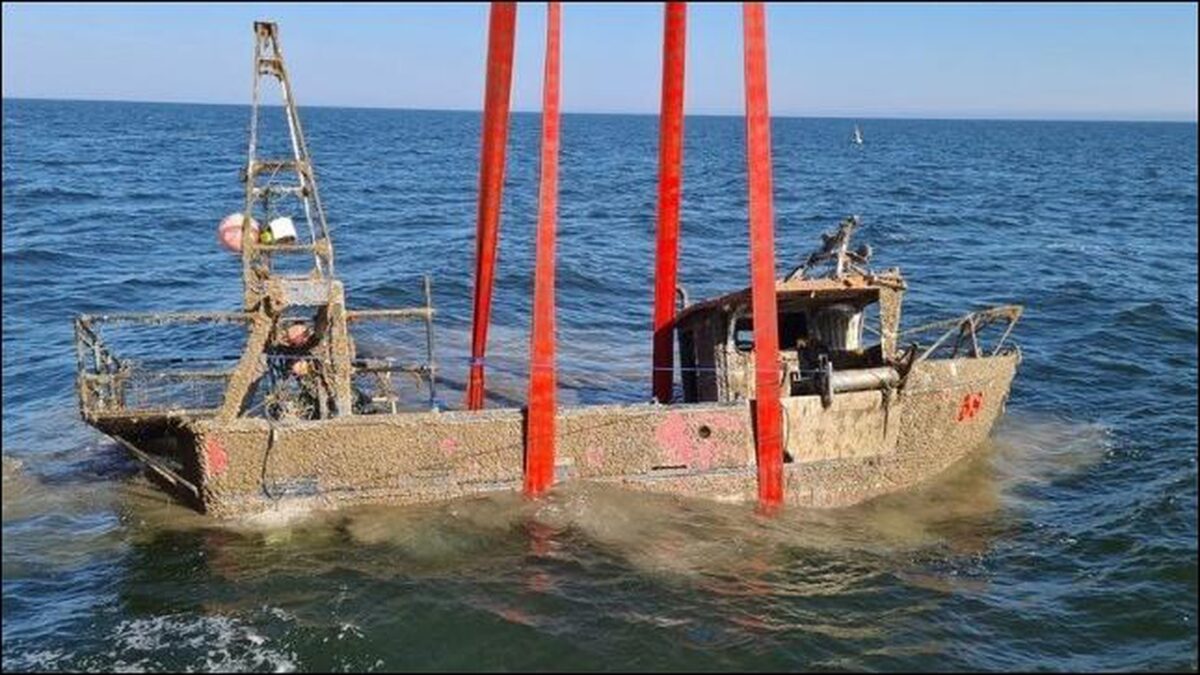
The poignant story of the fishing vessel Nicola Faith has taken a significant turn, transforming a tragic maritime incident into a groundbreaking opportunity for learning and advanced marine investigators training. In an unprecedented move, the Marine Accident Investigation Branch (MAIB) has donated the Nicola Faith wreck to Cranfield University, allowing aspiring maritime safety experts to gain unparalleled hands-on experience in accident investigation. This initiative is set to redefine how future generations of maritime professionals are educated, providing a tangible, real-world case study to dissect and understand the complexities of vessel casualties and contribute directly to enhanced maritime safety protocols globally.
The Tragic Disappearance of the Fishing Vessel Nicola Faith
The story of the Nicola Faith began in January 2021, when the 9.81-meter steel-hulled fishing vessel, built in 1987, disappeared off the coast of Conwy, North Wales, during a routine fishing expedition. The sudden and unexplained loss of the vessel, with its three crew members – Ross Ballantine, Alan Minard, and Carl McGrath – sent shockwaves through the local community and the wider maritime industry in the UK waters. The incident quickly garnered unprecedented attention, sparking an intense public and official response to locate the missing vessel and its crew.
Initially, hopes were high for a swift rescue, but as days turned into weeks, the grim reality began to set in. The bodies of the three brave crew members eventually washed ashore in different locations, with the first discovery occurring 44 days after the vessel’s disappearance. This heartbreaking outcome intensified the urgency and determination of the search and subsequent investigation into the fishing vessel’s capsizing and sinking. The tragedy highlighted the inherent dangers faced by those working at sea, particularly within the commercial fishing sector, which remains one of the most hazardous industries globally.
Unprecedented Search and Recovery Operations
Following the Nicola Faith’s disappearance, a truly comprehensive and challenging search operation was launched. Just days after the incident, on January 27, 2021, a vessel owned by Trinity House conducted an initial side scan sonar search around the vessel’s last known transmitted position. Despite these initial efforts, the wreck remained elusive, prompting further extensive searches across a wider geographical area and involving a range of advanced detection technologies.
Recognizing the critical importance of locating the vessel for a thorough accident investigation, the MAIB commissioned a specialized survey vessel on February 8. This vessel was tasked with carrying out an underwater search across the fishing vessel’s usual operating area. Still, the wreck could not be found, underscoring the formidable challenges inherent in maritime recovery operations, especially when dealing with small craft in dynamic sea conditions. The persistent efforts demonstrated the commitment to uncovering the truth behind the tragic incident, a cornerstone of effective maritime casualty investigation.
In response to the continued lack of success, the MAIB escalated its recovery efforts, commissioning several additional survey vessels. These vessels employed sophisticated side scan sonar technology to meticulously cover an ever-widening search area, re-surveying previously searched locations with enhanced precision. The scale of this operation was indicative of the profound impact of the Nicola Faith tragedy and the commitment of maritime authorities to providing answers and improving fishing vessel safety. The eventual discovery and recovery of the Nicola Faith wreck were testament to the tireless work of numerous organizations and individuals, paving the way for the critical post-recovery forensic examination and analysis.
Elevating Marine Accident Investigation Training
The donation of the Nicola Faith wreck represents a landmark development in marine accident investigation training. For too long, educational programs have relied heavily on theoretical models, simulations, and case studies based on reports rather than physical evidence. The actual fishing vessel provides an unparalleled forensic resource for aspiring marine investigators. Students at Cranfield University will now have the unique opportunity to examine the true structural integrity, material failures, and any contributing factors in a tangible format, moving beyond abstract concepts to hands-on practical experience.
This initiative fundamentally enhances the curriculum for those pursuing careers in maritime safety and accident analysis. Trainees will engage directly with the recovered vessel, learning to identify crucial evidence, understand the mechanics of capsize and sinking, and develop robust investigative methodologies. Such direct interaction is invaluable for cultivating a deep understanding of how complex maritime incidents unfold, offering insights that no textbook or digital simulation can fully replicate. It transforms the learning environment into a dynamic, real-world laboratory for advanced maritime investigation techniques.
The practical application of theoretical knowledge gained from studying the Nicola Faith wreck will equip future marine investigators with exceptional skills. They will learn how to properly document a wreck site, recover components for further laboratory analysis, and interpret damage patterns to reconstruct the sequence of events leading to a casualty. This comprehensive, immersive approach is crucial for developing highly competent professionals capable of conducting thorough and credible marine accident investigations, ultimately contributing to a safer maritime executive landscape and more effective regulatory frameworks.
Cranfield University: A Leader in Accident Investigation Education
Cranfield University boasts a long-standing and distinguished reputation as a global leader in accident investigation education, covering a multitude of sectors from aerospace to rail. Their specialized programs attract students and professionals worldwide, drawn by the university’s cutting-edge research, state-of-the-art facilities, and expert faculty. The integration of the Nicola Faith wreck into their curriculum further solidifies Cranfield’s position at the forefront of maritime safety training, providing an unmatched educational resource for the next generation of casualty investigators.
The university’s approach combines rigorous academic theory with practical, hands-on learning, making it an ideal institution to maximize the educational potential of the Nicola Faith wreck. Students will benefit from modules specifically designed to analyze the vessel’s structure, equipment, and operational context. This will involve detailed forensic examinations, material science analysis, and the application of engineering principles to understand the causes and contributing factors to the fishing vessel’s capsizing. The training will extend beyond technical analysis, incorporating human factors and organizational safety culture, which are integral to comprehensive maritime accident analysis.
By engaging with the physical wreck, students will develop critical thinking skills essential for complex investigations. They will learn to formulate hypotheses, gather corroborating evidence, and present findings in a clear, concise, and defensible manner, adhering to international standards for maritime incident reporting. This direct engagement with the Nicola Faith wreck ensures that graduates are not only academically proficient but also practically adept at tackling the multifaceted challenges inherent in modern marine accident investigation, bolstering global maritime safety protocols and practices.
Practical Applications and Future Implications for Maritime Safety
The transformation of the Nicola Faith wreck into a training asset carries profound implications for enhancing maritime safety worldwide. By providing future marine investigators with the opportunity to study an actual casualty in detail, the MAIB and Cranfield University are directly addressing the need for highly skilled professionals capable of preventing similar tragedies. The lessons learned from the Nicola Faith incident, now embodied in its physical remains, will inform best practices in vessel design, operational procedures, and regulatory oversight, particularly for the fishing industry which is often vulnerable to unique risks.
This innovative training approach will undoubtedly lead to more accurate and insightful investigation reports in the future. Better-trained investigators will be more adept at identifying root causes, not just immediate failures, enabling the maritime community to implement more effective preventative measures. The legacy of the Nicola Faith will not be one solely of loss, but also of progress – a tangible reminder of the importance of continuous improvement in maritime safety and the ongoing commitment to protecting lives at sea. The detailed examination of fishing vessel stability, maintenance records, and crew training through this unique resource will yield valuable insights that can be disseminated across the industry.
Furthermore, this initiative fosters greater collaboration between academic institutions, regulatory bodies, and industry stakeholders. The insights gained from Cranfield’s work with the Nicola Faith wreck can be shared globally, contributing to an international body of knowledge on maritime accident prevention. This collaborative spirit is essential for creating a robust safety culture across the entire maritime sector, moving towards a future where such tragedies are minimized. The story of the Nicola Faith, a stark reminder of the perils of the sea, now serves as a beacon of education and a commitment to a safer maritime future for all mariners, influencing policy and practice for generations to come.