Austal USA Starts Fifth Navy LCU 1700 Vessel Construction | Mariner News
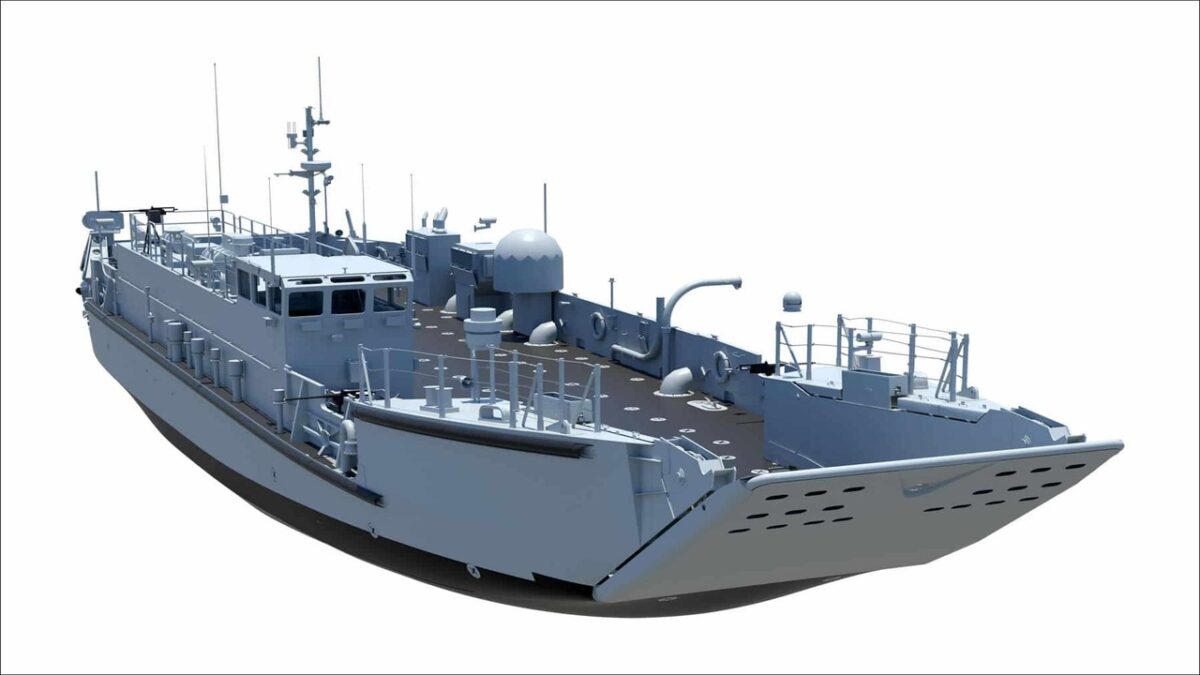
Austal USA, a prominent name in naval shipbuilding, has officially commenced construction on its fifth U.S. Navy Landing Craft Utility (LCU) 1700-class vessel, designated LCU 1714. This significant milestone was celebrated at their state-of-the-art Mobile, Alabama ship manufacturing facility on April 27, 2026. The continued progression of the Navy Landing Craft Utility vessel program underscores Austal USA’s commitment to bolstering the maritime defense capabilities of the United States. This ongoing LCU construction effort is a vital component of the U.S. Navy and U.S. Marine Corps’ broader strategy to enhance expeditionary capabilities, ensuring robust logistical support for diverse missions worldwide. The LCU program is not merely about building ships; it is about forging the essential platforms that enable rapid deployment, heavy-lift capacity, and critical resupply for military operations across vast oceanic theaters. This dedication reflects a sustained commitment to national security and global operational readiness, marking another successful chapter in Austal USA’s expansive shipbuilding portfolio. The initiation of LCU 1714’s construction is a clear indicator of the robust momentum within the program, signifying consistent progress and the efficient scaling of production lines at Austal USA’s facilities. It reaffirms the strategic importance of these vessels in maintaining a formidable naval presence and projecting power effectively. The intricate process of LCU development, from initial design to final delivery, embodies a collaborative effort between industry and defense, focused on delivering unparalleled quality and operational excellence in every unit. This program also highlights the substantial economic impact of defense contracts, supporting skilled labor and advanced manufacturing within the domestic industrial base. Such long-term commitments ensure job stability and foster innovation within the shipbuilding sector, strengthening the nation’s ability to respond to complex maritime challenges. The precision and dedication applied to each stage of construction guarantee that every LCU vessel meets the rigorous standards demanded by the U.S. Navy and Marine Corps, setting a benchmark for future naval acquisitions and fleet enhancements. This systematic approach ensures that each new vessel contributes significantly to the operational readiness and tactical advantage of the naval forces.
Accelerating LCU 1700 Program Milestones
Austal USA’s shipbuilding prowess has been evident since September 2023 when it secured a substantial $91.5 million contract for the comprehensive design and construction of up to 12 LCU vessels, alongside vital associated support efforts. To date, five distinct construction contracts have been formally awarded to Austal USA, solidifying its pivotal role in this critical naval program. The recent ceremony marking the start of LCU 1714 underscores the program’s impressive trajectory and the company’s ability to maintain a rigorous production schedule. Bill Bingle, acting vice president of surface ship programs at Austal USA, proudly articulated the company’s commitment, stating, “Austal USA is proud to continue advancing the LCU program with the start of construction on LCU 1714. This milestone reflects the strength of our serial production approach and the dedication of our workforce to delivering high-quality ships that support critical Navy and Marine Corps missions.” This statement encapsulates the efficiency and expertise that define Austal USA’s operations, particularly in managing complex, multi-vessel contracts. The serial production methodology employed by Austal USA is a testament to their advanced manufacturing capabilities and streamlined processes, enabling them to deliver high-quality naval assets consistently and punctually. This approach minimizes costs and maximizes efficiency, crucial factors in modern defense procurement. The ability to manage multiple vessels concurrently while adhering to stringent quality controls is a hallmark of Austal USA’s operational excellence. Each LCU represents not just a vessel but a strategic asset, crafted with precision and engineered for resilience in challenging marine environments. The ongoing success of this program is a testament to the synergistic efforts of engineers, designers, and skilled craftspeople, all working towards a common goal of enhancing national defense. Their collective expertise ensures that every LCU delivered is a testament to superior American shipbuilding, ready to serve the nation’s defense needs with unparalleled reliability and performance. This commitment extends beyond mere construction, encompassing comprehensive testing, trials, and ongoing support to ensure the vessels remain operational and effective throughout their service life. Such a holistic approach guarantees long-term value and operational readiness for the U.S. Navy and Marine Corps, solidifying Austal USA’s reputation as a trusted partner in national defense. The continuous progression of the LCU program is a clear demonstration of how strategic partnerships between the government and private industry can effectively address critical defense needs. This collaborative model not only delivers tangible assets but also fosters innovation and strengthens the domestic industrial base.
Strategic Importance of LCU Vessels for Naval Operations
Landing Craft Utility vessels are indispensable assets in modern naval warfare, serving as the crucial logistical bridge between naval amphibious assault ships and shore. Their primary function involves the rapid and efficient transport of U.S. Marine Corps vehicles, essential equipment, and personnel from ship to shore and back, enabling complex amphibious operations. These robust platforms are renowned for their significant heavy-lift capability, possessing the capacity to carry payloads comparable to multiple C-17 Globemaster III aircraft. This unparalleled cargo capacity makes LCUs vital for sustaining expeditionary forces, ensuring that Marines have the necessary resources to execute their missions effectively in diverse operational environments. The versatility of LCUs extends beyond mere transport; they are integral to disaster relief efforts, humanitarian aid missions, and a wide array of contingencies where traditional port infrastructure may be unavailable or compromised. Their ability to operate in austere conditions and conduct beach landings makes them an irreplaceable component of naval power projection. The LCU 1700-class vessels are designed to be highly adaptable, capable of supporting various mission profiles, from sustained logistics operations to rapid response scenarios. This adaptability enhances the overall flexibility and reach of the U.S. Navy and Marine Corps, enabling them to respond swiftly and decisively to global challenges. The operational readiness of these landing craft directly translates into the readiness of the expeditionary strike groups, making them a force multiplier in critical situations. By efficiently transferring vital assets, LCUs minimize turnaround times and maximize the operational tempo of amphibious operations. This efficiency is critical in dynamic combat zones and emergent crisis scenarios where speed and logistical agility can determine mission success. The strategic deployment of these vessels ensures that critical supplies, heavy vehicles, and personnel can be moved rapidly and safely, underpinning the success of complex military maneuvers. The robust design and advanced engineering of the LCU 1700 class guarantee exceptional durability and performance, even under extreme conditions. Their shallow draft allows them to access coastal areas that larger vessels cannot, providing a unique advantage in littoral operations. This capability is paramount for securing strategic positions and delivering decisive impact where it matters most. Therefore, the ongoing construction and delivery of these landing craft are not just about adding new vessels to the fleet; they are about enhancing the fundamental capabilities that define the U.S. Navy and Marine Corps as a global force. They are foundational to maintaining a robust and responsive maritime presence, capable of addressing future security challenges with unparalleled effectiveness and efficiency.
Austal USA’s Growing Steel Shipbuilding Expertise
The Austal USA LCU program represents a significant expansion of the company’s burgeoning steel shipbuilding portfolio. Historically recognized for its expertise in aluminum shipbuilding, particularly with the Independence-variant Littoral Combat Ship (LCS) and Expeditionary Fast Transport (EPF) programs, Austal USA has successfully diversified its capabilities into steel vessel construction. This strategic pivot began with the U.S. Coast Guard’s Offshore Patrol Cutter (OPC) program and has since been bolstered by the LCU 1700-class vessels, showcasing the company’s adaptability and commitment to meeting evolving naval requirements. LCU 1710, the inaugural vessel in the LCU program constructed at Austal USA, recently completed its acceptance trials and is on the verge of being delivered to the U.S. Navy. This successful completion of trials for the first vessel is a powerful validation of Austal USA’s advanced steel manufacturing processes and rigorous quality assurance protocols. The progressive scaling of the LCU program is a clear indicator of Austal USA’s growing proficiency and confidence in this critical manufacturing segment. Currently, Austal USA has a remarkable 12 ships under construction across its various programs, with three vessels nearing completion and preparing for sea trials. This impressive workload highlights the company’s substantial capacity and its role as a key contributor to the nation’s naval shipbuilding industrial base. The expansion into steel production facilities and the successful execution of multiple steel programs demonstrate Austal USA’s strategic vision and operational excellence. The company’s investment in advanced manufacturing technologies, skilled labor development, and integrated supply chain management has been instrumental in this successful transition. This not only enhances Austal USA’s competitive edge but also ensures that the U.S. Navy and Coast Guard benefit from diverse and resilient shipbuilding capabilities. The integration of cutting-edge fabrication techniques and robust engineering practices into their steel production lines allows Austal USA to construct highly complex vessels with exceptional structural integrity and mission readiness. The successful delivery of LCU 1710 will mark a significant milestone, solidifying Austal USA’s position as a premier builder of both aluminum and steel naval platforms. This dual capability provides invaluable flexibility to the Department of Defense in sourcing advanced maritime assets. The company’s commitment to continuous improvement and innovation ensures that each vessel delivered incorporates the latest technological advancements and meets the highest operational standards. The robust pipeline of projects further underscores Austal USA’s long-term commitment to national defense and its role in shaping the future of naval shipbuilding.
The Future of Expeditionary Capabilities and Naval Readiness
The ongoing LCU construction by Austal USA is not just about fulfilling current contracts; it is about investing in the future of expeditionary warfare and ensuring the sustained readiness of the U.S. Navy and Marine Corps. The LCU 1700-class vessels are foundational to the strategic objectives of rapid global response and sustained logistical support in contested environments. As geopolitical landscapes evolve, the demand for versatile, resilient, and high-capacity landing craft will only intensify. These vessels enable a critical component of sea-based power projection, allowing forces to operate independently of established port infrastructure, thereby increasing operational flexibility and strategic surprise. The continued refinement of serial production techniques by Austal USA ensures that these vital assets can be delivered efficiently and consistently, keeping pace with fleet modernization requirements. The success of the LCU program serves as a blueprint for future defense acquisition strategies, emphasizing the importance of predictable production, cost-effectiveness, and reliable delivery schedules. Furthermore, the development of advanced LCU capabilities contributes to the broader ecosystem of naval innovation, influencing future designs for amphibious platforms and logistics support vessels. The insights gained from the LCU 1700 program will undoubtedly inform the next generation of naval assets, fostering continuous improvement across the entire shipbuilding industry. The robust performance of vessels like LCU 1710 during acceptance trials demonstrates the effective integration of design, engineering, and manufacturing prowess. This success ensures that the U.S. Navy and Marine Corps possess the most capable tools for their missions, from humanitarian assistance to complex combat operations. The long-term impact of this program extends to strengthening the entire defense industrial base, cultivating a skilled workforce, and fostering technological advancements that benefit the nation as a whole. As Austal USA continues to expand its steel shipbuilding capabilities, it reinforces its position as a critical partner in national security, capable of delivering the complex, high-performance vessels required by a modern navy. The future readiness of the U.S. Navy relies heavily on the continuous development and delivery of such essential platforms, ensuring that American forces can project power, provide assistance, and protect national interests across the globe for decades to come. The strategic importance of the LCU program cannot be overstated; it underpins the very ability of the United States to respond to crises and maintain its global leadership role, making Austal USA’s contributions profoundly impactful.