Damen’s Hybrid Methanol-Ready Ship Boosts Offshore Wind | Mariner News
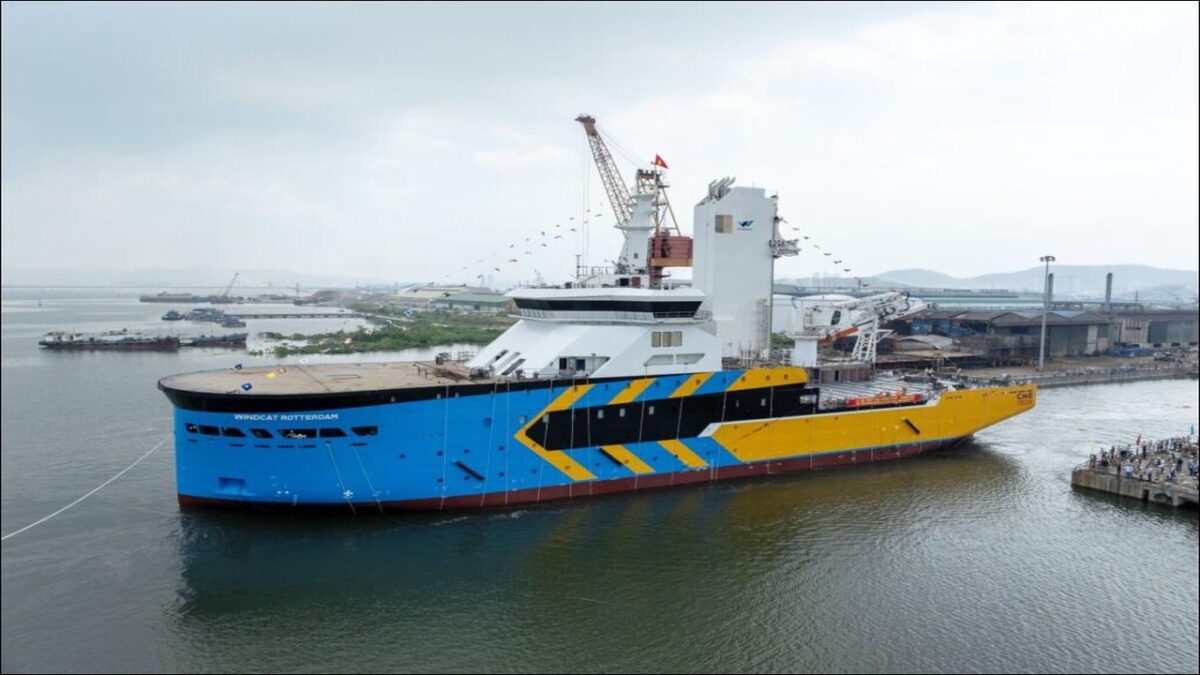
In a significant leap forward for sustainable maritime operations and renewable energy infrastructure, Damen Shipyards Group has officially delivered the first of two highly advanced hybrid methanol-ready ships to Ta San Shang Marine (TSSM). This landmark vessel, designated as a commissioning service operation vessel (CSOV), is poised to play a crucial role in the burgeoning offshore wind projects off the coast of Taiwan, marking a pivotal moment in the global pursuit of greener shipping solutions and robust offshore energy development. The delivery underscores a growing industry commitment to decarbonization, showcasing practical steps toward a future where maritime logistics and energy production work hand-in-hand to reduce environmental impact.
The `TSS Cruiser`, as the vessel is named, represents a fusion of innovative marine technology and forward-thinking design. Its hybrid diesel-electric propulsion system provides immediate benefits in terms of fuel efficiency and reduced emissions, while its built-in `methanol-ready` capabilities position it as a key asset for the long-term `energy transition`. As global pressures mount for the maritime industry to adopt more sustainable practices, vessels like the `TSS Cruiser` offer a strategic pathway, enabling shipowners to gradually transition to cleaner `alternative fuels` as infrastructure and regulatory frameworks mature. This pragmatic approach is essential for navigating the complexities of `maritime decarbonization` without compromising operational reliability.
Ta San Shang Marine (TSSM), a strategic joint venture between Japan’s Mitsui O.S.K. Lines (MOL) and Taiwan’s Ta Tong Marine, will deploy the `TSS Cruiser` to support both the construction and operational phases of `offshore wind energy` facilities in Taiwan. This collaboration highlights the international cooperation required to accelerate renewable energy projects and foster `green shipping` initiatives across the Asia/Pacific region. The vessel’s robust capabilities and future-proof design make it an invaluable asset for a sector that demands both high performance and environmental responsibility, setting a new benchmark for `offshore energy` support vessels.
Pioneering Hybrid Methanol Technology in Maritime
The `TSS Cruiser` is not merely another offshore vessel; it is a testament to the cutting edge of `marine technology`. Measuring 90 meters in length, the vessel is meticulously designed to accommodate up to 120 offshore workers, providing comfortable and efficient living and working conditions in challenging marine environments. A critical feature of its design is the motion-compensated gangway, which ensures safe and stable transfers of personnel and equipment between the vessel and wind turbines, even in significant wave heights, thereby maximizing operational uptime and crew safety.
At the heart of the `TSS Cruiser`’s advanced capabilities lies its sophisticated `hybrid diesel-electric propulsion` system. This innovative setup combines traditional diesel engines with electric motors and often battery storage, allowing for optimal power management, reduced fuel consumption, and lower `emissions`. The flexibility of such a system enables the vessel to operate in various modes, from full power for transit to silent electric operation during dynamic positioning at wind farm sites, significantly minimizing its `environmental footprint` during critical operations. This `fuel innovation` represents a crucial step in the journey toward a more `sustainable shipping` industry.
Perhaps the most forward-looking aspect of the `TSS Cruiser` is its `methanol-ready` designation. This means the vessel has been engineered from the outset with the necessary space, piping, and system adaptations to facilitate a future conversion to methanol `propulsion systems` with relative ease. While the industry has shown a cautious approach to `alternative fuel adoption` due to infrastructure availability and cost considerations, the `methanol-ready` concept provides a viable bridge. It allows owners to invest in current technology while retaining the flexibility to upgrade to `future fuels` as they become more economically viable and widely accessible, making it a strategic choice for long-term `fleet decarbonization`.
Supporting Taiwan’s Offshore Wind Energy Ambitions
Taiwan has emerged as a key player in the global `offshore wind energy` market, boasting excellent wind resources and strong government support for renewable energy development. The `TSS Cruiser` will play an indispensable role in strengthening Taiwan’s position, facilitating the complex logistics and operational demands of building and maintaining large-scale offshore wind farms. From transporting technicians and equipment to providing essential support services during construction and maintenance, the vessel’s capabilities are directly aligned with the specific needs of this rapidly expanding sector.
The strategic partnership forming Ta San Shang Marine (TSSM) — between MOL, a global shipping giant, and Taiwan’s local maritime expert Ta Tong Marine — underscores the blend of international expertise and local knowledge crucial for success in the Asia/Pacific `offshore energy` market. This joint venture not only brings advanced maritime assets like the `TSS Cruiser` to Taiwan but also fosters local talent development and strengthens the domestic supply chain for renewable energy projects. Such collaborations are vital for accelerating the `energy transition` and ensuring long-term sustainability.
By enhancing the efficiency and safety of `offshore wind` operations, the `TSS Cruiser` indirectly contributes to Taiwan’s broader energy independence goals and its commitment to reducing carbon emissions. `Offshore wind` is a cornerstone of many nations’ `decarbonization` strategies, offering a clean, inexhaustible power source. The reliability and performance of specialized support `vessels` like the `TSS Cruiser` are paramount to realizing the full potential of these ambitious renewable energy initiatives, providing continuous support for clean power generation and promoting `sustainable practices` across the entire value chain.
Damen’s Commitment to Sustainable Shipbuilding
Damen Shipyards Group has long been recognized as a leader in innovative and high-quality `shipbuilding`. The delivery of the `TSS Cruiser` reinforces Damen’s proactive stance on `sustainable shipping` and its vision for a greener `maritime industry`. The company’s focus extends beyond mere compliance with environmental regulations; it actively invests in research and development to produce vessels that offer tangible `environmental performance` improvements, demonstrating its dedication to shaping the future of maritime transport and operations.
Damen’s comprehensive portfolio of `green maritime solutions` reflects a strategic commitment to `fuel innovation` and `emissions reduction`. From advanced propulsion systems like the `hybrid diesel-electric` setup on the `TSS Cruiser` to pioneering designs for alternative fuel compatibility, Damen is at the forefront of engineering vessels that can adapt to evolving environmental standards and `future fuels`. This forward-thinking approach provides shipowners with confidence, knowing their investments are future-proofed against increasingly stringent environmental mandates and shifting market demands for `sustainable practices`.
The `TSS Cruiser` is a prime example of Damen’s ability to integrate complex technologies into practical, robust `vessel designs`. The initial `hybrid` configuration offers immediate benefits, while the `methanol-ready` feature ensures long-term flexibility. This dual strategy is crucial for bridging the gap between current operational requirements and future `decarbonization` targets, positioning Damen as a crucial partner for clients seeking to enhance their fleet’s `sustainability` profile without sacrificing operational excellence or economic viability in the demanding `offshore energy` sector.
Navigating the Future of Maritime Decarbonization
The `maritime industry` faces immense pressure to `decarbonize`, with ambitious targets set by international bodies like the IMO. The journey to net-zero emissions is complex, requiring significant investment in `alternative fuels`, new `propulsion systems`, and supportive infrastructure. Methanol has emerged as a promising `future fuel` due to its lower carbon content, ease of storage compared to other green fuels like hydrogen, and established bunkering technologies. However, the transition is not without its challenges.
While the `methanol-ready` notation signifies a proactive approach, the reality of `alternative fuel adoption` indicates a degree of industry caution. Many `vessels` ordered with similar notations have yet to be retrofitted, reflecting ongoing uncertainties regarding fuel availability, cost differentials, and regulatory clarity. This highlights the need for continued investment in both fuel production and bunkering infrastructure to support a widespread shift to cleaner `marine technology` and `future fuels`. The initial step of being `methanol-ready`, as demonstrated by the `TSS Cruiser`, is nevertheless a vital commitment to future change.
Despite these hurdles, `methanol-ready ships` like the `TSS Cruiser` serve as crucial enablers of the `energy transition`. They allow shipowners to gain experience with new `vessel designs` and operational procedures for `alternative fuels` without being locked into a single `propulsion system` before the market fully matures. This strategic flexibility is essential for `fleet decarbonization`, enabling a phased approach that mitigates risk while fostering innovation and readiness for the `sustainable shipping` future. Such proactive investments are paramount for the `maritime industry` to meet its ambitious `environmental targets`.
Global Impact and Industry Outlook
The delivery of the `TSS Cruiser` sends a clear signal to the global `maritime industry`: `sustainable shipping` is not just a concept but an achievable reality. As nations worldwide intensify their efforts to combat climate change, the demand for `green maritime solutions` will only grow. Vessels that integrate `hybrid propulsion` with `methanol-ready` capabilities exemplify the kind of innovative thinking required to meet the International Maritime Organization (IMO)’s ambitious `decarbonization` targets, pushing the entire industry towards a more environmentally responsible operational model.
This `vessel delivery` by Damen for operations in `offshore wind Taiwan` sets a powerful precedent for other shipbuilders and operators. It showcases a viable pathway for addressing `environmental impact` while maintaining commercial competitiveness. The `TSS Cruiser` is more than a ship; it is a tangible representation of progress in the global `energy transition`, demonstrating how `marine technology` can support both renewable energy generation and a cleaner `shipping` ecosystem. Its role in powering Taiwan’s green energy future also underscores the critical interdependencies between various sectors in the fight against climate change.
Ultimately, the success of `vessels` like the `TSS Cruiser` will pave the way for broader `alternative fuel adoption` and accelerate the `decarbonization` of the global `maritime industry`. As more `methanol-ready ships` come into service and `future fuels` infrastructure expands, the cautious approach currently observed will likely give way to more widespread implementation. This positive trajectory is essential for achieving a truly `sustainable shipping` sector, one that effectively balances economic viability with robust `environmental performance` and contributes meaningfully to a cleaner, greener planet for generations to come.