SEA-LNG Reports Surging Bio-LNG Bunkering Growth | Mariner News
The maritime industry is witnessing a significant paradigm shift towards decarbonization, with LBM bunkering emerging as a frontrunner in sustainable marine fuel solutions. A recent report from SEA-LNG, a prominent industry coalition advocating for the use of liquefied natural gas (LNG) as a marine fuel, confirms a remarkable surge in the adoption of liquefied biomethane (LBM), commonly known as bio-LNG. This cleaner alternative to conventional marine fuels is rapidly gaining traction, propelled by its environmental benefits and its compatibility as a “drop-in” fuel for existing LNG-powered vessels. The growing volumes reported across major bunkering hubs and by leading fuel suppliers underscore a pivotal moment in the industry’s journey towards a more sustainable future, demonstrating a clear commitment to reducing greenhouse gas (GHG) emissions despite various market and regulatory complexities. This robust growth signifies the maritime sector’s increasing confidence in bio-LNG as a viable and effective pathway to achieving ambitious sustainability targets.
The Green Wave: Understanding Liquefied Biomethane (Bio-LNG)
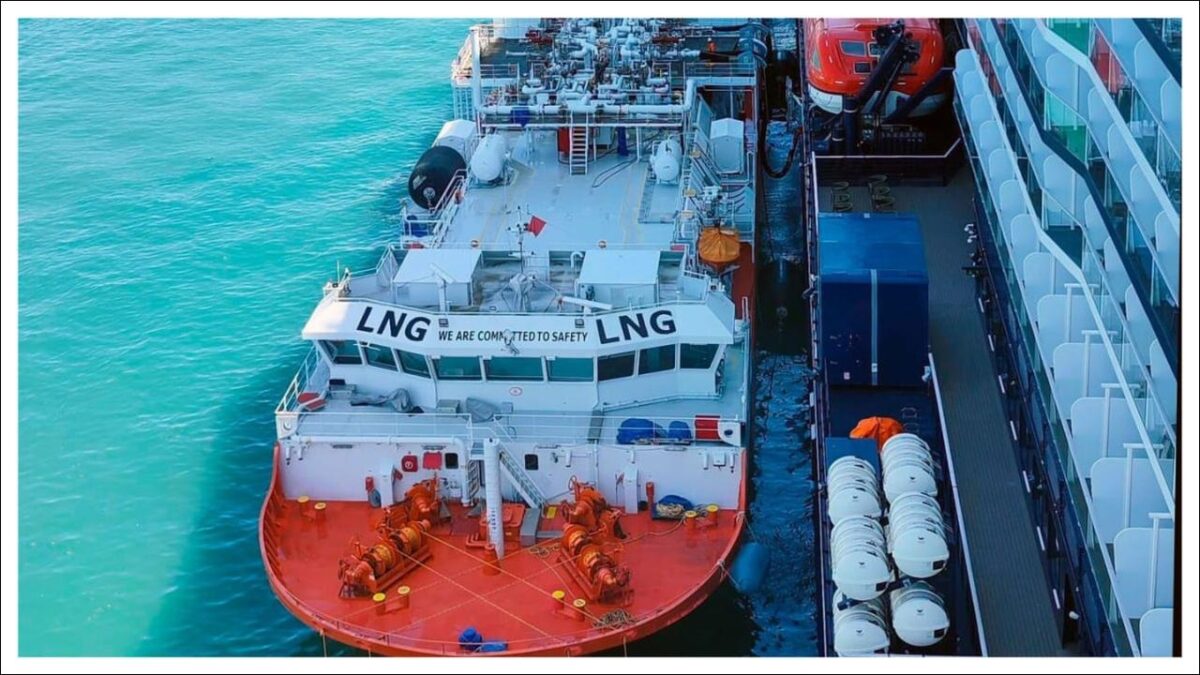
Liquefied biomethane (LBM), or bio-LNG, represents a renewable and sustainable advancement of the proven LNG fuel technology. It is chemically identical to fossil LNG but is derived from organic waste materials such as agricultural residues, manure, and municipal solid waste through anaerobic digestion. This process captures methane that would otherwise be released into the atmosphere, transforming it into a valuable, low-carbon marine fuel. The “drop-in” nature of bio-LNG is a significant advantage, allowing it to be blended with or completely replace conventional LNG without requiring modifications to a ship’s engines or existing bunkering infrastructure. This seamless integration capability dramatically reduces the barriers to entry for shipowners looking to decarbonize their operations.
The environmental credentials of bio-LNG are compelling. When produced sustainably, it can achieve substantial reductions in lifecycle greenhouse gas emissions, often up to 80-90% compared to traditional marine fuels like heavy fuel oil (HFO) or marine gas oil (MGO). Beyond carbon emissions, bio-LNG also significantly cuts down on local air pollutants, including sulfur oxides (SOx), nitrogen oxides (NOx), and particulate matter (PM), contributing to cleaner air quality in port areas and coastal regions. This multifaceted environmental benefit positions bio-LNG as a cornerstone of the shipping industry’s decarbonization strategy, offering immediate and tangible improvements while providing a clear trajectory towards net-zero emissions. Its role in meeting the International Maritime Organization’s (IMO) ambitious emission reduction targets is becoming increasingly critical, as the industry seeks pragmatic and scalable solutions.
Tangible Growth: Data from Key Bunkering Hubs and Suppliers
The data presented by SEA-LNG offers compelling evidence of bio-LNG’s accelerating adoption within the global shipping landscape. The Port of Rotterdam, a pivotal maritime hub and the largest port in Europe, reported an astonishing more than six-fold increase in LBM bunker volumes in 2025 compared to 2024. Specifically, the port saw approximately 17,644 cubic meters (m³) of bio-LNG sold in 2025, a dramatic leap from 2,775 m³ in the preceding year. This upward trend shows no signs of abating; the first quarter of 2026 alone witnessed 15,260 m³ of bio-LNG supplied, nearly matching the entire volume delivered throughout all of 2025. Such rapid escalation in a major port highlights the growing operational demand and the increasing availability of this sustainable marine fuel.
This impressive growth trajectory is further corroborated by leading industry players and SEA-LNG members. Gasum, a prominent energy company and key supplier of maritime gas volumes, reported a substantial increase in the bio-LNG share of its maritime gas volumes. This share rose from a modest 0.8% in 2024 to a significant 12.3% in 2025, indicating a strong shift in customer preference and supply chain capabilities. Similarly, Titan Clean Fuels, another influential LNG bunker supplier and SEA-LNG member, observed a parallel increase in its bio-LNG deliveries. The proportion of bio-LNG within Titan’s total delivered volume surged from 6.5% to 19.1% over the same period, underscoring the broad market acceptance and robust supply networks being developed to meet the escalating demand for sustainable shipping solutions. These figures not only reflect the commercial viability of bio-LNG but also signal a growing commitment from fuel suppliers to expand their renewable offerings.
Navigating the Methane Pathway Towards Decarbonization
The “methane pathway,” championed by SEA-LNG, refers to the strategy of using LNG as a marine fuel, with a clear and increasingly important transition towards renewable variants like bio-LNG and eventually synthetic liquefied methane (e-LNG). This approach leverages existing infrastructure and proven engine technology, offering a pragmatic and scalable solution for immediate greenhouse gas reductions while paving the way for future net-zero emissions. Peter Keller, chairman of SEA-LNG, emphatically stated that “The IMO’s regulatory delays have not slowed the methane pathway,” a sentiment that encapsulates the industry’s proactive stance. Despite uncertainties and delays in international regulatory frameworks, the market continues to drive forward, with shipowners and operators making strategic investments in LNG-fuelled vessels designed to accommodate bio-LNG.
The flexibility of the methane pathway is one of its most compelling attributes. Shipowners can invest in LNG-compatible vessels today, benefiting from immediate emissions reductions compared to conventional fuels, and seamlessly transition to bio-LNG as its availability increases and production scales up. This avoids the risk of stranded assets and provides a clear, actionable roadmap for decarbonization. Furthermore, the development of e-LNG, produced using renewable electricity and captured carbon dioxide, promises a truly carbon-neutral solution in the longer term, fully integrating with the existing LNG value chain. This layered approach allows the maritime sector to incrementally reduce its carbon footprint, ensuring compliance with evolving environmental standards and maintaining operational efficiency.
Addressing Challenges and Forging a Sustainable Future for Marine Fuels
While the growth in LBM bunkering is undeniably impressive, the industry faces several challenges that require collaborative efforts to overcome. Ensuring a consistent and scalable supply of sustainably produced bio-LNG is paramount. This involves developing robust supply chains, increasing production capacity, and implementing rigorous certification schemes to verify the renewable origin and environmental performance of the fuel. Cost competitiveness remains another key factor; while bio-LNG often commands a premium over conventional fuels, supportive policies, carbon pricing mechanisms, and economies of scale are expected to help close this gap over time, making it more accessible for a wider range of shipping operations. Investment in infrastructure, though largely compatible with existing LNG facilities, still requires strategic planning and development to ensure widespread availability at critical bunkering locations globally.
However, the momentum is clearly building. Industry collaborations, technological advancements, and increasing awareness of environmental responsibilities are driving solutions to these challenges. Governments and international bodies are also beginning to provide clearer signals and incentives for the adoption of cleaner marine fuels. The rapid uptake demonstrated by the Port of Rotterdam and major suppliers like Gasum and Titan Clean Fuels signifies a strong market pull that is likely to stimulate further investment in bio-LNG production and infrastructure. As the global shipping industry continues its journey towards decarbonization, bio-LNG will undoubtedly play an increasingly vital role as a cornerstone of sustainable shipping, enabling significant emissions reductions today while laying the groundwork for a net-zero future. The collective efforts of industry stakeholders, policymakers, and innovators will be crucial in accelerating this transition, ensuring a cleaner, greener maritime sector for generations to come.
Conclusion
The pronounced growth in LBM bunkering volumes, as highlighted by SEA-LNG, provides unequivocal proof of the maritime industry’s unwavering commitment to sustainability. Bio-LNG offers a pragmatic, immediate, and scalable solution for reducing greenhouse gas and local air pollutant emissions, leveraging existing infrastructure and technology. This momentum, driven by market demand and reinforced by the tangible data from key ports and suppliers, positions bio-LNG as a critical component of the broader methane pathway. As the industry navigates future regulatory landscapes and technological advancements, the continued expansion of bio-LNG bunkering will be instrumental in achieving a truly decarbonized global shipping fleet. The enthusiasm for this renewable marine fuel signifies a promising era for environmental stewardship in shipping.