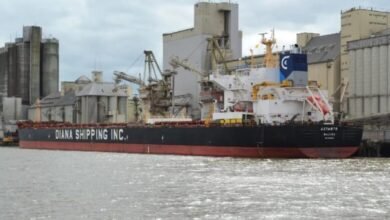
Diana Shipping vs Genco: $24.80 Cash Offer Rejected | Mariner News
In a significant development within the maritime sector, Diana Shipping Inc. announced that Genco Shipping & Trading Limited’s Board of Directors has once again rejected its $24.80 per share all-cash tender offer. This latest rebuff marks the third instance where Genco has declined to engage with Diana Shipping, its largest shareholder, regarding increasingly compelling acquisition proposals. The proposed deal, centered on the dry bulk shipping industry, highlights ongoing consolidation efforts and strategic maneuvers among key players seeking to optimize their fleet operations and market position.
The initial offer from Diana Shipping, a global shipping company specializing in the ownership and bareboat charter-in of dry bulk vessels, aimed to acquire Genco Shipping & Trading, another prominent entity in the dry bulk market. This all-cash offer was structured to provide immediate and certain value to Genco shareholders. However, Genco’s board has consistently maintained a stance of non-engagement, prompting frustration from Diana Shipping, which views the lack of dialogue as detrimental to Genco’s shareholder interests. The persistent rejection underscores a deep strategic disagreement between the two dry bulk shipping giants, sparking wider discussions across the maritime industry about corporate governance and shareholder value.
The Standoff: Diana Shipping’s Persistent Pursuit
Diana Shipping’s commitment to acquiring Genco Shipping & Trading has been unwavering, evidenced by a series of increasingly attractive offers. Semiramis Paliou, Diana’s Chief Executive Officer, expressed significant disappointment regarding Genco’s continued refusal to engage in constructive dialogue. “Genco’s news release today makes clear — more than ever — that the Genco Board is not going to engage in a constructive dialogue regarding our proposal,” Paliou commented. She further elaborated that despite Genco’s pro forma statements about willingness to engage, their conduct over more than six months demonstrates the exact opposite. This sustained non-engagement raises critical questions about the Genco Board’s intentions and its responsibility to explore opportunities that could benefit its shareholders.
The saga began with earlier proposals from Diana Shipping, each met with similar resistance. The current $24.80 per share all-cash tender offer represents a premium that Diana Shipping believes accurately reflects Genco’s value, especially considering the current dynamics of the dry bulk shipping market. Diana’s management believes that the proposed shipping acquisition would create significant synergies, enhance operational efficiencies, and fortify the combined entity’s standing in the competitive global dry bulk freight sector. The repeated rejections, without any counter-proposals or genuine discussion, suggest a fundamental disagreement on Genco’s strategic direction and valuation, creating an impasse that shareholders are now closely watching.
Genco’s Board: Rationale and Resistance
Genco Shipping & Trading’s Board of Directors has not publicly detailed its specific reasons for rejecting Diana Shipping’s offers beyond general statements about shareholder value. Typically, a board might reject a tender offer if it believes the offer undervalues the company, if it perceives the acquirer’s strategy as not aligning with its long-term vision, or if it has alternative plans for growth and value creation. In the context of the dry bulk sector, market cycles and asset values fluctuate significantly, leading boards to potentially hold out for better terms or believe their intrinsic value is higher than current market sentiment or an unsolicited offer suggests. The Genco board might be confident in its standalone strategy, which could include fleet modernization, strategic partnerships, or a belief that market conditions for dry bulk vessels will improve, leading to higher valuations in the future.
Critics of Genco’s non-engagement, including Diana Shipping, argue that the board has a fiduciary duty to at least explore credible offers. By not even entering into a dialogue, Genco’s directors risk being perceived as unresponsive to potentially beneficial shareholder opportunities. This situation could invite further shareholder activism, as investors might pressure the board to justify its stance or consider the proposed shipping merger more seriously. The lack of transparency regarding the board’s detailed rationale for resistance also adds to the complexity, leaving investors to speculate on Genco’s true intentions and future plans in the dynamic dry bulk shipping industry.
Navigating the Dry Bulk Shipping Market
The dry bulk shipping market is notoriously cyclical, influenced by global trade volumes, commodity demand, and fleet supply. Consolidation, like the proposed Diana-Genco shipping acquisition, is a common strategy in such industries to achieve economies of scale, reduce operational costs, and increase market power. A combined Diana-Genco entity would command a significantly larger fleet of dry bulk vessels, potentially leading to better chartering terms, optimized route planning, and stronger negotiating power with shipyards and suppliers. Such a merger could also provide a more diversified fleet portfolio, reducing exposure to volatility in specific vessel segments or trade routes within the dry bulk market.
Furthermore, the current environment presents both opportunities and challenges for dry bulk carriers. Supply chain disruptions, geopolitical tensions, and global economic shifts all play a role in freight rates and vessel utilization. A strategic dry bulk merger could allow the combined company to better weather market downturns and capitalize on upswings, enhancing its overall resilience. Investors often look for stability and growth in the shipping sector, and consolidation is one path to achieving these. The financial implications of such an acquisition extend beyond immediate stock prices, touching on debt structures, future earnings potential, and long-term asset value in the competitive maritime industry.
Shareholder Value and Corporate Governance
At the heart of this dispute is the fundamental question of shareholder value and effective corporate governance. Diana Shipping, as a major shareholder of Genco, argues that its all-cash tender offer represents a compelling opportunity for Genco shareholders to realize immediate and substantial value. The board’s role is to act in the best interests of all shareholders, and the rejection of a significant premium offer without engagement can be seen as a failure in this duty, especially if no clear, superior alternative strategy is presented. This situation often leads to debates about the balance between short-term gains from a tender offer and the long-term strategic vision pursued by incumbent management.
Shareholder activism in the shipping industry, particularly in the dry bulk sector, is not uncommon when companies face underperformance or governance issues. Investors expect transparency and accountability from their boards. If Genco’s board continues to refuse engagement, it risks alienating a significant portion of its investor base, potentially leading to proxy fights or demands for changes in board composition. The outcome of this standoff could set precedents for how unsolicited offers are handled in the dry bulk shipping market, reinforcing the importance of robust corporate governance frameworks that ensure boards genuinely consider all options that could maximize shareholder returns.
What’s Next for Diana and Genco?
The immediate future for Diana Shipping and Genco Shipping & Trading remains uncertain. Diana Shipping could choose to escalate its efforts, perhaps by launching a direct appeal to Genco shareholders, initiating a proxy contest to replace board members, or even pursuing a hostile takeover. Alternatively, Diana might revise its offer, hoping to sweeten the deal enough to compel Genco’s board to reconsider. The current dry bulk market conditions, characterized by evolving freight rates and vessel demand, will undoubtedly influence any subsequent moves. A prolonged battle could also create instability, affecting both companies’ stock performance and their standing within the broader maritime industry. The dry bulk vessels sector is highly interconnected, and this dispute could influence other potential shipping mergers and acquisitions.
Genco, on the other hand, faces pressure to articulate a clear and convincing strategy that justifies its standalone path and demonstrates superior value creation compared to Diana’s offer. Without engagement, the onus is on Genco’s board to prove that its current direction will generate greater returns for shareholders in the long run. This might involve announcing new strategic initiatives, financial projections, or other measures to boost investor confidence. The resolution of this high-stakes dry bulk shipping acquisition battle will have significant implications not only for Diana Shipping and Genco Shipping & Trading but for the strategic landscape of the entire dry bulk maritime industry.