Batavia Mutiny’s Dark History Revealed by Tiny Crystals | Mariner News
Few episodes cast a longer or darker shadow across maritime history than the infamous wreck of the Batavia and the horrific events that followed, now illuminated further by groundbreaking research. This notorious Dutch East India Company vessel, which met its untimely end off the mid-west coast of Western Australia in June 1629, has long been a chilling tale of disaster, mutiny, and mass murder. However, a recent study, delving into the microscopic world of tiny crystals found within the ship’s cargo, offers a fresh perspective, not just on the 1629 Batavia Mutiny itself, but also on the vast, intricate global supply chains of the 17th century. This new archaeological discovery paints a more detailed historical background of the ill-fated voyage, revealing previously hidden layers of human ambition, logistical complexity, and colonial enterprise.
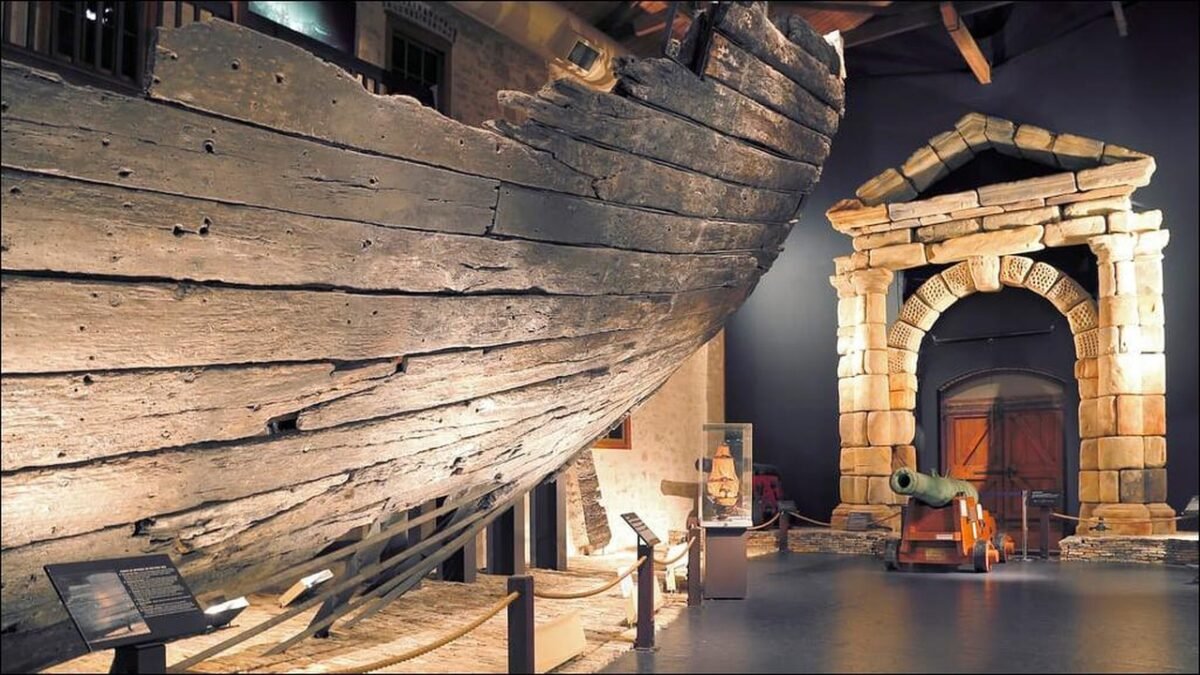
The Batavia was a flagship, a symbol of Dutch economic might, embarking on its maiden voyage from the Dutch Republic to Java. Aboard were 341 souls, a mix of crew, soldiers, and settlers, along with an immensely valuable cargo destined for the colonial capital. This cargo included what mariners often referred to as “paying ballast”—heavy materials that served the dual purpose of stabilizing the ship at sea while also holding significant commercial or practical value at their destination. Among these crucial items were thousands of bricks and, most notably, large, carefully carved sandstone blocks. These architectural elements were not merely practical; they were intended for a monumental gateway or portico within the Dutch East India Company’s colonial stronghold, a testament to the company’s grand aspirations.
The Ill-Fated Voyage and Its Horrific Aftermath
The journey of the Batavia was fraught with peril long before its catastrophic end. Command was effectively split between the ship’s captain, Ariaen Jacobsz, and the senior merchant, Francisco Pelsaert. Tensions simmered, exacerbated by Jacobsz’s insubordination and Pelsaert’s frequent illness. These internal conflicts laid the groundwork for the disaster that was to unfold. The ship veered off course, striking a reef in the Houtman Abrolhos islands, a treacherous archipelago off the coast of what is now Western Australia.
While the wreck itself was a tragedy, the subsequent events spiraled into one of the darkest chapters in maritime history. Pelsaert and Captain Jacobsz departed in the ship’s longboat to seek help, leaving over 200 survivors stranded on a barren island. In their absence, a ruthless and charismatic undermerchant named Jeronimus Cornelisz seized control. He orchestrated a horrific reign of terror, eliminating anyone he deemed a threat or an undesirable, particularly women and children, in a desperate bid to consolidate power and hoard the remaining provisions and treasure.
Cornelisz and his loyal followers committed unimaginable atrocities, including mass murder and sexual enslavement. This period of extreme violence and anarchy on the remote islands saw at least 110 people brutally murdered. A small group of soldiers, led by Wiebbe Hayes, managed to resist Cornelisz’s control, fortifying themselves on a separate island and preparing for a desperate battle. Their heroic resistance became a beacon of hope amidst the darkness, ultimately allowing for the eventual triumph of justice upon Pelsaert’s return.
Tiny Crystals: Geological Fingerprints of a Global Supply Chain
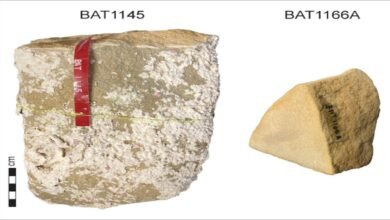
The enduring mystery surrounding the Batavia has always invited further scrutiny, and modern archaeological science has delivered remarkable insights. The latest breakthrough comes from the examination of tiny crystals preserved within the ship’s sandstone cargo. These aren’t just any crystals; they are often durable minerals like zircon, which contain geological ‘fingerprints’ unique to their origin. By analyzing the unique isotopic and geochemical composition of these microscopic remnants, scientists can precisely trace the geological age and source region of the sandstone blocks.
This sophisticated forensic geology offers unprecedented detail. The historical research involved identifying the precise quarries from which these massive stones were hewn. The findings revealed that the sandstone blocks, intended for a significant structure in Batavia (modern-day Jakarta), did not come from local Javanese quarries, nor did they originate from a simple, direct route. Instead, these sandstone blocks likely hailed from specific European quarries, a testament to the ambitious and complex logistical planning of the Dutch East India Company.
This discovery fundamentally changes our understanding of the Batavia’s global supply chain. It illustrates that the company was not merely shipping goods from Europe to Asia but was also strategically sourcing building materials from distant lands, transporting them across continents and oceans. These tiny crystals act as silent witnesses, providing concrete evidence of early modern globalization, showcasing how extensively materials and labor were being moved across vast distances nearly 400 years ago. This scientific approach provides an undeniable link between the geological past and the human dramas of the 17th century.
Reconstructing 17th Century Colonial Ambition and Trade Routes
The identification of the sandstone’s origin through these tiny crystals underscores the remarkable sophistication of 17th-century colonial trade and the sheer ambition of the Dutch East India Company. Such an undertaking speaks volumes about the economic power and logistical capabilities required to execute such a large-scale international operation. The company was not just trading spices and silks; it was engaging in monumental infrastructure projects, literally building its empire brick by brick, or rather, block by block, sourced from diverse corners of the world.
This finding sheds new light on the company’s extensive trade routes and its calculated approach to resource management. It demonstrates a foresight and an investment in permanent colonial presence that transcended immediate mercantile gains. The logistical challenge of acquiring, carving, and transporting such heavy and valuable cargo across vast oceans highlights the advanced seafaring technology and organizational prowess of the era. The blocks were not mere ballast; they were strategic components of a burgeoning colonial capital, carrying immense symbolic and practical weight.
The 1629 disaster of the Batavia thus becomes more than a cautionary tale of human depravity; it is also a powerful illustration of the immense effort and resources invested in establishing and maintaining global empires during the Age of Sail. The journey of these sandstone blocks from their ancient geological resting places to a shipwreck on the coast of Western Australia connects the European mainland directly to the nascent colonial outposts in Asia, linking the Batavia Mutiny to a much broader narrative of global expansion and its inherent risks and rewards.
The Enduring Legacy of the Batavia and Archaeological Discovery
The story of the Batavia continues to captivate historians and archaeologists alike, standing as a stark counterpoint to romanticized narratives of exploration. It exposes the violence, greed, and ruthless ambition that often accompanied early European ventures into new territories. The historical background provided by the tiny crystals deepens our understanding of this complex tapestry, integrating geological science with human history in a truly fascinating way.
This interdisciplinary approach exemplifies the power of modern archaeological discovery. By combining traditional historical records with cutting-edge scientific analysis, researchers can unlock secrets that have remained hidden for centuries. The ability to pinpoint the origin of a building material from so long ago, and from so far away, adds a layer of tangible reality to the abstract concepts of global trade and colonial power.
The Batavia Mutiny and the shipwreck itself serve as a poignant reminder of the fragility of human endeavor against the forces of nature, and the darker aspects of human nature under duress. Yet, through ongoing research and the incredible revelations brought forth by tiny crystals, we continue to uncover new facets of this complex narrative, ensuring that the legacy of the Batavia and its crew, both victims and perpetrators, remains a powerful lesson in maritime history for generations to come. This ongoing historical research keeps the story alive, offering continuous new perspectives on a dark, yet incredibly significant, period in human expansion and interaction.