

China Validates Stealth Drone Operations on Type 076 Amphibious Ship
China's Sichuan amphibious assault ship successfully tested the GJ-21 stealth drone, marking a major shift in naval aviation capabilities.
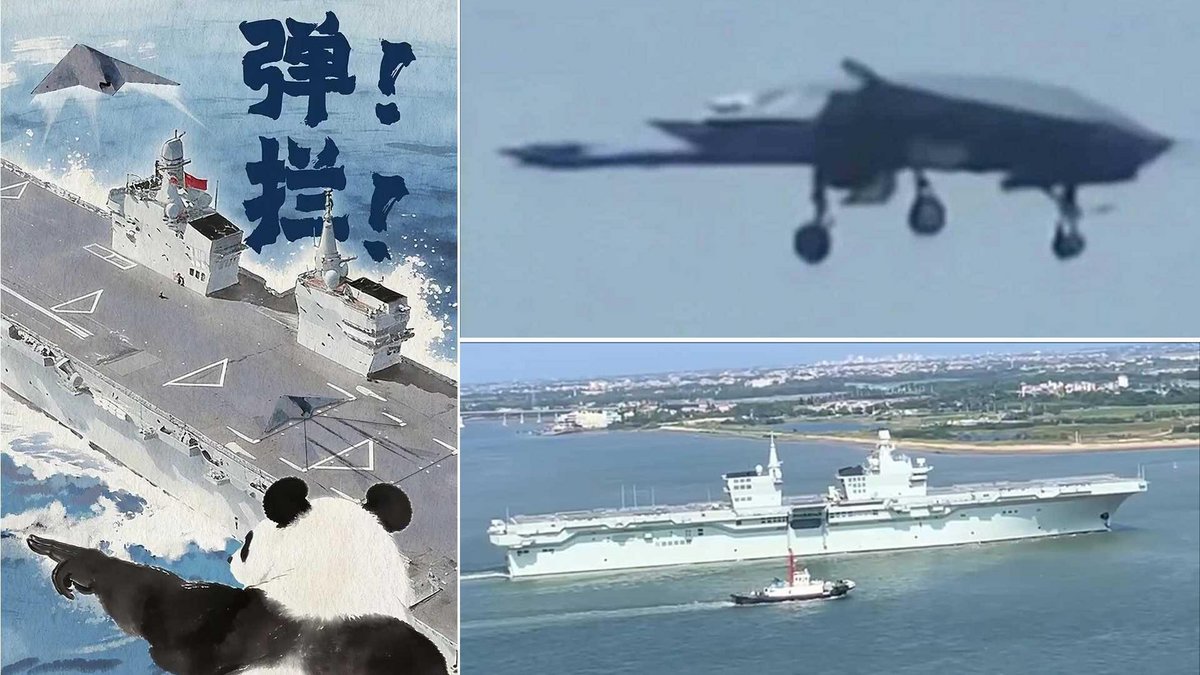
China has successfully completed the first takeoff and landing of its GJ-21 stealth reconnaissance and strike drone aboard the Sichuan, the lead vessel of the Type 076 amphibious assault ship class. The trial, reported by state news agency Xinhua, marks a significant expansion of the People’s Liberation Army Navy’s ability to project air power from multi-role amphibious platforms.
A New Class of Aviation Capability
The Sichuan, which features a full-load displacement exceeding 40,000 metric tons, represents a departure from traditional amphibious assault ship design. Unlike previous iterations, the Type 076 is equipped with electromagnetic catapult and arresting technology, allowing it to operate fixed-wing aircraft rather than relying solely on helicopters or vertical-takeoff assets.
The successful integration of the GJ-21 suggests that China is moving toward a drone-centric aviation concept. While the drone has a smaller airframe than the J-35 or J-20 stealth fighters, military analysts note it maintains a substantial combat radius and can deploy low-cost glide-guided bombs. The ability to recover and redeploy these systems offers a higher fire delivery efficiency and better cost control than expendable munitions like hypersonic missiles.
Operational Implications
The move to operate fixed-wing stealth drones from a 40,000-ton platform provides a more flexible and cost-effective alternative to traditional carrier strike groups. By utilizing electromagnetic catapults on an amphibious ship, the navy can launch heavier, more capable unmanned systems that do not require the complex and weight-intensive engines necessary for short-takeoff and vertical-landing (STOVL) operations.
The Sichuan was launched in December 2024 and features a full-length flight deck with a twin-island superstructure. Recent sea trials in late October followed earlier scientific testing and training missions in the South China Sea in April. While official statements describe these deployments as routine, the successful GJ-21 trials confirm the Type 076’s role as a primary platform for integrating advanced unmanned systems into maritime modernization efforts.