Singapore Harbour Craft Ready for B100 Biofuel Adoption | Mariner News
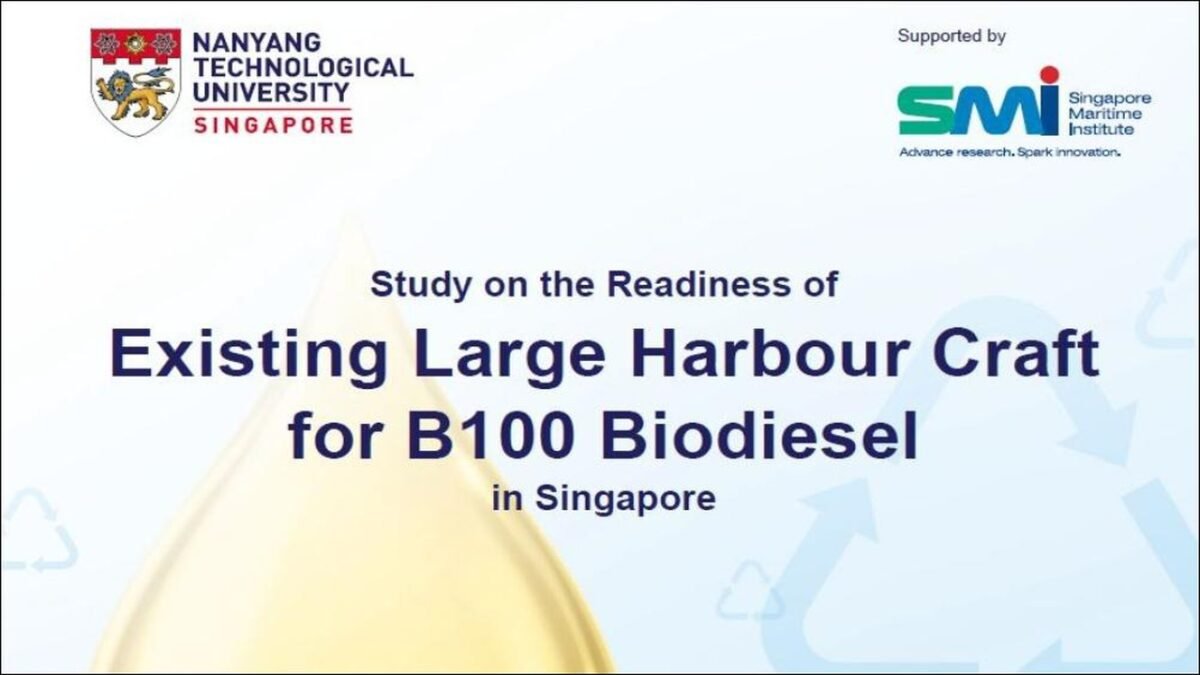
Singapore is charting a course towards a greener maritime future, as a new comprehensive study has revealed that its existing fleet of large harbour craft is well-prepared for the widespread adoption of B100 marine biofuel. This groundbreaking finding marks a significant milestone in the nation’s ambitious maritime decarbonization efforts, showcasing a tangible pathway for reducing emissions within one of the world’s busiest ports. The readiness for B100 adoption among Singapore harbour craft underscores the potential for rapid integration of sustainable fuel solutions across the global shipping industry, offering a beacon of hope for achieving critical environmental targets.
The study, meticulously conducted by the Maritime Energy & Sustainable Development Centre of Excellence (MESD), provides robust evidence that B100, which is 100% biodiesel, can be effectively utilized by current vessel engines, provided that appropriate fuel handling and storage practices are rigorously followed. This scientific validation is crucial, as it addresses practical concerns and dispels myths surrounding the transition to advanced biofuels, paving the way for accelerated implementation. The findings reinforce Singapore’s commitment to being a leader in green shipping initiatives and a hub for maritime sustainability, setting a powerful precedent for other port states worldwide.
Understanding B100 Marine Biofuel and Its Environmental Promise
B100 marine biofuel represents a significant leap forward in the quest for sustainable maritime energy. Comprising entirely of biodiesel, it offers a direct, ‘drop-in’ alternative or blend component to conventional fossil diesel, capable of powering marine engines with substantially lower carbon footprints. The push for B100 adoption is driven by its ability to drastically cut greenhouse gas emissions, including carbon dioxide, making it a vital tool in the maritime industry’s journey towards net-zero operations. As the world increasingly focuses on climate change mitigation, the viability of biofuels like B100 becomes paramount for sectors heavily reliant on liquid fuels.
Unlike traditional marine fuels, B100 is typically derived from renewable sources such as vegetable oils, animal fats, or recycled cooking oil, giving it a lifecycle emissions advantage. Its chemical properties allow it to be used in existing diesel engines with minimal or no modifications, significantly lowering the barrier to entry for ship operators looking to decarbonize. This inherent compatibility is a key factor contributing to the positive outlook for B100 adoption within the Singapore harbour craft fleet and, by extension, the broader global maritime sector. The environmental promise of B100 extends beyond CO2 reductions, encompassing a cleaner combustion profile that impacts local air quality positively.
The Rigorous Study: Proving B100 Readiness Through Sea Trials
The MESD study embarked on an extensive assessment of B100 use, combining rigorous laboratory testing with real-world sea trials. This comprehensive approach ensured that the findings were not merely theoretical but grounded in practical operational experience. A tugboat and a bunker tanker, representing typical large harbour craft in Singapore, were instrumental in these trials, offering a realistic testbed for the biofuel’s performance under various conditions encountered in port operations.
Over 200 hours of sea trials, the engines maintained remarkably stable performance. The study reported no significant power loss, no unusual fuel consumption trends, and crucially, no critical operational disruptions. These results directly address core concerns operators might have about reliability and efficiency when switching to alternative fuels. The consistent operational integrity observed during the trials provides substantial assurance to the maritime community regarding the practical feasibility of B100 adoption for similar vessel types, further bolstering the case for its wider implementation.
Furthermore, the research delved into the combustion efficiency, finding that B100 achieved brake thermal efficiency comparable to conventional diesel. This metric is vital as it indicates that vessels can maintain similar operational ranges and cargo capacities without compromising performance. Such a finding is a strong incentive for shipowners and operators, as it suggests that the transition to sustainable fuels does not necessitate a trade-off in operational capabilities, making B100 an attractive option for future fuel strategies.
Emissions Reduction and Environmental Benefits of B100
One of the most compelling aspects of the MESD study revolved around the environmental impact of B100. The findings highlighted significant reductions in several key pollutants compared to traditional marine diesel. Specifically, B100 produced lower carbon monoxide (CO) and particulate matter (PM) emissions. These reductions contribute directly to improved air quality in port areas, benefiting both marine ecosystems and the health of coastal communities. The decrease in PM is particularly noteworthy, as particulate matter is a major contributor to respiratory issues and smog formation.
While the study did record a modest increase in nitrogen oxide (NOx) emissions, this is a known characteristic of biodiesel combustion in some engine types. However, industry experts are actively exploring and developing mitigation strategies for NOx, such as engine tuning adjustments, Selective Catalytic Reduction (SCR) systems, or other exhaust gas treatment technologies, which can effectively manage and reduce these emissions. The overall environmental balance remains highly favorable for B100, especially when considering the significant lifecycle greenhouse gas reductions and improvements in local air quality, making B100 a strong candidate for marine decarbonization.
Crucial Considerations for Successful B100 Adoption
The study’s success hinged not just on the fuel itself but also on understanding the practicalities of its use. A key takeaway from the MESD research emphasized the importance of appropriate fuel handling and storage practices. Biodiesel, including B100, has different characteristics than fossil diesel, particularly regarding its oxidation stability. To address this, the study found that the incorporation of antioxidant additives significantly improved B100’s oxidation stability, effectively reducing the risk of fuel degradation during storage. This insight is critical for maintaining fuel quality and preventing operational issues.
Effective fuel management systems, including proper tank cleaning, filtration, and monitoring, are paramount for a smooth transition to B100. Training for crew members on best practices for handling and storing marine biofuel will also be essential to ensure long-term success and prevent potential challenges. The findings underscore that while the engines are ready, the operational ecosystem – from bunkering to onboard storage – must adapt to fully harness the benefits of B100, ensuring a reliable and efficient supply chain for these sustainable marine fuels.
Regulatory Momentum and Singapore’s Green Shipping Vision
The positive findings of this study arrive at a crucial time, aligning perfectly with Singapore’s robust regulatory framework aimed at fostering a sustainable maritime industry. The Maritime and Port Authority of Singapore (MPA) has mandated that all new harbour craft from 2030 onwards must be fully electric, or capable of using B100 or other net-zero marine fuels. This progressive policy provides a clear impetus for the maritime sector to accelerate its transition to cleaner energy sources, positioning Singapore at the forefront of global green shipping initiatives.
This study serves as a strong validation for the MPA’s foresight, demonstrating the qualified readiness of the existing large harbour craft fleet for B100 adoption. It signifies that the pathway to meeting these ambitious targets is not only achievable but also supported by practical, scientific evidence. Singapore’s proactive stance in promoting maritime sustainability, coupled with such definitive research, strengthens its role as a leading international maritime center committed to decarbonization. The nation’s efforts are expected to inspire similar initiatives globally, driving widespread acceptance and implementation of sustainable fuel technologies.
Collaborative Efforts Paving the Way for a Greener Future
The success of this study is a testament to the power of collaboration between academia and industry. The MESD worked closely with partners like KST Maritime and others to execute the laboratory tests and sea trials, bringing together theoretical knowledge with practical maritime expertise. Such partnerships are vital for bridging the gap between research and real-world application, accelerating the development and adoption of new sustainable technologies.
Moving forward, continued collaboration among various stakeholders – including fuel suppliers, engine manufacturers, shipowners, and regulatory bodies – will be essential to scale up B100 adoption. Addressing challenges such as feedstock availability, cost competitiveness, and the development of robust bunkering infrastructure requires a concerted, industry-wide effort. Singapore’s study not only highlights readiness but also emphasizes the collective responsibility in fostering a sustainable and resilient maritime future through innovative fuel solutions.
Conclusion: A Clear Voyage Ahead for Sustainable Maritime Fuels
The Singapore study’s conclusive findings regarding the readiness of existing large harbour craft for B100 adoption represent a pivotal moment for marine decarbonization. The extensive laboratory testing and successful 200-hour sea trials conclusively demonstrate the operational viability, comparable performance, and significant environmental benefits of B100 marine biofuel. With proper fuel handling, storage, and the use of antioxidant additives, the pathway for widespread B100 implementation within the Singapore fleet is not just theoretical but demonstrably practical.
This research provides a powerful impetus for the maritime industry to embrace sustainable fuel alternatives, aligning with global climate objectives and Singapore’s vision for a green and innovative maritime future. The “qualified readiness” confirmed by MESD serves as an encouraging signal, not only for Singapore but for the entire international shipping community contemplating the transition to cleaner energy sources. As the industry sails towards net-zero emissions, the proven efficacy of B100 stands out as a reliable and effective solution, propelling the maritime sector closer to its ambitious sustainability goals and fostering a truly greener ocean economy.