Russian Patrol Ship Drone Defense: Fencing Improvised | Mariner News
In an increasingly complex maritime landscape marked by escalating conflicts, naval forces are constantly seeking innovative solutions to emergent threats. Recent reports from the Black Sea region have highlighted an extraordinary example of such improvisation, where a Russian patrol ship was observed deploying an unconventional drone defense mechanism: improvised protection in the form of chain-link fencing. This development underscores the growing threat posed by unmanned aerial vehicles (UAVs) in modern naval warfare and the resourcefulness required to counter them, especially amidst the ongoing conflict in Ukraine.
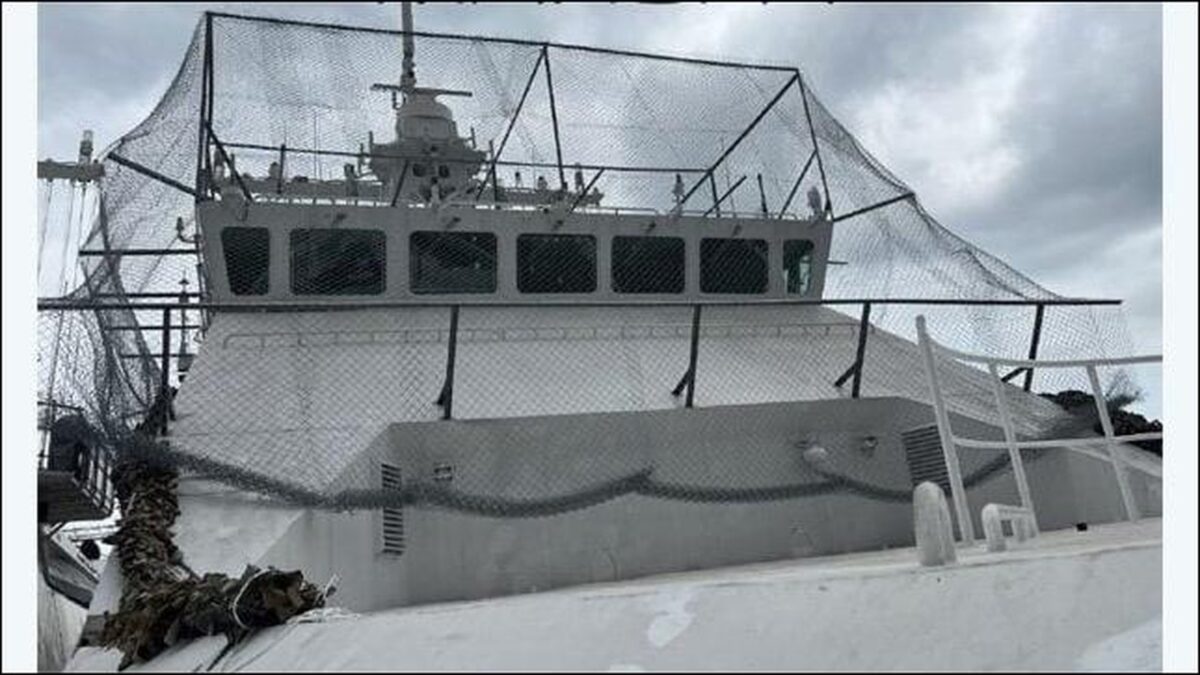
The visual evidence, initially circulated on Russian social media and later analyzed by Ukrainian media, reveals naval vessels “covered in chain-link fencing” This makeshift armor, strategically positioned around critical areas like the bridge and superstructure, signals a pragmatic, albeit rudimentary, attempt to safeguard these Russian naval assets against persistent naval drone attacks. This tactical adaptation reflects a broader trend of rapid evolution in maritime security challenges, compelling navies worldwide to rethink traditional anti-drone measures and ship protection strategies.
The Rise of Naval Drone Warfare in the Black Sea
The war in Ukraine has dramatically reshaped perceptions of naval warfare, particularly with the proliferation and sophisticated deployment of drones by Ukrainian forces. Over the past four years, Ukraine has demonstrated remarkable proficiency in drone technology, effectively leveraging these systems to target Russian warships and vital infrastructure, particularly in the Black Sea. These Ukrainian drone attacks have ranged from surface naval drones to aerial UAVs, proving to be a significant and persistent threat to the Black Sea fleet and its operations.
This shift towards drone-centric maritime engagement has necessitated a re-evaluation of naval doctrine and defensive capabilities. Traditional naval defenses, designed primarily to counter missile or manned aircraft threats, often prove less effective against small, fast-moving, and often low-observable UAV threats. The strategic importance of the Black Sea, coupled with its confined operational areas, makes it an ideal proving ground for asymmetric warfare tactics involving drones.
Previous incidents have shown the vulnerability of larger, less agile naval vessels to these agile robotic adversaries. Reports of significant damage to Russian ships by Ukrainian drones have become a regular feature of conflict updates, pushing Russian naval commanders to explore a range of counter-drone tactics, from sophisticated electronic warfare to more rudimentary, physical barriers.
Details of the Improvised Fencing Solution
The images that sparked widespread discussion show Russian patrol boats draped with what appears to be ordinary chain-link fencing. Pro-Russian site DVA Major confirmed the application of this improvised protection, stating that public funding was utilized to procure the materials and that multiple Project 22460 patrol ships had received this unique upgrade. The fencing was reportedly applied around the bridge and on top of the superstructure – areas critical for command, control, and sensor integrity.
This method, while appearing unsophisticated, could serve several purposes. It might act as a physical barrier to prematurely detonate or disrupt incoming aerial drones before they reach the ship’s vulnerable surfaces. Alternatively, it could tangle propeller-driven drones, rendering them inoperable. DVA Major acknowledged the limitations, stating, “This solution isn’t a panacea. It won’t protect against all types of enemy ammunition. But if nothing is done, nothing will happen.” This pragmatic outlook highlights the desperation and resourcefulness inherent in wartime naval innovation.
The use of such a low-tech anti-drone measure also raises questions about the availability of more advanced counter-drone systems for the Russian navy. While high-tech solutions like electronic warfare jammers, laser systems, or sophisticated anti-aircraft weapons are ideal, they are expensive, complex to integrate, and may be in short supply. In contrast, chain-link fencing represents a readily available, cost-effective, and rapidly deployable solution that, even if partially effective, offers some degree of naval vessel protection.
Identifying the Vessel and Its Operational Context
The Ukrainian site Militarnyi conducted an analysis of the shared photographs, and despite the vessel remaining unnamed in Russian reports, they confidently identified the class of ship. According to Militarnyi, the specific structure and placement of the fencing around the bridge are distinctive features of the Project 22460 patrol ship, also known as the Rubin-class. Russia commissioned the first of these versatile vessels in 2009, employing them primarily for various coastal patrols, border guard duties, and general maritime border security operations.
Media reports indicate that at least four of these Project 22460 vessels are currently based in Crimea, a strategically vital region, with an additional two stationed at Krasnodar Krai. Their deployment in these sensitive areas, particularly near the front lines of the conflict, makes them high-priority targets for Ukrainian drone capabilities. This geographic concentration underscores the need for enhanced maritime defense systems for these specific patrol ships.
Indeed, these vessels have been previously targeted. In February 2026, Ukraine’s general staff claimed the successful use of drones to strike two border guard ships moored near the town of Inkerman in Crimea, at the easternmost end of Sevastopol Bay. The damaged vessels were reportedly Project 22460 Rubin-class fast patrol boats, reinforcing the urgency behind the implementation of improvised defenses seen recently.
Broader Implications for Naval Strategy and Maritime Security
The sight of a modern Russian patrol ship relying on improvised protection like fencing for drone defense is a stark indicator of the evolving challenges in maritime security. It signifies a shift where low-cost, readily available UAV threats can compel major naval powers to adopt unconventional anti-drone measures. This development has profound implications for naval strategy globally.
Firstly, it highlights the democratizing effect of drone technology in warfare, enabling actors with fewer resources to inflict significant damage on more technologically advanced adversaries. This forces navies to prioritize adaptable and multi-layered maritime defense systems that can counter a spectrum of threats, from sophisticated missiles to swarms of inexpensive drones.
Secondly, it prompts a discussion about the cost-benefit analysis of naval innovation. While advanced counter-drone systems are under development, their deployment takes time and significant investment. Improvised solutions, though not a perfect answer, offer a stop-gap measure that can be implemented quickly and affordably, potentially saving lives and valuable assets. This emphasizes the need for rapid prototyping and agile development in military procurement.
Finally, this scenario offers valuable insights into naval doctrine and ship design. Future naval vessels may need to incorporate modular defenses, easily attachable armor, or integrated anti-drone technology from the outset. The “fencing solution” may seem rudimentary, but its existence underscores a critical vulnerability that naval architects and strategists must address comprehensively to ensure maritime resilience in future conflicts.
The Future of Anti-Drone Technology and Naval Vessel Protection
The ongoing conflict in the Black Sea serves as a real-world laboratory for the future of maritime security. The cat-and-mouse game between drone attackers and naval defenders will undoubtedly continue to drive innovation in anti-drone technology. While improvised solutions like fencing offer immediate, albeit limited, naval vessel protection, the long-term goal for naval forces remains the development and deployment of integrated, high-tech counter-drone systems.
These advanced systems include sophisticated radar and electro-optical sensors for early detection, electronic warfare suites to jam drone signals, directed energy weapons (lasers) to physically destroy drones, and kinetic interceptors like drones-catching nets or small anti-drone missiles. The challenge lies in integrating these diverse technologies into a cohesive and effective defense network that can operate autonomously or with minimal human intervention in dynamic maritime environments.
The adaptability shown by the Russian patrol ship in deploying physical barriers illustrates a broader truth: effective maritime defense systems will increasingly rely on a combination of cutting-edge technology and pragmatic, sometimes low-tech, solutions. The goal is to create multiple layers of defense, ensuring that if one layer fails, another can intercept the UAV threat. The lessons learned from these improvised defenses in the Black Sea will undoubtedly shape the future of naval innovation and maritime security protocols for years to come, influencing how navies around the globe prepare for the persistent and evolving challenge of naval drone attacks.