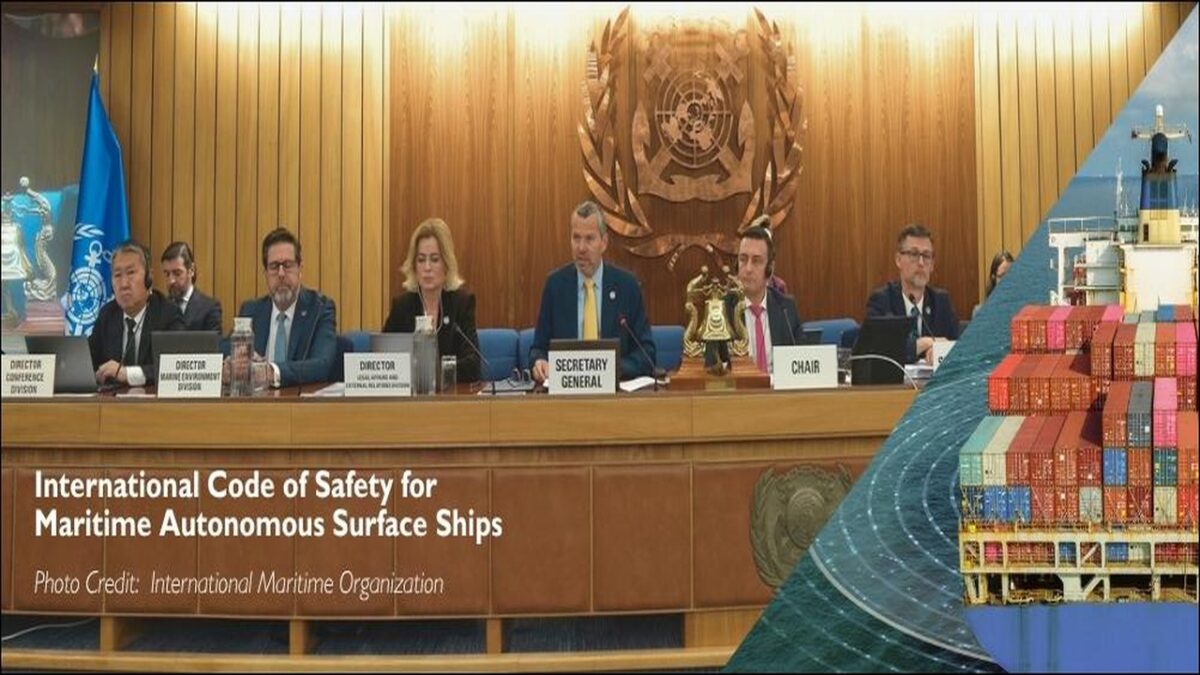
MASS Code: Governing Autonomous Shipping Safety | Mariner News
The International Maritime Organization’s groundbreaking International Code of Safety for Maritime Autonomous Surface Ships (MASS Code) heralds a pivotal moment for the global shipping industry. On July 1, 2026, this significant framework will enter its first operational phase, marking a profound shift in how we perceive and govern maritime autonomy. While this date won’t instantly empty vessel bridges or dispatch fleets of uncrewed container ships across every ocean, it undeniably represents a decisive turning point in the ongoing autonomous shipping debate. The industry is consciously moving beyond merely questioning whether autonomy is technically feasible, to the more critical and complex challenge of whether it can be governed safely, securely, and effectively at scale.
The adoption of the non-mandatory MASS Code by the IMO in May 2026 underscores this forward momentum. Initially, it applies as a voluntary framework, specifically targeting large cargo ships engaged in international trade. This phased approach is designed to allow for the careful gathering of invaluable operational experience, which will then inform the development of a future mandatory instrument. This deliberate transition is of paramount importance because the journey towards autonomous shipping has never been solely a navigation problem. Instead, it is recognized as a profound “system-of-systems” challenge, intricately weaving together critical aspects such as ship design, robust connectivity, advanced cyber resilience, sophisticated remote operations, comprehensive human factors analysis, meticulous maintenance protocols, complex liability considerations, and rapid, effective emergency response mechanisms.
Understanding the Scope and Significance of the MASS Code
The MASS Code is more than just a set of guidelines; it’s a foundational document designed to steer the maritime sector through an unprecedented era of technological transformation. Its voluntary nature during this initial phase allows for crucial flexibility, enabling early adopters to innovate and test new operational models while adhering to a common safety standard. This period of experience-gathering is vital for identifying unforeseen challenges and refining best practices before any mandates are imposed, ensuring that future regulations are robust, practical, and globally applicable. The code’s broad application to large cargo ships reflects the significant economic potential of autonomous technology in the commercial shipping sector, promising greater efficiency, reduced operational costs, and potentially enhanced safety under controlled conditions.
However, the complexity arises from the holistic nature of the MASS Code’s scope. It demands a coordinated approach across multiple disciplines, from naval architecture adapting to new propulsion and control systems, to telecommunications ensuring reliable global connectivity, and cybersecurity experts fortifying against sophisticated digital threats. The human element, while seemingly diminished on an uncrewed vessel, remains central in the form of remote operators, maintenance technicians, and emergency responders. Therefore, the MASS Code acts as a comprehensive roadmap, guiding stakeholders through the intricate interplay of these various systems to achieve safe and sustainable maritime autonomous surface ship operations.
From Pioneering Demonstrations to Operational Realities: Navigating Unforeseen Challenges
The most difficult questions surrounding autonomous shipping truly begin precisely where the promotional videos typically end. While sophisticated remotely operated ships may boast an impressive array of advanced technologies—including cutting-edge radar systems, high-resolution cameras, precise lidar sensors, reliable satellite links, and automated collision-avoidance functions—no single sensor suite, however advanced, can entirely eliminate uncertainty. The real-world maritime environment is inherently unpredictable, characterized by constantly changing conditions. Visibility can rapidly deteriorate due to fog or severe weather, communication links can suffer unexpected failures, complex software systems can behave unpredictably, and ambiguous traffic situations can arise, defying straightforward algorithmic solutions.
The true measure of an autonomous system’s effectiveness is not simply its flawless performance in routine, predictable conditions. Rather, the definitive test lies in the capacity of the wider organizational ecosystem to promptly recognize any degradation in performance, safely transfer control from automated to human oversight when necessary, and maintain unquestionable accountability even when multiple layers of safety safeguards fail concurrently. This necessitates not only robust technological solutions but also resilient operational protocols, continuous training for human operators, and an ingrained culture of safety and preparedness. The transition from controlled demonstrations to scalable operational reality for uncrewed vessels demands a profound re-evaluation of risk management and emergency procedures across the entire maritime value chain.
The Critical Role of Remote Operations Centres (ROCs) in Autonomous Shipping
This heightened emphasis on managing real-world complexities places the remote operations centre (ROC) squarely at the heart of the new regime for autonomous maritime surface ships. Shipping companies face pivotal decisions regarding the optimal number of vessels that one highly skilled operator can safely and efficiently manage. This crucial ratio is influenced by numerous factors, including the level of autonomy of the vessels, the complexity of their routes, and the sophistication of the ROC’s supporting technology. Furthermore, the challenges within ROCs extend beyond mere staffing levels; they encompass critical issues such as preventing operator fatigue, maintaining acute situational awareness across multiple simultaneous operations, and facilitating swift, accurate decision-making under high-pressure scenarios.
To effectively address these challenges, ROCs require robust digital infrastructure, capable of real-time data analytics and seamless integration of information from various shipboard sensors. Advanced human-machine interface (HMI) design becomes paramount, ensuring that operators receive clear, concise, and actionable intelligence, minimizing cognitive load and maximizing their ability to intervene effectively. The development of specific skill sets for remote operators is also essential, encompassing not just navigation and engineering expertise, but also proficiency in digital systems, cybersecurity awareness, and advanced problem-solving. Alongside this, comprehensive protocols for emergency response and meticulous contingency planning must be meticulously developed and regularly rehearsed, guaranteeing that ROCs are prepared for any eventuality in the remote control of uncrewed vessels.
Ensuring Cyber Resilience and Data Integrity for Uncrewed Vessels
Within the intricate tapestry of autonomous maritime operations, cyber resilience stands out as a critical and non-negotiable pillar. As maritime autonomous surface ships become increasingly reliant on digital systems for navigation, propulsion, communication, and cargo management, they simultaneously become more susceptible to a range of sophisticated cyber threats. These threats can manifest in various forms, from malicious hacking attempts designed to seize control of a vessel, to data breaches compromising sensitive operational information, and even jamming or spoofing attacks aimed at disrupting GPS signals or deceiving sensor data. The implications of such cyber incidents for maritime safety, security, and environmental protection are profound, underscoring the urgency of comprehensive protective measures.
To mitigate these pervasive risks, the implementation of robust and multi-layered cybersecurity strategies is absolutely essential. This includes securing all network infrastructures, deploying strong encryption protocols for data transmission and storage, establishing sophisticated intrusion detection systems to identify threats in real-time, and conducting regular, thorough vulnerability assessments to pinpoint and rectify potential weaknesses. Beyond mere protection, maintaining absolute data integrity is crucial. The reliability and accuracy of data – from navigational charts and weather forecasts to engine performance metrics and cargo manifests – directly impact operational safety and the overall efficiency of smart shipping. Therefore, ensuring that data remains untampered and trustworthy is as vital as protecting it from unauthorized access, forming an indispensable element in the safe operation of uncrewed vessels.
Human Factors and the Evolving Role of Seafarers in Autonomous Environments
Even in the context of supposedly “uncrewed” ships, the human factors component remains profoundly significant, albeit shifting in its manifestation. The advent of maritime autonomy doesn’t eliminate the need for human expertise; rather, it redefines the roles and responsibilities of seafarers. The traditional onboard crew is transitioning into a new paradigm where remote operators manage multiple vessels from onshore control centers, supported by teams of shore-based technicians, engineers, and logistical planners. This evolution necessitates a fundamental shift in required skill sets, moving away from purely manual operations towards proficiency in digital navigation, advanced cybersecurity protocols, intricate remote diagnostics, and complex data analysis.
This transformation inevitably impacts maritime employment, necessitating comprehensive reskilling and upskilling initiatives across the shipping industry. Training programs must adapt rapidly to equip existing seafarers with the competencies required for these new roles, ensuring a smooth transition and retaining valuable maritime experience. Furthermore, the psychological aspects of remote work must be carefully considered. Remote operators can experience unique stressors, including maintaining constant vigilance over complex systems, managing high-stakes decision-making from a distance, and dealing with potential feelings of isolation or detachment from the physical vessel. Addressing these human factors through ergonomic design of ROCs, psychological support, and robust training is critical for fostering a safe, effective, and sustainable autonomous maritime workforce.
Liability, Accountability, and the Legal Framework for Maritime Autonomy
The integration of autonomous ships introduces some of the most complex legal and ethical questions facing the maritime industry, particularly concerning liability and accountability in the event of an incident. When an uncrewed vessel is involved in a collision, grounding, or other maritime casualty, determining who bears ultimate responsibility becomes an intricate challenge. Is it the ship owner, the remote operator, the technology provider who developed the autonomous system, the software developer, or the manufacturer of specific components? The existing framework of maritime law, largely predicated on the presence of a human master on board, requires significant adaptation to accommodate these new operational realities.
While the MASS Code begins to address certain aspects of operational safety and responsibility, a comprehensive international legal harmonization is still urgently needed to provide clarity and consistency across jurisdictions. This involves re-evaluating established conventions such as SOLAS, MARPOL, and COLREGs to ensure their applicability to autonomous vessels, or to develop new instruments where necessary. Furthermore, the implications for maritime insurance are profound; insurers will need to develop new policies and risk assessment models that account for the unique risks associated with autonomous technology, cyber threats, and remote operations. Establishing clear lines of accountability is not just a legal formality; it is essential for fostering public trust, ensuring fair compensation for damages, and ultimately upholding the fundamental principles of maritime justice in the age of autonomous shipping.
The Path Forward: Evolution of the MASS Code and Future of Maritime Operations
The journey of the MASS Code from a voluntary framework to a potentially mandatory international instrument reflects the ambitious trajectory of maritime autonomy. This ongoing process relies heavily on the continuous collection of data, thorough analysis of operational experiences, and proactive engagement from all stakeholders across the maritime ecosystem. Every trial, every voyage, and every reported incident involving an autonomous ship contributes vital information that will refine and strengthen the code, ensuring it remains relevant and effective in an ever-evolving technological landscape. This collaborative approach is crucial for building a robust regulatory environment that can accommodate innovation while upholding the highest standards of safety and environmental protection.
The future impact of maritime autonomy, guided by the MASS Code, is poised to be transformative. It promises to reshape global shipping lanes, optimize logistics and supply chains, and introduce unprecedented efficiencies in cargo transport. However, this transformation must be tempered with a steadfast commitment to ensuring that technological advancements do not compromise the fundamental principles of safety, security, and environmental stewardship. The MASS Code is more than just a regulatory document; it is a foundational cornerstone for the future of the maritime world, guiding the industry towards a new era of smart, safe, and sustainable operations. As we move forward, continuous collaboration, adaptive regulation, and an unwavering focus on responsible innovation will be key to unlocking the full potential of maritime autonomous surface ships for the benefit of all.