IMO Council Reaffirms Vital Shipping Lane Protection | Mariner News
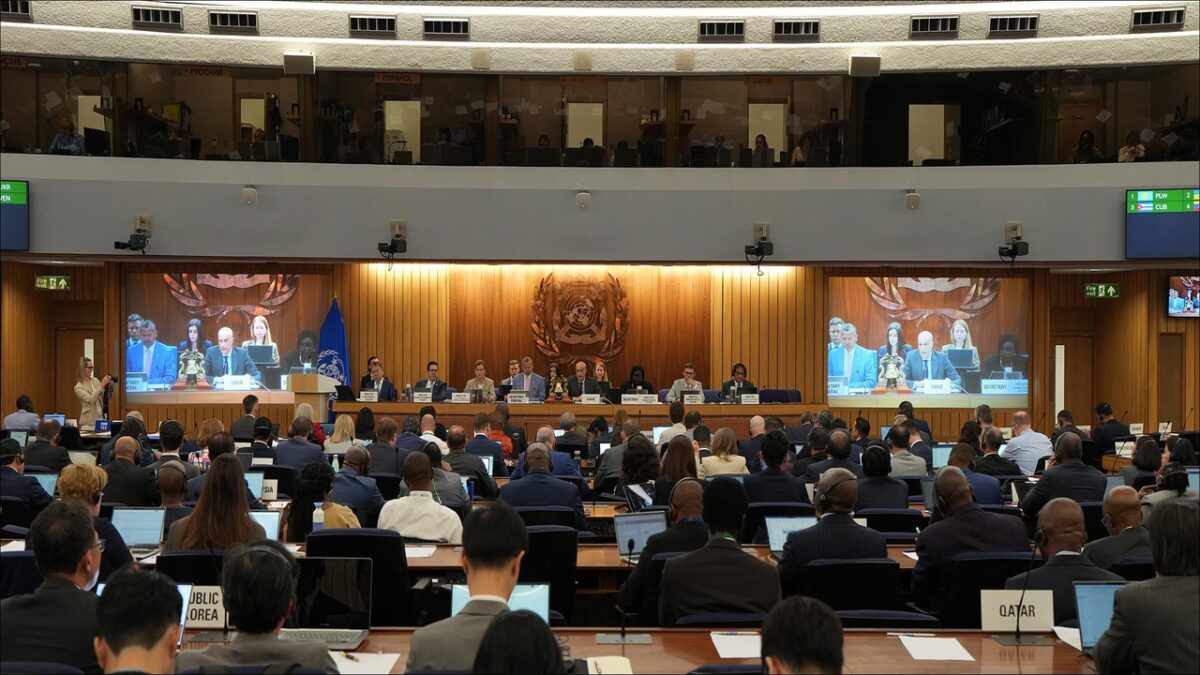
The International Maritime Organization (IMO) Council, at its 137th session, has unequivocally reaffirmed its unwavering commitment to shipping lanes protection, emphasizing the critical importance of preserving navigational rights and freedoms in accordance with established international law. This resolute stance underscores the global community’s dedication to ensuring the unimpeded flow of maritime commerce, a cornerstone of international trade and economic stability. The Council’s declarations serve as a vital reminder of the complex challenges facing global shipping and the collective responsibility to safeguard these essential arteries of commerce.
During the session, a pivotal resolution was adopted, highlighting the absolute necessity of maintaining the right of transit passage through straits used for international navigation. This fundamental right, enshrined in international maritime law, must not be threatened, impeded, denied, hampered, impaired, or suspended under any circumstances. The IMO Council’s strong declaration reinforces the principles of freedom of navigation, which are paramount for the efficient and safe movement of vessels across the world’s oceans. These principles are not merely theoretical constructs but practical requirements that directly impact the daily operations of countless merchant ships and the livelihoods they support globally.
Beyond upholding existing frameworks, the Council also reiterated that any measures implemented by coastal States to regulate traffic in these vital shipping lanes must strictly adhere to IMO regulations, particularly those outlined in the International Convention on the Safety of Life at Sea (SOLAS). This commitment ensures a harmonized approach to maritime safety and security, preventing unilateral actions that could create uncertainty or impose undue burdens on international shipping. Striking a balance between national sovereignty and the collective interest of global maritime navigation is crucial for maintaining predictability and trust within the shipping industry.
Upholding Navigational Rights and Freedoms Globally
The preservation of navigational rights and freedoms forms the bedrock of modern international maritime law. The IMO Council’s recent reaffirmation underscores the enduring relevance of conventions like the United Nations Convention on the Law of the Sea (UNCLOS), which delineates the rights and obligations of states concerning the use of the world’s oceans. The right of transit passage through international straits is a particularly sensitive and vital aspect, ensuring that geopolitical tensions do not translate into physical barriers for vessels traversing strategically important sea routes. This principle is fundamental for maintaining efficient global supply chains and fostering international cooperation.
Any attempt to disrupt or unilaterally restrict passage through these critical maritime chokepoints poses a direct threat to the global economy. The Council’s resolution acts as a powerful deterrent against such actions, emphasizing that the international community stands united in upholding these universally recognized rights. This legal framework provides predictability and security for ship operators, allowing them to plan routes and manage logistics with confidence, knowing that fundamental freedoms are protected. Without these safeguards, the inherent risks of maritime operations would be exponentially magnified, impacting trade flows and increasing costs across the board.
Furthermore, the resolution calls for a concerted effort from all member states to respect and enforce these rights. It acknowledges that while coastal states have legitimate security concerns, these must be addressed within the confines of international law and without compromising the fundamental right of innocent or transit passage. Dialogue and cooperation are presented as the preferred mechanisms for resolving any potential disputes or misunderstandings, ensuring that international shipping remains a pathway for peace and prosperity rather than a source of conflict.
IMO Regulations and Coastal State Responsibilities for Maritime Safety
The balance between a coastal state’s sovereign rights and its international obligations is meticulously defined within IMO conventions. The Council’s emphasis on adherence to IMO regulations, especially SOLAS, highlights the organization’s role as the global standard-setter for maritime safety. These regulations cover a vast array of operational aspects, from ship construction and equipment to navigation and pollution prevention. When coastal states implement measures affecting shipping lanes, it is imperative that these actions are consistent with internationally agreed standards to avoid fragmentation and confusion for mariners.
SOLAS, in particular, is a comprehensive treaty designed to ensure the safety of life at sea, and its provisions are critical for regulating maritime traffic effectively. For instance, measures related to vessel traffic services (VTS), pilotage requirements, or designated sea lanes must be developed and implemented in conformity with SOLAS requirements and IMO guidelines. This ensures that safety enhancements are universally understood and applied, thereby reducing the risk of accidents and incidents in busy or confined waters.
By reiterating this principle, the IMO Council encourages a cooperative rather than confrontational approach, fostering an environment where safety improvements benefit all users of the sea. It underscores that regulating traffic in vital shipping lanes is a shared responsibility, requiring continuous consultation and coordination between coastal states and the international maritime community. Such collaboration is key to preventing unintended consequences and maintaining the integrity of global shipping operations.
Addressing Challenges in Critical Waterways: The Strait of Hormuz
The ongoing challenges facing international shipping, particularly in and around the Strait of Hormuz, were a significant point of discussion for the Council. The Strait of Hormuz represents one of the world’s most critical maritime chokepoints, essential for the transit of a substantial portion of global oil and gas supplies. The Council unequivocally condemned the attacks on civilian commercial ships in this region, recognizing the severe threat these incidents pose to the safety of seafarers, maritime security, and global energy markets.
In response to these escalating tensions, the IMO Council issued a clear call for the de-escalation of tensions in the Middle East region. It stressed that any future arrangements or understandings between the littoral states of the region must guarantee the non-discriminatory and unimpeded right of transit passage for all ships through the internationally recognized channels. This principle is vital for maintaining the predictable flow of crude oil and liquefied natural gas, on which much of the global economy depends.
Disruptions in such a pivotal waterway can have cascading effects, leading to increased insurance premiums, re-routing of vessels, and ultimately, higher costs for consumers worldwide. The Council’s firm stance reinforces the international community’s expectation that all parties will respect international law and work towards diplomatic solutions that prioritize the safety and security of maritime commerce. Protecting these critical sea routes from geopolitical interference remains a top priority for the IMO and its member states, ensuring vessels can navigate freely and safely.
The Broader Impact on Global Trade and Supply Chains
The secure and free passage through vital shipping lanes is intrinsically linked to the stability of global trade and the resilience of supply chains. Any disruption, whether due to acts of piracy, geopolitical tensions, or environmental disasters, can have immediate and far-reaching economic consequences. Industries worldwide rely on the timely and cost-effective transportation of raw materials, components, and finished goods, making reliable maritime transport absolutely essential for modern commerce. The Council’s focus on shipping lanes protection is a direct acknowledgment of this critical economic function.
When major arteries of global maritime commerce are threatened, the ripple effects are felt across diverse sectors, from manufacturing and retail to energy and agriculture. Increased shipping costs, longer transit times, and heightened insurance premiums can significantly impact profit margins, potentially leading to price increases for consumers and contributing to inflationary pressures. The interconnectedness of the global economy means that a disruption in one vital shipping lane can create bottlenecks and delays thousands of miles away, highlighting the fragility of finely tuned logistics networks.
Therefore, the IMO’s commitment to safeguarding these essential trade routes extends beyond mere legal pronouncements; it is a pragmatic necessity for sustaining economic growth and fostering prosperity on a global scale. Maintaining open and secure sea lines of communication allows businesses to operate efficiently, supports job creation, and ensures that essential goods reach their intended destinations, contributing to overall global stability and development.
Strengthening International Cooperation for Maritime Security
Effective shipping lanes protection necessitates robust international cooperation among states, industry stakeholders, and international organizations. The IMO, as the specialized agency for maritime affairs, plays a pivotal role in facilitating this collaboration. Its platforms enable dialogue, the development of common standards, and the coordination of responses to emerging threats. Through shared intelligence and coordinated patrols, for instance, instances of piracy or other illicit activities can be more effectively deterred and addressed.
Diplomatic engagement and multilateral initiatives are crucial for de-escalating tensions in regions prone to conflict and ensuring adherence to international maritime law. The Council’s call for de-escalation in the Middle East is a prime example of how the IMO uses its authority to advocate for peaceful resolutions that safeguard maritime interests. Such efforts contribute to building trust among nations and reinforcing the principle that the seas are a shared resource, to be used responsibly by all.
Furthermore, capacity building programs, where more experienced maritime nations assist those with developing capabilities, are vital for enhancing overall global maritime security. This includes training for port state control officers, sharing best practices for maritime domain awareness, and promoting compliance with international conventions. By strengthening the capabilities of all states, the collective ability to protect shipping lanes and ensure the safety of navigation is significantly improved.
Looking Ahead: The Future of Maritime Safety and Security
The challenges to maritime safety and security are continually evolving, from traditional threats like piracy and armed robbery to emerging concerns such as cyberattacks on maritime infrastructure and the impacts of climate change on navigation. The IMO Council’s sustained commitment to shipping lanes protection acknowledges this dynamic environment and the need for continuous vigilance and adaptation. Future strategies must anticipate new threats and leverage technological advancements to enhance monitoring, communication, and response capabilities.
The ongoing commitment to robust regulatory frameworks and international collaboration will be more critical than ever. The IMO will continue to play a central role in guiding member states through these complex issues, ensuring that the global shipping industry can operate safely, securely, and efficiently. This includes promoting innovation in navigation technologies, strengthening incident response protocols, and fostering a culture of safety across all maritime operations.
Ultimately, the reaffirmation of principles by the IMO Council is not merely a restatement of existing policy but a forward-looking pledge. It signals a sustained dedication to ensuring that the world’s oceans remain open for legitimate maritime activity, fostering global trade, economic growth, and international understanding for generations to come. The responsibility to uphold these vital principles rests with every nation, contributing to a secure and prosperous future for the entire maritime community.