English Court Defines Payment Deadline Expiry | Mariner News
The intricate world of international commerce, particularly within the shipping industry, often grapples with complexities that transcend borders and time zones. One such critical issue, concerning the precise moment a payment deadline actually expires, has recently been clarified by the English High Court. This landmark ruling provides much-needed legal certainty for businesses operating globally, especially those dealing with bunker credit terms and other time-sensitive commercial contracts. The decision underscores that for an invoice due on a given day, it becomes late once midnight has passed at the geographical location where the money was designated to be received, rather than in the buyer’s time zone or any jurisdiction offering a more lenient interpretation. This definitive stance has significant ramifications for suppliers managing late payments and buyers navigating tight deadlines, making it imperative for all parties to understand which clock governs their contractual obligations.
The Landmark `Songa Coral` Case: A Midnight Conundrum
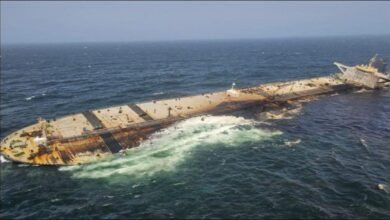
The pivotal case that brought this issue to the forefront involved the $25 million sale of the MT Songa Coral tanker. The dispute arose when the sellers validly cancelled the sale just nine minutes after midnight, arguing that the buyer had missed the payment deadline. This seemingly minor delay ignited a fundamental legal question that many commercial contracts leave unanswered: when a payment obligation falls due on a specific day, where in the world does that day officially end? The court’s examination of this `midnight deadline` principle delved deep into the nuances of international transactions.
The financial stakes were incredibly high, highlighting the critical importance of pinpointing the exact expiration moment. For decades, businesses in sectors like shipping have operated with a degree of ambiguity surrounding these deadlines, often relying on conventions or informal understandings. The `Songa Coral` decision has now crystallized these understandings into a firm legal principle, ensuring that future transactions involving substantial sums, whether for vessel sales or complex `bunker credit terms`, will have a clear framework for defining default. The judgment effectively eliminates the potential for disputes arising from differing interpretations of `time zone` relevance.
English High Court’s Definitive Ruling on Performance Place
The English High Court delivered a clear verdict: payment deadlines expire at midnight at the place of performance. In practical terms, this means that if an invoice is due on a particular day, and payment is to be received into an account in, for example, Rotterdam, then the deadline is midnight in Rotterdam. It is not midnight in the buyer’s home country, nor is it subject to a subjective interpretation based on whichever jurisdiction might offer a more advantageous reading for a defaulting party. This `place of performance` rule provides a robust and unambiguous standard for determining compliance with financial obligations in international `commercial contracts`.
The court’s reasoning emphasized the importance of objective certainty in maritime law and wider commercial dealings. Relying on the time zone of the party expected to receive the funds simplifies contractual enforcement and reduces potential for strategic ambiguity. This principle is particularly relevant in the global `shipping industry`, where parties from diverse geographical locations engage in complex transactions involving vast sums of money. The decision acts as a safeguard against `late payment` claims being unfairly dismissed due to conflicting `time zone` interpretations, thereby upholding the sanctity of `contractual obligations`.
Profound Impact on Bunker Credit Terms and Shipping Contracts
This ruling carries profound implications for the `bunker market` and broader `shipping industry`. Consider a scenario where a supplier in Singapore invoices a shipowner in Athens, with payment due to an account in Rotterdam. The moment `payment becomes late` is crucial, as it determines when `default interest` begins to accrue, when `credit can be pulled`, and when a supplier can initiate action, potentially leading to `vessel arrest`. The English Court’s decision makes it clear that Rotterdam’s midnight will be the governing factor, not Athens’ or Singapore’s.
For `bunker suppliers` extending `credit terms`, this offers enhanced protection and clarity. They now have a definitive time marker for when a payment is officially overdue, allowing them to act swiftly and decisively to mitigate financial exposure. Conversely, `shipowners` and `charterers` operating with tight cash flow or navigating various `time zones` must be acutely aware of this rule. Running close to a payment deadline now requires meticulous attention to the time zone of the receiving bank, rather than solely their own operating hours. This clarity can prevent accidental defaults and expensive penalties, reinforcing the need for precise financial management in `maritime operations`.
Navigating Global Time Zones: Practical Advice for Stakeholders
Suppliers and buyers alike need to adjust their operational protocols to align with this new legal certainty. For suppliers acting on `late payment`, it means confidently initiating default procedures once midnight has passed at the stipulated place of payment. For buyers, particularly those managing international fleets and complex payment schedules, it necessitates a heightened awareness of `time zone` differentials. It is no longer sufficient to ensure funds are dispatched by the end of your business day; they must be received by the end of the beneficiary’s relevant day.
Contract drafters within the `shipping industry` should also take note. While the `English Court ruling` provides a default position, parties can, and perhaps should, explicitly state the governing time zone for payment deadlines in their `commercial contracts`. This added layer of specificity can prevent future disputes and provide unequivocal `legal certainty`. Clear contractual language regarding the `place of performance` and the specific `time zone` for `midnight deadlines` will undoubtedly become a standard best practice, enhancing reliability in `international trade` and `maritime transactions`.
Broader Implications for Commercial Maritime Law
While the `Songa Coral` case specifically addressed a tanker sale and has immediate implications for `bunker credit terms`, its underlying principle extends to all `commercial contracts` where time is of the essence. This includes charter party payments, hire payments, demurrage, and any other financial obligation within the vast ecosystem of the `shipping industry`. The English High Court’s decision contributes significantly to the body of `maritime law` by providing a clear, objective standard for determining `payment deadlines`.
This ruling enhances predictability, which is a cornerstone of sound commercial practice. Businesses can now plan their financial operations with greater confidence, knowing precisely when `default crystallises`. It encourages proactive financial management and robust internal controls to ensure timely payments, regardless of the geographic dispersion of contracting parties. By fostering `legal certainty`, the judgment ultimately supports smoother and more efficient `international trade` within the maritime sector, reducing the scope for costly and protracted legal battles over when a clock truly stopped ticking.
In conclusion, the `English Court ruling` on the expiration of a payment deadline marks a pivotal moment for the `shipping industry`. By definitively establishing that the `midnight deadline` is governed by the time zone of the place of performance, it has introduced invaluable clarity into `bunker credit terms` and other `commercial contracts`. This ruling demands that all stakeholders – from suppliers to shipowners – meticulously understand and adhere to these clear guidelines to avoid the severe consequences of `late payment`, including `default interest`, `credit withdrawal`, or even `vessel arrest`. Adapting to this refined legal landscape is not merely good practice, but an essential component of resilient and compliant `maritime operations`.