Russia’s Floating Pillbox Defends Against Ukraine Drones | Mariner News
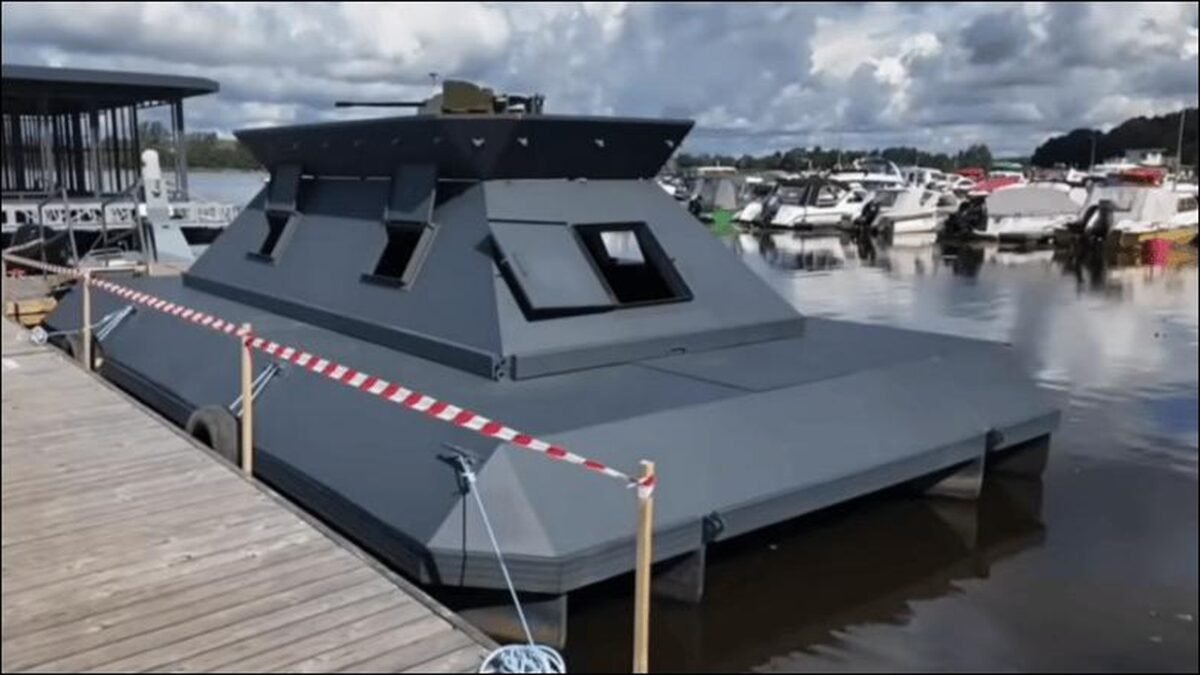
In a significant development reflecting the rapidly evolving nature of modern naval warfare, Russia has deployed a novel defensive system – a floating pillbox – explicitly designed to counter the increasingly potent threat posed by Ukrainian unmanned surface and aerial drones. This innovative platform, dubbed the PLOT-40 (and sometimes PLOT-47), represents a direct response to Ukraine’s successful and disruptive drone operations against Russian naval assets and critical port infrastructure in the Black Sea. The conflict has become a crucible for technological innovation, forcing both sides to rapidly develop and deploy new offensive and defensive capabilities, particularly in the maritime domain, making maritime security a paramount concern.
The deployment of this unique Russian floating pillbox underscores a global shift in military strategy, where low-cost, high-impact autonomous systems are challenging traditional naval power. Ukraine, despite facing significant resource disparities, has leveraged ingenuity to develop sophisticated naval drones capable of inflicting substantial damage, disrupting naval operations, and impacting vital shipping lanes. These Ukraine drone attacks have highlighted vulnerabilities in existing port defense mechanisms, necessitating agile and adaptive countermeasures. The international maritime community is closely observing these developments, recognizing that lessons learned from this conflict will inevitably influence future naval doctrines and global anti-drone systems deployment strategies.
The constant exchange between offensive capabilities and defensive measures characterizes this technological arms race. While Russia may have initially lagged in adapting to the scale of Ukraine’s drone innovation, the introduction of the PLOT-40 demonstrates a concerted effort to close that gap. This is not merely a localized conflict but a real-time laboratory for future naval drone warfare, providing invaluable insights into what nations can expect in coming decades regarding sea drone threats and the imperative for robust maritime defense technology.
The Drone Threat: Redefining Naval Warfare
The invasion of Ukraine has fundamentally reshaped perceptions of naval warfare, primarily through the ascendancy of unmanned aerial vehicles (UAVs) and, crucially, unmanned surface vessels (USVs). Ukraine’s ingenuity in developing and deploying these autonomous systems has proven incredibly effective, challenging Russia’s traditional naval dominance in the Black Sea. These agile, often low-cost drones have targeted Russian warships, logistical support vessels, and even commercial ships associated with Russia’s ‘dark fleet,’ demonstrating an unparalleled capability to project power and sow disruption without risking human lives.
The strategic importance of port defense has been thrown into sharp relief by these attacks. Russian ports, vital for military logistics and economic sustainment, have become prime targets, with high-profile incidents like the numerous Ukraine drone attacks on Novorossiysk on August 11 and 12 serving as stark reminders of their vulnerability. Such attacks not only inflict material damage but also create significant psychological and economic pressure. Protecting these critical maritime gateways from evolving sea drone threats is now a top priority, driving the need for novel solutions like the Russian floating pillbox.
Naval analysts, including prominent figures like HI Sutton, have been at the forefront of tracking these developments, providing critical insights into the real-time evolution of naval drone warfare. Sutton’s observations have frequently highlighted the speed with which new offensive capabilities emerge and the urgent need for commensurate defensive measures. This ongoing technological duel underscores the dynamic nature of modern conflict, where yesterday’s cutting-edge defense can quickly become today’s obsolescence, demanding constant innovation in anti-drone systems and broader maritime defense technology.
PLOT-40: A Closer Look at Russia’s Anti-Drone Platform
The PLOT-40, described by naval experts as a floating sentry box rather than a conventional boat, embodies Russia’s practical approach to countering the immediate threat. Its design is straightforward yet functional: a 4.5m x 2.5m rectangular structure resting on four cylindrical floats. The name ‘PLOT’ (????) itself is Russian for ‘raft,’ accurately reflecting its pontoon-like nature. This minimalist design suggests a focus on stability, ease of deployment, and cost-effectiveness for widespread use in safeguarding strategic maritime zones.
While specific details on its internal systems remain classified, the purpose of this Russian floating pillbox is unequivocally defensive. It is designed to be stationed at sea, strategically positioned to protect the approaches to Russian ports, anchorages, and critical infrastructure from incoming threats. It is highly probable that the PLOT-40 is equipped with a suite of sensors, including radar and electro-optical/infrared systems, to detect small, fast-moving drone targets. Its defensive capabilities likely include various countermeasures, ranging from electronic warfare systems designed to jam drone communications and navigation to kinetic defenses such as heavy machine guns or small caliber autocannons for direct interception. The sloping walls could also indicate a design consideration for deflecting incoming projectiles or minimizing radar cross-section, further enhancing its survivability against sophisticated threats.
This innovative platform represents a significant component of Russia’s evolving maritime security strategy. Its role is not to patrol vast expanses but to provide concentrated, localized port defense against the persistent threat of Ukraine drone attacks. The deployment of such a dedicated anti-drone system highlights the severity of the threat perceived by Russia and its willingness to invest in specialized, purpose-built solutions to safeguard its vital maritime interests. The simplicity and apparent modularity of the PLOT-40 could allow for rapid production and deployment across multiple vulnerable locations, offering a scalable response to sea drone threats.
The Evolving Arms Race: Innovation in Maritime Defense
The conflict in Ukraine has unveiled an accelerated arms race in the maritime domain, particularly concerning autonomous systems. Ukraine’s rapid development of increasingly sophisticated USVs and UAVs has forced Russia to innovate quickly in defense. This dynamic interplay between offensive development and defensive counter-innovation is a defining characteristic of modern warfare, and the Russian floating pillbox is a prime example of this reactive evolution in maritime defense technology.
Analysts like HI Sutton have consistently emphasized the unprecedented speed of these developments. What might have taken years in traditional military procurement cycles is now being accomplished in months, driven by the immediate demands of combat. This pace of innovation directly impacts future naval defense strategies globally. Nations worldwide are now scrutinizing the effectiveness of various anti-drone systems and reassessing their own port defense vulnerabilities in light of the sea drone threats demonstrated in the Black Sea. The lessons are clear: adapt or face significant risks to maritime security.
Russia’s response, through systems like the PLOT-40, suggests a strategic pivot towards layered and dedicated defenses against unmanned threats. This approach is not solely about advanced technology but also about practical, deployable solutions that can address specific, high-frequency threats. The broader implications for global navies are profound, necessitating a continuous re-evaluation of defense postures, investment in counter-drone technologies, and perhaps a paradigm shift in how naval assets and critical infrastructure are protected against increasingly autonomous and intelligent threats. This ongoing contest of innovation is shaping the future of naval power and the nature of conflict at sea.
Future Implications for Maritime Security
The deployment of specialized defenses like the Russian floating pillbox carries significant implications for future global maritime security and naval drone warfare. The effectiveness of these compact, dedicated platforms in deterring or neutralizing Ukraine drone attacks will undoubtedly be closely studied by naval strategists worldwide. This trend suggests a future where critical maritime infrastructure, including ports, offshore platforms, and vital shipping lanes, will require far more robust and dynamic anti-drone systems than previously envisioned.
The widespread adoption of similar maritime defense technology could lead to a proliferation of floating defensive structures, potentially altering the visual and operational landscape of strategic waterways. Nations will need to invest heavily in integrated sensor networks, electronic warfare capabilities, and kinetic interceptors, moving towards a multi-layered defense-in-depth strategy against autonomous threats. The experience from the Black Sea underscores the necessity for adaptable and rapidly deployable solutions that can respond to the unpredictable nature of drone attacks, which can originate from various vectors – subsurface, surface, or air.
Ultimately, the ongoing conflict serves as a stark warning and a valuable case study for all maritime nations. The era of low-cost, high-impact sea drone threats is here, forever changing the calculus of naval power and port defense. The PLOT-40 is not just a localized Russian response; it is a precursor to a global challenge, demanding innovative thinking and investment in advanced naval defense strategies to ensure the continued safety and security of maritime commerce and national interests against an evolving spectrum of unmanned threats.