Ambrey Manages Wrecked Tanker Salvage off Oman | Mariner News
Ambrey, a leading maritime response firm, has taken on the crucial Ambrey tanker salvage Oman for the extensively damaged “Caroline Bezengi.” This Suezmax tanker, grounded off the Hallaniyat Islands, presents a significant environmental and navigational challenge. Originating from an explosion near Yemen, its drift and grounding necessitate a complex international effort to avert ecological disaster, underscoring the immediate need for expert intervention.
The Caroline Bezengi: A Grounding Incident’s Unfolding Crisis
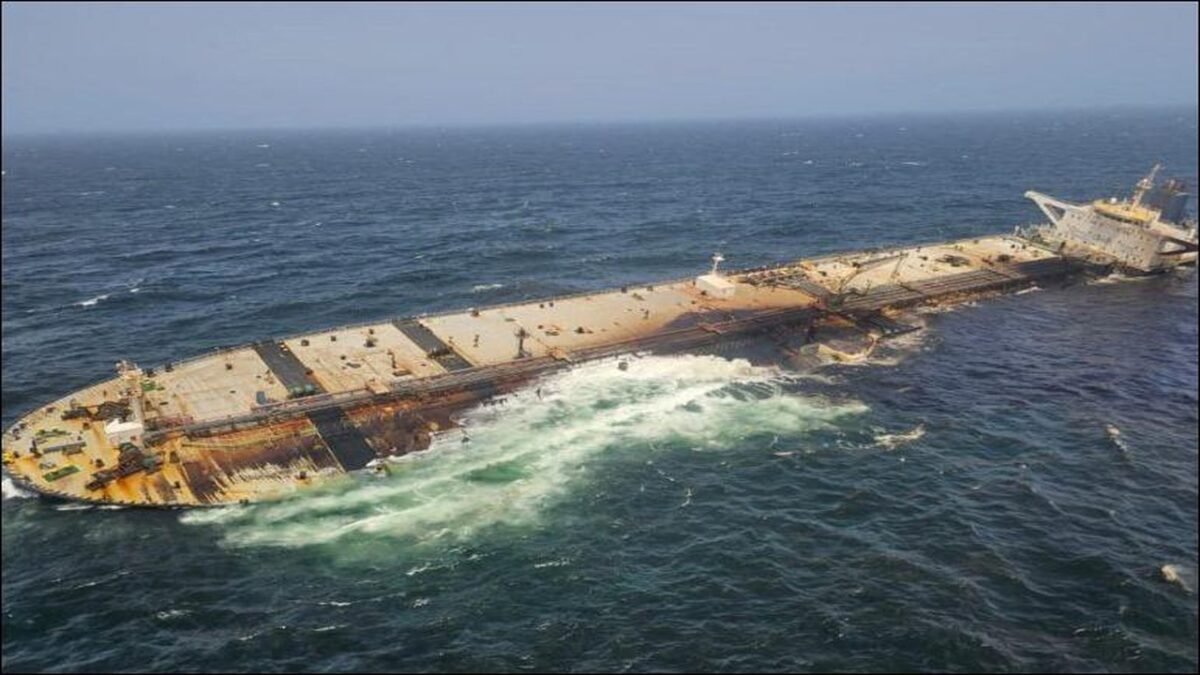
The perilous journey of the Caroline Bezengi began June 8 with an explosion that crippled the shadow fleet Suezmax tanker off Yemen’s coast. Disabled and without effective towing, the vessel drifted northeast for weeks, pushed by monsoon winds. On June 30, it ran aground on Al Qibliyah Island, part of Oman’s Hallaniyat Islands, transforming a drifting hazard into a grounded wreck and escalating disaster potential.
The aftermath was complicated by absent responsible parties. The anonymous Chinese owner and a potentially fraudulent insurer failed to fund the estimated nine-figure cost for a full maritime response. This dereliction placed immense burden on international specialists. Satellite imagery quickly revealed a long, sinuous oil slick from the wrecked tanker Oman, drifting along the coastline. This visible threat underscored the urgent need to protect Oman’s delicate marine ecosystems and coastal communities from environmental catastrophe. The lack of clear ownership and financial responsibility defines this complex maritime incident.
Ambrey’s Strategic Maritime Response in Oman
Amidst the crisis and the vacuum left by absentee owners, Ambrey was engaged by undisclosed parties to lead the challenging salvage of the Caroline Bezengi. This highlights Ambrey’s specialized capabilities and rapid deployment expertise. A cornerstone of the operation is Ambrey’s proactive collaboration with the Sultanate of Oman. Recognizing national interest and ecological risks, Omani authorities are instrumental in facilitating the salvage, providing logistical support and local knowledge.
Ambrey has engaged a team of highly experienced subcontracted salvors, experts at the forefront of the effort with decades of experience in complex maritime casualties. Specialists from Ambrey and partners have conducted thorough on-board assessments of the vessel’s structural integrity, cargo status, and potential hazards. Oman’s air force provides pivotal logistical support, airlifting personnel and equipment to the remote Hallaniyat Islands for timely access. This coordinated maritime response Oman demonstrates a robust effort to address the crisis and prevent further environmental degradation.
Navigating the Technical Challenges of a Grounded Suezmax
The salvage operation for the Caroline Bezengi is fraught with formidable technical challenges, primarily due to the specifics of the Suezmax grounding. The tanker is firmly aground on rocks forward, causing immense structural stress. Numerous rocky outcrops off the port side further complicate matters; any vessel shift could cause critical impacts and potential breaches. Exposed rocks 500 yards off the stern add to intricate navigational and operational difficulties, demanding meticulous planning for any refloating.
Crucially, there has been no catastrophic structural failure or major breach in the ship’s cargo tanks. While an ongoing oil slick exists, likely from residual fuel, a larger release from the main cargo has been averted. This delicate balance is central to the oil spill prevention strategy. The sheer volume of hydrocarbons a Suezmax carries means any cargo system failure would lead to ecological disaster. Salvors focus on stabilizing the vessel, potentially lightening its load, and preparing it for safe removal, all while monitoring for fatigue. The objective is to move the ship safely, preserving tank integrity and protecting the surrounding marine environment.
Protecting Oman’s Pristine Coastline and Marine Ecosystems
The Caroline Bezengi grounding represents a profound environmental threat, placing the preservation of Oman’s pristine coastline and delicate marine ecosystems at the forefront of the salvage. The Hallaniyat Islands boast rich biodiversity, vital coral reefs, and critical habitats for diverse marine life. A significant oil spill would devastate these assets, impacting local fishing communities and tourism, crucial to the regional economy.
The existing oil slick, visible in satellite imagery, underscores the ongoing danger. Ambrey and partners actively implement strategies to contain and recover this oil, deploying specialized equipment and personnel to minimize its spread. This proactive environmental protection Oman approach aims to limit the ecological footprint. The successful maritime disaster recovery of the Caroline Bezengi is not just about hazard removal; it is about safeguarding Oman’s natural heritage. Collaborative efforts focus on securing the vessel, long-term remediation, and monitoring recovery. This commitment highlights the gravity and dedication to mitigating consequences for this unique marine environment.
Broader Implications: Shadow Fleets and Maritime Accountability
The Caroline Bezengi incident highlights challenges posed by “shadow fleets” in global shipping. These vessels, with opaque ownership and questionable insurance, complicate accountability and environmental protection. The anonymous owner and potentially fraudulent insurer’s failure to fund the response underscores a systemic vulnerability where entities exploit loopholes to avoid obligations. Such practices endanger marine environments and undermine responsible shipping.
The Caroline Bezengi salvage transcends a technical operation; it’s a case study in maritime law and environmental liability. It emphasizes the urgent need for enhanced international cooperation and stricter enforcement to ensure all vessels meet safety and environmental standards. Organizations like Ambrey manage crises that responsible parties should handle, highlighting deficiencies in oversight. This incident prompts critical questions about tracking and regulating vessels that obscure identities. A positive outcome is vital for Oman and for setting a precedent that even shadow fleet ships cannot escape responsibility when disaster strikes.
Conclusion
The ongoing Ambrey tanker salvage Oman operation for the Caroline Bezengi underscores the critical importance of expert maritime response. Faced with a disabled Suezmax, grounded in a sensitive ecological zone and abandoned by its owners, Ambrey, with the Sultanate of Oman, undertakes a monumental task. This complex effort, from initial assessments to meticulous wrecked tanker recovery planning, aims to prevent a catastrophic environmental disaster. Successful mitigation will be a significant achievement for environmental protection Oman. This incident also highlights the broader need for greater accountability within the maritime industry, particularly concerning opaque “shadow fleets.” These collective efforts are crucial for regional stability and for setting a precedent for responsible maritime conduct globally. It is a story of resilience, collaboration, and unwavering commitment to preserving our marine environments.