Russian Frigate Warning Shots in English Channel | Mariner News
A recent Russian frigate incident involving warning shots fired at a civilian yacht in the busy English Channel has sent ripples through the international maritime community, highlighting escalating geopolitical tensions and the complexities of naval encounters in vital shipping lanes. This alarming event, which unfolded approximately 20 nautical miles south of the Isle of Wight, outside UK territorial waters, adds another layer of concern for global maritime security and safe passage. The encounter comes on the heels of the detention of a Russian ‘shadow fleet’ tanker in the same vicinity, underscoring the interconnected nature of these maritime developments and their significant implications for the shipping industry worldwide. While no injuries or damage were reported from the frigate’s actions, the psychological impact and the potential for miscalculation in such a sensitive area are considerable, prompting calls for heightened vigilance and adherence to international protocols.
Escalating Tensions in the English Channel
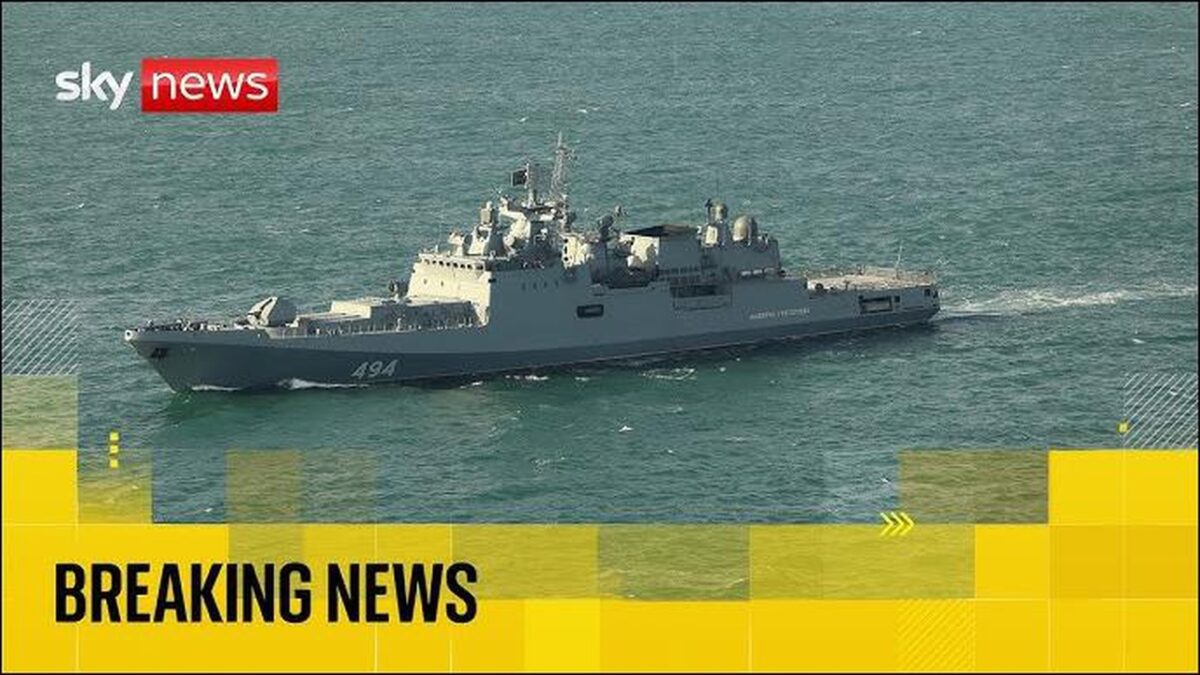
The details of the English Channel incident are stark: the Russian frigate Admiral Grigorovich reportedly discharged warning shots after sailing dangerously close to a yacht on a Tuesday morning. This naval maneuver, occurring at about 11:40 AM, quickly became a point of international scrutiny. The proximity of a powerful naval vessel taking such assertive action against a civilian craft in one of the world’s busiest shipping arteries immediately raises questions about intent and the broader geopolitical climate. While the Admiral Grigorovich is a modern warship equipped with advanced weaponry, its decision to fire warning shots at a non-military vessel underscores a perceived shift in maritime conduct, moving away from standard international engagement protocols.
This particular maritime security event is not an isolated occurrence but rather appears to be linked to a broader context of heightened military presence and strategic competition in European waters. The English Channel, a narrow strait connecting the North Sea to the Atlantic Ocean, is a critical maritime choke point for global trade. Any disruption or perceived threat within this corridor has wide-ranging consequences for commercial shipping, cargo transit, and naval operations alike. The incident serves as a potent reminder of the fragility of peace and order in international waters, especially when state actors engage in confrontational tactics.
Observers and analysts are closely monitoring these developments, recognizing that even seemingly minor provocations can rapidly escalate in an environment charged with geopolitical rivalry. The presence of powerful naval assets, such as the Admiral Grigorovich, operating with such assertiveness near civilian vessels necessitates careful diplomatic responses and robust security frameworks to prevent future incidents. The international community is keenly aware that the rules of engagement in international waters, while established, are constantly tested by evolving global dynamics and the actions of individual nations, particularly those involved in ongoing conflicts or disputes.
The Shadow Fleet Tanker Incident
Compounding the Russian frigate event was the earlier detention of a 106,900 DWT tanker, the Smyrtos, just days prior in the same strategic waterway. British armed forces boarded the vessel on suspicion of false flagging, a practice often associated with the ‘shadow fleet’—a clandestine network of ships operating to circumvent international sanctions, particularly those imposed on Russian oil cargo. The Smyrtos was reportedly transporting Russian oil to India, a common route for sanctioned crude as nations seek alternative buyers and shipping methods outside traditional regulatory oversight.
‘Shadow fleet’ tankers pose significant risks to global maritime security and environmental safety. These vessels often operate with deliberately obscured ownership structures, minimal insurance, and lax maintenance standards, making them difficult to track and regulate. Their involvement in the illicit trade of sanctioned goods undermines international efforts to enforce economic penalties and creates a perilous operating environment. The detention of the Smyrtos highlights the persistent challenge faced by maritime authorities in identifying and interdicting such vessels, particularly in the complex and crowded waters of the English Channel.
The practice of false flagging, where a vessel deliberately misrepresents its nationality or registration, is a direct challenge to international maritime law and transparency. It allows operators to evade regulatory scrutiny, sanctions, and safety standards, posing risks not only to the integrity of global shipping but also to the marine environment. The British intervention against the Smyrtos underscores a proactive stance by maritime nations to combat these illicit activities, signaling a commitment to upholding international law and sanctions regimes, even in challenging circumstances involving major global powers.
Geopolitical Ramifications and Maritime Security
These recent English Channel incidents are not merely isolated maritime skirmishes; they are symptomatic of broader geopolitical tensions simmering beneath the surface of international relations. The ongoing conflict in Ukraine has significantly heightened the stakes in maritime domains, with Russia’s naval forces demonstrating increased activity and assertiveness in key strategic areas. The English Channel, given its proximity to the UK and its importance as a NATO transit route, becomes a highly sensitive zone for such demonstrations of power, carrying the risk of unintended escalation.
Such encounters between military and civilian vessels in international waters demand a delicate balance of diplomacy and deterrence. The firing of warning shots by a naval warship, even without direct impact, is a serious act that can be interpreted as a coercive measure or an aggressive signal. It necessitates a clear understanding of international laws of the sea, including principles of freedom of navigation and the prohibition against actions that threaten the safety of navigation or the marine environment. When these principles are challenged, the entire framework of global maritime security is tested.
Moreover, these events feed into a narrative of increasing militarization of international waters, where naval forces operate with a heightened sense of vigilance and, at times, confrontation. The presence of the Admiral Grigorovich and its actions could be seen as a calculated move to assert presence and project power, or as a response to perceived threats in an area where its naval activities are closely monitored. Regardless of the immediate motivation, the outcome is a climate of unease for all maritime operators, civilian and military alike, emphasizing the need for robust communication channels and de-escalation protocols to prevent incidents from spiraling out of control.
Impact on Shipping and Compliance
The ripple effects of these English Channel incidents extend significantly into the commercial shipping industry, particularly concerning compliance and risk management. The detention of the Smyrtos and the subsequent naval encounter involving the Russian frigate force shipping companies, insurers, and charterers to re-evaluate their operational risks in politically sensitive regions. The growing scrutiny on ‘shadow fleets’ and vessels engaged in sanctions evasion means that due diligence processes must become even more rigorous and comprehensive.
Experts are warning that new EU sanctions packages, specifically targeting bunker supply to the shadow fleet, will pose substantial challenges for bunker compliance teams. This expansion of sanctions, designed to cut off financial and logistical support for illicit shipping operations, introduces complex layers of regulatory requirements that shipping companies must navigate. The need for precise and transparent tracking of vessel ownership, cargo origin, destination, and financial transactions has never been more critical. Failure to comply can result in severe penalties, including hefty fines, reputational damage, and loss of operating licenses.
Furthermore, the heightened risk of geopolitical incidents, such as naval confrontations or interdictions, directly impacts insurance premiums, crew safety protocols, and route planning. Vessels operating in areas like the English Channel, where state actors are increasingly assertive, must adopt enhanced security measures and contingency plans. The shipping industry thrives on predictability and stability, and these recent events introduce an element of uncertainty that demands proactive risk mitigation strategies from all stakeholders involved in global maritime trade, from port authorities to vessel owners and cargo suppliers.
Navigating International Waters and Legalities
Understanding the legal framework governing actions in international waters is crucial to interpreting the recent English Channel incident. While coastal states have sovereign rights over their territorial waters (typically 12 nautical miles from the baseline), beyond this limit lies the high seas, where the principle of freedom of navigation applies to all nations. This freedom, however, is not absolute; it comes with responsibilities, including exercising due regard for the interests of other states and the safety of navigation. The firing of warning shots by a naval vessel in international waters, particularly near a civilian craft, brings these principles into sharp focus.
Under international law, specific conditions must be met for a warship to take such actions, usually involving a direct threat or a clear breach of international law, such as piracy or smuggling. While the Russian frigate was outside UK territorial waters, its actions against a yacht raise questions about the justification and proportionality of force. Incidents of this nature typically warrant investigations and formal diplomatic protests, as they have the potential to set dangerous precedents for freedom of navigation and the safety of non-military vessels. The absence of reported damage or injury, while fortunate, does not negate the gravity of the act itself.
The broader context of the detention of the Smyrtos tanker, suspected of false flagging and sanctions evasion, adds another layer to the legal complexities. While a coastal state has the right to board a vessel in its territorial waters or contiguous zone under certain circumstances, actions on the high seas are generally restricted to the flag state or in cases of universal jurisdiction crimes. The intertwining of these incidents—a suspected sanctions-busting tanker and a warship’s aggressive posture—creates a challenging environment for enforcing international law and maintaining order at sea, necessitating a robust and coordinated international response to safeguard the principles of maritime governance.
Conclusion: A New Era of Maritime Vigilance
The Russian frigate firing warning shots at a yacht in the English Channel, coupled with the prior detention of a ‘shadow fleet’ tanker, collectively signal a new era of heightened scrutiny and potential confrontation in global maritime domains. These maritime security developments underscore the urgent need for enhanced vigilance, robust compliance mechanisms, and clear diplomatic channels to de-escalate tensions. The shipping industry, in particular, must adapt to an increasingly complex geopolitical landscape, characterized by the pervasive threat of sanctions evasion and the unpredictable actions of state actors in critical international waters.
As global supply chains continue to rely heavily on secure and predictable maritime routes, the stability of passages like the English Channel is paramount. The incidents serve as a powerful reminder that while the seas may seem vast, they are increasingly contested spaces where geopolitical rivalries play out with tangible consequences for trade, security, and international law. Moving forward, a concerted international effort will be essential to uphold the principles of freedom of navigation, enforce sanctions effectively, and ensure the safety and security of all vessels navigating the world’s oceans, thereby protecting the integrity of global maritime commerce.