MPA Confirms Boxship Damage After Hormuz Attack | Mariner News
The Maritime and Port Authority of Singapore (MPA) has confirmed that a container ship sustained minor damage following a recent Strait of Hormuz attack. This incident, involving the Singapore-registered vessel Ever Lovely, highlights persistent maritime security challenges in one of the world’s most critical shipping lanes. While the damage was minimal and all crew members are safe, the event underscores the ongoing risks faced by commercial shipping in a region characterized by heightened geopolitical tensions. This development has once again brought into sharp focus the imperative for robust `maritime security` measures and adherence to `international law` to safeguard `global shipping` and protect `seafarers`. The confirmation from the MPA provides crucial clarity on the circumstances surrounding this `boxship incident`, prompting discussions across the maritime industry about safety protocols and regional stability.
The Incident: Details of the Boxship Attack
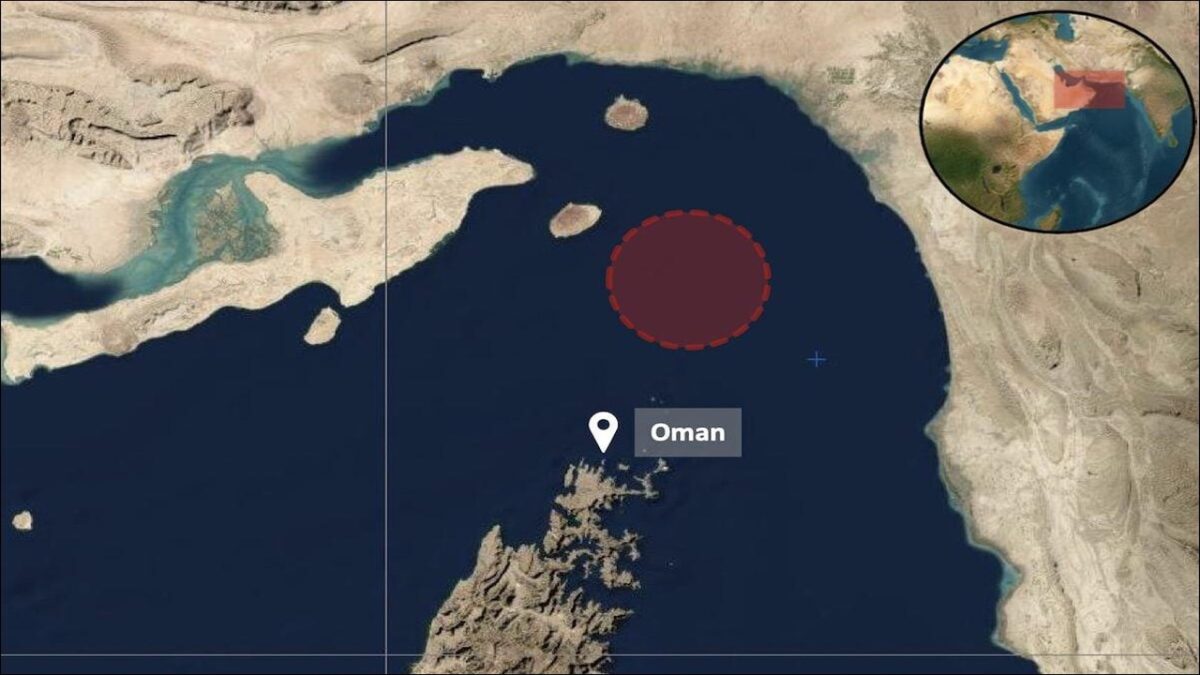
According to the MPA, the container ship Ever Lovely was struck by an unknown projectile while departing the Strait of Hormuz. The incident took place at approximately 10:00 pm Singapore time on June 25, with the vessel suffering minor damage primarily to its bridge area. Fortunately, the vessel, which was described as being about 7.5 nautical miles south-east of Dahit at the time of the occurrence, was able to continue its scheduled voyage after the attack, demonstrating the resilience of modern shipping vessels even under duress. This rapid recovery and continuation of transit are vital for maintaining the fluidity of `global trade` routes, particularly through such a critical chokepoint.
All 21 crew members onboard the Ever Lovely were reported safe, with no Singaporeans among them. The welfare of `seafarers` remains a paramount concern in any `shipping incident`, and the swift confirmation of their safety provided significant relief to the maritime community. The MPA has maintained close contact with the vessel’s management company, affirming its commitment to provide any necessary assistance. This proactive engagement is a standard procedure that helps ensure timely support and accurate information dissemination in the wake of `maritime risks` and potential threats, contributing to overall `shipping safety` and operational continuity.
Escalating Maritime Security Concerns in the Strait of Hormuz
The Strait of Hormuz is a narrow passage connecting the Persian Gulf with the Arabian Sea and the Gulf of Oman, acting as a vital chokepoint for global oil supplies and `container shipping`. Incidents like the recent `Strait of Hormuz attack` on the Ever Lovely amplify long-standing `maritime security concerns` in this volatile region. The area has witnessed a series of attacks on commercial vessels in recent years, often linked to ongoing `geopolitical tensions` between regional and international powers. These events consistently raise the alert level for all vessels transiting the strait, leading to increased vigilance and enhanced `vessel security protocols`.
Navigating these waters presents inherent `maritime risks` that shipping companies must continuously assess and mitigate. The strategic importance of the Strait cannot be overstated, as a significant portion of the world’s seaborne oil passes through it daily, alongside immense volumes of `containerized cargo`. Any disruption, even minor, can send ripples across `global supply chains` and energy markets. Therefore, ensuring `freedom of navigation` and `shipping safety` in this corridor is a top priority for international maritime organizations and naval forces operating in the area.
International Law and Condemnation of Maritime Aggression
In response to the incident, the MPA issued a strong condemnation, labeling the attack as “unprovoked, unjustifiable, and a breach of `international law`.” This unequivocal stance reinforces the global commitment to upholding the rules-based order governing the seas. The authority specifically cited the United Nations Convention on the Law of the Sea (UNCLOS), a foundational treaty that establishes a comprehensive legal framework for all ocean activities, emphasizing that all actions affecting `international shipping` must fully comply with its provisions and not endanger the safety of seafarers and ships at sea.
Attacks on commercial vessels are serious violations that threaten `maritime peace` and `stability`. Such acts undermine the principles of `freedom of navigation` and the safe passage of legitimate trade, which are critical for the economic well-being of nations worldwide. The international community, through various forums and organizations, consistently calls for restraint and adherence to `maritime regulations` to prevent further escalation of `regional tensions`. The condemnation by the MPA serves as a reminder of the collective responsibility to protect vital `shipping lanes` and ensure `shipping safety` for all `seafarers`.
Impact on Container Shipping and Global Supply Chains
The `Strait of Hormuz attack` on the Ever Lovely, a `container ship`, while minor in damage, has significant implications for the broader `container shipping` sector and `global supply chains`. Such incidents can lead to increased `insurance premiums` for vessels transiting high-risk areas, translating into higher operating costs for shipping lines. Furthermore, the perceived threat can influence routing decisions, with some companies opting for longer, more expensive alternative routes to avoid potential `maritime risks`, thereby affecting `transit times` and delivery schedules.
For `global supply chains`, even isolated `shipping incidents` in key chokepoints can create uncertainty and anxiety. Businesses rely on predictable and secure `shipping routes` to manage their inventory and logistics effectively. Disruptions, however small, can cascade through the system, leading to delays, shortages, and increased consumer prices. The resilience of `global supply chains` is continuously tested by `geopolitical dynamics` and `maritime security` threats, making continuous monitoring and adaptive strategies essential for international trade. The incident on the Ever Lovely serves as a poignant reminder that the smooth flow of goods is intrinsically linked to `maritime stability`.
Navigating Future Risks: Measures for Maritime Safety
In light of ongoing `maritime risks`, shipping companies and international bodies are constantly developing and implementing strategies to enhance `maritime safety` and security. These measures range from upgrading `vessel security protocols` and onboard defenses to improving intelligence sharing among naval forces and commercial operators. Real-time threat assessments and collaborative efforts are crucial for providing timely warnings and operational guidance to vessels traversing sensitive areas like the Strait of Hormuz. The goal is to minimize exposure to threats while ensuring the efficient movement of `global shipping`.
Technological advancements also play a significant role, with improved tracking systems, surveillance capabilities, and communication networks enhancing situational awareness. The presence of international naval coalitions and `maritime task forces` in the region provides a deterrent and response capability, albeit within the complexities of international waters. However, the ultimate responsibility for `shipping safety` often falls on individual vessel operators to comply with the latest advisories and employ best practices. Continuous training for `seafarers` in `maritime security` procedures is equally vital to ensure they are prepared for potential threats.
The Broader Geopolitical Landscape and Regional Stability
Every `shipping incident` in the Strait of Hormuz is inextricably linked to the broader `geopolitical dynamics` of the Middle East. The region is a nexus of international interests, characterized by complex alliances and rivalries, which often manifest in `maritime aggressions`. Attacks on commercial vessels are not isolated events but often reflect underlying tensions and strategic maneuvering by various state and non-state actors. Understanding this intricate political landscape is key to comprehending the challenges to `maritime peace` and `shipping safety`.
Maintaining `regional stability` is therefore paramount, not just for the Middle East, but for the entire global economy that relies heavily on its energy and trade routes. Diplomatic efforts, international dialogues, and adherence to `international law` are essential tools in de-escalating tensions and preventing conflicts from spilling over into vital `shipping lanes`. The international community must continue to advocate for peaceful resolutions and condemn actions that jeopardize `freedom of navigation` and the safety of `seafarers`. The `Strait of Hormuz attack` on the Ever Lovely is a stark reminder of the fragile balance that exists in maintaining `global maritime security`.
Conclusion: Vigilance in a Volatile Maritime Environment
The MPA’s confirmation of minor damage to the container ship Ever Lovely after a `Strait of Hormuz attack` serves as a critical reminder of the persistent threats to `maritime security` in key `global shipping lanes`. While the immediate impact on the vessel and its crew was fortunately limited, the incident underscores the broader implications for `international shipping`, `global supply chains`, and regional stability. The unwavering commitment to `international law` and collective efforts to enhance `shipping safety` remain paramount in safeguarding `seafarers` and the free flow of `global trade`.
As `geopolitical tensions` continue to simmer, vigilance and proactive measures are indispensable for all stakeholders in the maritime industry. The incident on the Ever Lovely highlights the continuous need for robust `maritime security protocols`, effective intelligence sharing, and concerted diplomatic efforts to ensure `maritime peace` and the unimpeded operation of `container shipping` and other vital sectors. The global community must remain united in condemning `maritime aggressions` and upholding the principles of `freedom of navigation` to protect these crucial arteries of commerce.