EU Project Accelerates Wind Propulsion for Green Shipping | Mariner News
Navigating Towards a Greener Future: The AWESOME Project Pioneers Wind Propulsion in Shipping
The global maritime industry stands at a critical juncture, facing immense pressure to decarbonize and adopt more sustainable practices. As shipping accounts for a significant portion of global greenhouse gas emissions, the urgency for innovative solutions has never been greater. Amidst this backdrop, a groundbreaking new EU project, named AWESOME — Advanced Wind Energy System Optimisation & Monitoring for Efficiency — is charting a course towards a dramatically greener future. This Horizon Europe initiative is specifically designed to accelerate the adoption of wind propulsion in shipping, promising substantial emission reduction and considerable cost reduction for shipowners and operators. By delivering validated tools, standardized methodologies, and crucial real-world performance data, AWESOME aims to dismantle the uncertainties surrounding wind-assisted propulsion systems (WAPS), paving the way for widespread commercial deployment and making maritime sustainability a tangible reality.
Led by industry giant Kongsberg Maritime and bolstered by a powerful consortium of 14 European partners, the AWESOME project is not merely a research endeavor; it is a catalyst for transformative change. It brings together a diverse array of stakeholders, including leading industry players, academic institutions, and research clusters, all united by a common goal: to support the transition to low- and zero-emission shipping. This collaborative spirit is essential for tackling the multifaceted technical, operational, and regulatory barriers that have, until now, limited the broader deployment of wind propulsion technology. As Kjerstin Kleyne Braaten, SVP Emerging Solutions at Kongsberg Maritime, aptly puts it, “Wind-assisted propulsion is one of the most attractive pathways to compliant, cost-effective shipping. We believe AWESOME represents a major step forward in scaling this technology.” This sentiment underscores the profound impact AWESOME is poised to have on the future of green shipping.
The Urgent Imperative for Decarbonizing Maritime Transport
The call for decarbonization within the maritime sector resonates globally, driven by escalating environmental concerns and stringent international regulations. International bodies like the IMO have set ambitious targets for reducing shipping’s carbon footprint, while regional frameworks such as FuelEU Maritime are introducing robust measures to encourage the adoption of cleaner fuels and technologies. Traditionally reliant on heavy fossil fuels, the shipping industry is a major contributor to greenhouse gas emissions, including carbon dioxide (CO2), sulfur oxides (SOx), and nitrogen oxides (NOx). Beyond environmental damage, this reliance also exposes operators to volatile fuel prices and increasing carbon taxation, making the search for viable alternative sustainable maritime solutions both an ecological necessity and an economic imperative.
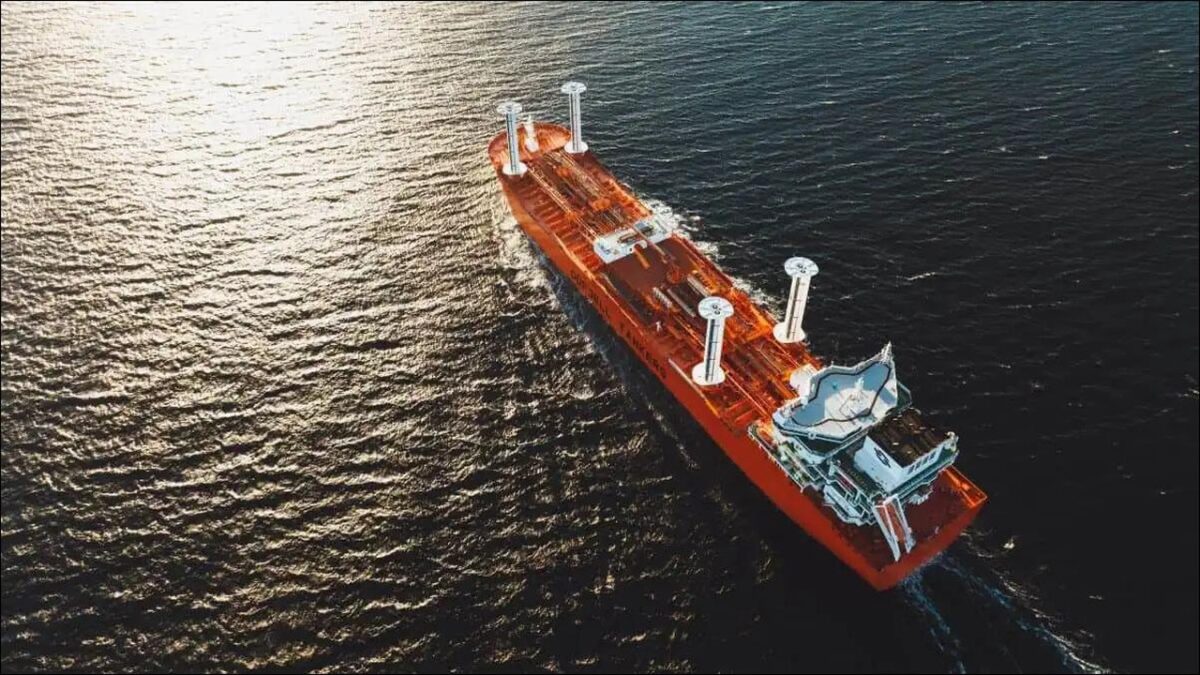
Against this backdrop, wind-assisted propulsion systems (WAPS) are re-emerging as a highly promising solution. While the concept of harnessing wind power for ships is as old as seafaring itself, modern wind propulsion systems leverage advanced aerodynamics, smart materials, and sophisticated automation to deliver auxiliary power that significantly reduces the load on conventional engines. These systems, which include rotor sails, wingsails, and kites, offer a compelling pathway to substantial emission reduction without requiring a complete overhaul of existing vessel infrastructure or entirely new fuel supply chains. The challenge, however, has been the lack of standardized performance data and proven methodologies to instill confidence in shipowners and investors. This is precisely where the AWESOME project steps in, aiming to bridge the gap between innovative technology and widespread commercial adoption by providing the verifiable evidence needed for successful deployment in the competitive global market for sustainable shipping solutions.
AWESOME’s Holistic Approach to Wind Propulsion Technology
The core of the AWESOME project’s innovation lies in its comprehensive and multi-faceted approach to making wind propulsion in shipping a viable and scalable solution. The project focuses on delivering three crucial elements: validated tools, standardized methodologies, and real-world performance data. These components are meticulously designed to reduce the inherent uncertainty associated with new technologies and to provide concrete evidence of the benefits of wind-assisted propulsion systems (WAPS).
Firstly, AWESOME is developing and validating advanced tools for performance prediction and optimization. These tools leverage sophisticated computational fluid dynamics (CFD) models, simulation software, and machine learning algorithms to accurately forecast the fuel savings and emission reductions achievable by WAPS under various operational conditions and ship types. By offering robust and reliable predictive capabilities, these tools empower shipowners to make informed investment decisions, understanding the tangible return on investment and environmental benefits before committing to retrofits or new builds. This focus on verifiable data is paramount for reducing perceived risks in the adoption of maritime technology.
Secondly, the project is establishing standardized methodologies for performance measurement and verification. This involves creating consistent protocols for how WAPS performance is monitored, analyzed, and reported across the industry. The absence of such standards has historically been a significant hurdle, making it difficult to compare different systems or to confidently integrate wind propulsion into existing fleet management strategies. AWESOME’s standardized approach ensures transparency and comparability, fostering trust among stakeholders and simplifying regulatory compliance. These methodologies are crucial for generating credible, real-world performance data that can be used to benchmark effectiveness and facilitate broad market acceptance of wind propulsion technology.
Finally, and perhaps most critically, AWESOME is focused on generating real-world performance data. This involves deploying and monitoring WAPS on operational vessels, collecting extensive data on fuel consumption, power generation, and environmental impact under actual sea conditions. This empirical evidence is invaluable, as it moves beyond theoretical models and simulations, providing concrete proof of the systems’ efficiency and reliability. The integration of transparent performance verification with holistic control and automation systems ensures that the data is not only accurate but also representative of optimized operational performance. This comprehensive data collection and analysis will directly address industry skepticism, reduce investment risk, and accelerate the adoption of these cost-effective emission reduction solutions in the global shipping fleet, ultimately strengthening the case for green shipping across diverse vessel segments.
Addressing Key Barriers for Wind-Assisted Propulsion Adoption
The path to widespread adoption of wind propulsion in shipping is fraught with various challenges, which the AWESOME project is systematically designed to overcome. These barriers can be categorized into technical, operational, and regulatory hurdles, each requiring tailored solutions and a collaborative approach.
From a technical perspective, integrating complex wind-assisted propulsion systems (WAPS) with existing vessel designs and onboard power management systems presents significant engineering challenges. Ship stability, structural integrity, space constraints, and dynamic control in varying weather conditions are all critical considerations. AWESOME addresses these by providing validated tools for optimal system design and integration, ensuring that WAPS can be seamlessly incorporated into diverse vessel types without compromising safety or operational efficiency. The project’s emphasis on advanced automation and control systems further ensures that wind power is harnessed effectively and intuitively, integrating with existing ship systems to optimize overall vessel performance and enhance fuel efficiency.
Operationally, concerns exist regarding crew training, route optimization, and the impact of wind propulsion on port maneuvering. Operators need assurance that WAPS will enhance, not hinder, their operations. AWESOME tackles this by developing best practices for operational procedures, including advanced weather routing strategies that maximize wind benefit while maintaining schedules. The project’s focus on collecting real-world data and developing user-friendly control interfaces will inform comprehensive training programs for crews, building confidence and expertise in managing these advanced systems. This proactive approach ensures that the transition to renewable energy at sea is smooth and practical, minimizing disruptions and maximizing the benefits for shipowners focused on cost reduction.
Regulatory barriers represent another significant hurdle. The lack of clear, internationally recognized standards for the measurement and reporting of emissions reductions from wind propulsion technology complicates compliance with emerging frameworks like FuelEU Maritime. Shipowners need certainty that their investments in WAPS will be recognized and rewarded within these regulatory schemes. AWESOME’s focus on standardized methodologies and transparent performance verification is instrumental in providing the data and frameworks necessary to inform regulators. By demonstrating verifiable emission reduction and providing robust data, the project aims to influence policy development, facilitating the creation of supportive regulatory environments that incentivize the adoption of sustainable maritime solutions and accelerate the overall decarbonization of the industry. This crucial work is pivotal for ensuring that the benefits of clean shipping are fully recognized and integrated into the global maritime governance structure.
Economic and Environmental Impact of Green Shipping
The successful deployment of wind propulsion in shipping through initiatives like AWESOME promises profound economic and environmental benefits, fundamentally reshaping the landscape of global maritime transport. Economically, the most direct advantage for shipowners is significant cost reduction through reduced fuel consumption. With fuel being one of the largest operational expenses for vessels, even a partial shift to auxiliary wind power can translate into substantial savings, enhancing profitability and competitiveness. Moreover, as carbon pricing mechanisms become more prevalent and stringent, vessels equipped with WAPS will benefit from lower carbon taxes and potentially access to premium freight rates from environmentally conscious shippers. This future-proofs investments against increasing regulatory costs, making green shipping technology a smart financial move.
Environmentally, the impact is even more compelling. By significantly reducing reliance on fossil fuels, wind-assisted propulsion systems offer a direct pathway to substantial emission reduction of greenhouse gases and air pollutants. This contributes directly to global climate change mitigation efforts and improves air quality in port regions and along shipping lanes. The project’s focus on integrating with emerging frameworks like FuelEU Maritime ensures that these reductions are verifiable and contribute to compliance goals. This commitment to maritime sustainability extends beyond immediate emissions, fostering a culture of innovation and environmental stewardship throughout the industry. The collaborative efforts of Kongsberg Maritime and the 14 European partners highlight a collective vision for a cleaner, more efficient shipping sector, paving the way for wider adoption of eco-friendly maritime transport solutions and securing a more sustainable future for global trade.
Conclusion: Charting a Course for a Sustainable Maritime Future
The AWESOME project represents a pivotal moment for the maritime industry, offering a pragmatic and scientifically rigorous pathway to achieve ambitious decarbonization goals. By diligently addressing the technical, operational, and regulatory hurdles, AWESOME is poised to unlock the full potential of wind propulsion in shipping. The commitment to delivering validated tools, standardized methodologies, and real-world performance data is not just about advancing technology; it’s about building confidence and reducing investment risk, thereby accelerating the adoption of cost-effective emission reduction solutions.
This Horizon Europe initiative, led by Kongsberg Maritime and supported by a robust consortium of European partners, exemplifies the power of collaboration in driving meaningful change. As AWESOME continues its vital work, it moves the maritime sector closer to a future where wind-assisted propulsion systems (WAPS) are a mainstream and scalable solution for achieving green shipping. The project’s success will not only usher in a new era of fuel efficiency and emission reduction but also inspire further innovation in sustainable maritime solutions, ensuring that the oceans remain pathways for global trade while protecting our planet for generations to come. The future of maritime transport is undoubtedly shifting towards a greener horizon, powered by the ancient, yet ever-renewed, force of the wind.