Solomon Islands Intercepts Shadowy Maritime Crime Vessel | Mariner News
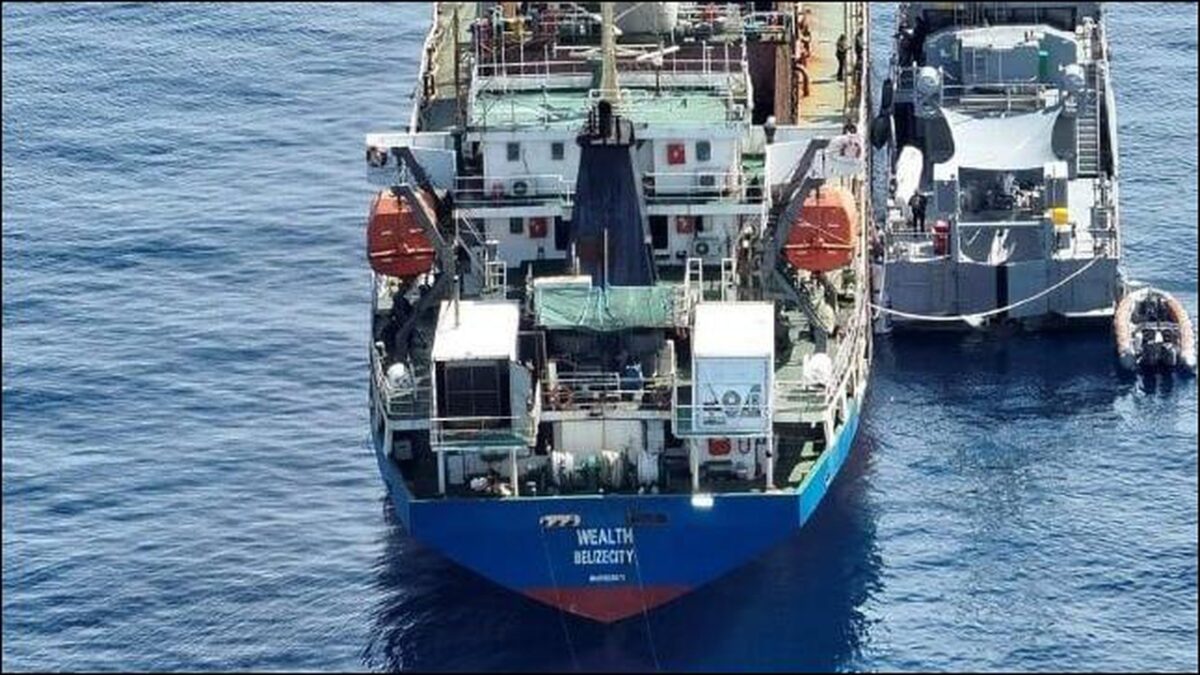
The tranquil waters of the Pacific were recently stirred by a significant law enforcement action as the Solomon Islands authorities successfully intercepted a shadowy vessel suspected of extensive international crimes. This decisive operation, targeting a ship believed to be a central player in transnational organized crime, underscores the growing challenges faced by island nations in safeguarding their maritime borders and combating illicit activities at sea. The Royal Solomon Islands Police Force (RSIPF), in a commendable display of regional and international cooperation, brought the vessel, identified as the MV Wealth, to Honiara for a thorough investigation into alleged drug trafficking, tobacco smuggling, and other severe forms of maritime transnational crime. This incident highlights the relentless efforts required to track and apprehend vessels operating outside the bounds of international law, posing substantial threats to security and stability across the vast Pacific expanse. The interception marks a critical victory in the ongoing battle against criminal networks that exploit the open seas for their nefarious enterprises, emphasizing the Solomon Islands’ commitment to upholding maritime integrity and ensuring the rule of law within its jurisdiction and beyond. The successful operation against this shadowy vessel sends a clear message to those engaged in illicit shipping and maritime crime that the Pacific region is vigilant and ready to act.
A Coordinated International Operation Unfolds
The apprehension of the MV Wealth was the culmination of a meticulously planned and executed joint operation involving multiple national and international agencies. The Royal Solomon Islands Police Force (RSIPF), working in seamless coordination with Solomon Islands Customs and Immigration, spearheaded the on-the-ground efforts. Crucially, their work was bolstered by invaluable intelligence and support from a network of international authorities and regional law enforcement partners. This level of cross-border collaboration is becoming increasingly vital in the fight against sophisticated transnational organized crime groups that routinely exploit jurisdictional boundaries.
Authorities revealed they had been tracking the suspicious movements of the vessel, the MV Wealth, since April. Intelligence reports had consistently indicated activities consistent with large-scale organized criminal operations at sea, raising red flags across multiple security agencies. This extended period of surveillance allowed law enforcement to gather critical evidence and strategize the most effective interception point, minimizing risks and maximizing the chances of a successful outcome. The patience and persistence demonstrated by the tracking teams were instrumental in ensuring that the shadowy vessel could not evade justice.
Among the key international partners providing assistance were the Australian Border Force and the Pacific Islands Forum Fisheries Agency (FFA). The involvement of such prominent regional bodies underscores the widespread concern over maritime crime and the collective resolve to address it. Their expertise in maritime surveillance, intelligence sharing, and regional security protocols proved invaluable. The collaborative spirit demonstrated by all parties involved highlights a unified front against illicit activities that threaten not only individual nations but the entire Pacific maritime domain, ensuring that vessels engaged in such practices face coordinated opposition.
The Mysterious MV Wealth: A Profile in Suspicion
At the heart of this unfolding investigation is the MV Wealth, a Belize-flagged general cargo ship. Its specifications paint a picture of a vessel well-suited for clandestine operations. Measuring approximately 98 meters in length with a deadweight tonnage (dwt) of 61,000, this ship is capable of transporting both containerized and bulk cargo. Built in 2010, the MV Wealth initially operated for Chinese interests. However, according to maritime databases, it underwent a change of ownership in February 2026, subsequently adopting its current identity. This recent change in ownership and flag state is often a red flag in maritime intelligence, frequently indicating an attempt to obscure past activities or facilitate new, potentially illicit, ventures. The vessel’s capacity for diverse cargo types makes it an ideal platform for various smuggling operations, from illicit drugs to embargoed goods, rendering it a versatile asset for organized crime syndicates.
Police reports explicitly detail the vessel’s suspected involvement in significant maritime transnational crime. The primary allegations include extensive drug trafficking, a highly lucrative and destructive form of international crime that fuels violence and instability. Furthermore, the MV Wealth is suspected of tobacco smuggling, another prevalent illicit trade that undermines national economies through tax evasion and supports criminal enterprises. Beyond these specific charges, authorities believe the vessel played a role in other forms of transnational organized criminal activities at sea, suggesting a broader pattern of illicit shipping behavior.
The choice of a general cargo ship like the MV Wealth for these alleged criminal activities is strategic. Its versatile design allows for the flexible loading and unloading of various goods, making it harder for authorities to predict its cargo manifest or ultimate purpose. Such vessels can blend more easily into legitimate shipping lanes, using their capacity for conventional cargo as a cover for their illicit consignments. The complexity of tracking and intercepting such a vessel, particularly one operating under a recent change of identity, speaks volumes about the challenges faced by maritime law enforcement agencies globally. The investigation into the MV Wealth promises to unravel a network of sophisticated maritime crime.
Unraveling the Crew and Their Alleged Role
Following the successful interception of the shadowy vessel, authorities took 19 crew members into custody. The individuals are believed to hail from various Asian nations, specifically China, Indonesia, and the Philippines. The diversity of nationalities among the crew is not uncommon in international shipping, yet in cases involving suspected criminal activity, it often adds layers of complexity to the investigative and legal processes. Each individual’s role in the alleged transnational crime will be meticulously examined as part of the ongoing investigation, moving beyond their mere presence on the MV Wealth to ascertain their specific involvement in the illicit operations.
One of the immediate challenges faced by the investigating authorities has been the difficulty in fully verifying the identities and nationalities of all the apprehended crew members. The initial reports suggest an absence of complete and legitimate documentation for some individuals, which further complicates the process. This deliberate obfuscation of identity is a common tactic employed by those involved in maritime crime, designed to impede law enforcement efforts and complicate prosecution. Establishing verified identities is a critical first step in understanding the broader network behind the MV Wealth’s operations and ensuring proper legal proceedings.
As the crew members are held in custody in Honiara, a rigorous interrogation process is underway. Investigators will be seeking to understand their roles, the chain of command, the logistics of the alleged drug trafficking and tobacco smuggling, and the full extent of the vessel’s illicit voyages. The legal implications for these individuals are significant, potentially ranging from charges related to smuggling and drug offenses to participation in organized crime. The outcome of these investigations will not only determine the fate of the 19 crew members but could also provide crucial intelligence for dismantling larger maritime crime syndicates operating in the Pacific region.
The Broader Implications for Pacific Maritime Security
The interception of the MV Wealth reverberates far beyond the immediate waters of the Solomon Islands, carrying significant implications for Pacific maritime security as a whole. Transnational organized crime in the Pacific is a multifaceted threat, encompassing not only drug and tobacco smuggling but also illegal fishing, human trafficking, and environmental crimes. These illicit activities undermine governance, destabilize economies, and pose direct threats to the safety and livelihoods of coastal communities. The sheer scale and connectivity of these criminal networks necessitate a strong, unified response from all regional stakeholders. This success story underscores the power of intelligence-led operations against shadowy vessels.
This incident vividly demonstrates the paramount importance of regional and international cooperation in combating such widespread maritime threats. No single nation, especially smaller island states, possesses the resources or reach to effectively counter these sophisticated criminal enterprises alone. The collaborative efforts involving the RSIPF, Australian Border Force, Pacific Islands Forum Fisheries Agency, and other law enforcement partners serve as a powerful model. Such partnerships facilitate intelligence sharing, joint surveillance, coordinated interdiction strategies, and capacity building, all essential components in the complex fight against maritime crime and illicit shipping.
Moreover, the success of this operation sends a clear deterrent message to other criminal elements who might be considering using the Pacific’s vast waterways for their illegal trade. It highlights the increasing vigilance and enhanced capabilities of Pacific island nations, supported by their allies, to protect their sovereign waters and uphold international law. The Solomon Islands’ proactive role in this apprehension strengthens its position as a key player in regional security and contributes significantly to building a safer, more secure maritime environment for all nations within the Pacific rim. This focus on security extends to protecting marine resources and legitimate trade routes from the dangers posed by shadowy vessels.
The Path Forward: Investigation and Justice
With the MV Wealth now securely docked in Honiara, the capital of the Solomon Islands, the focus shifts to the extensive investigation phase. This is a critical period where evidence will be meticulously gathered and analyzed to build a robust legal case against those involved in this significant maritime crime. Forensic teams will conduct thorough searches of the vessel, looking for hidden compartments, illicit cargo, and any documentation that can shed light on the ship’s movements, ownership, and the criminal network it served. Every detail uncovered during this process will be vital in ensuring justice is served.
Anticipated next steps include a comprehensive examination of all electronic devices found on board, detailed interviews with the 19 apprehended crew members, and the processing of any physical evidence related to the suspected drug trafficking, tobacco smuggling, and other forms of transnational organized crime. Law enforcement agencies will work to establish clear links between the vessel, its crew, and the criminal organizations behind its operations. This phase will also involve further collaboration with international partners to trace the origins and intended destinations of any illicit cargo, mapping out the wider criminal supply chain and identifying key players who operate these shadowy vessels.
Ultimately, the goal is to bring all perpetrators to justice, whether they are the crew on board or the masterminds orchestrating these operations from afar. This may involve navigating complex international legal processes, including potential extradition requests and cross-jurisdictional prosecutions, underscoring the global nature of maritime crime. The commitment to combating illegal shipping remains unwavering, with authorities dedicated to ensuring that the Solomon Islands and the wider Pacific region are not exploited by criminal elements. The successful resolution of this case will set an important precedent for future maritime law enforcement actions against similar shadowy vessels and organized crime.
In conclusion, the interception of the MV Wealth by Solomon Islands authorities represents a significant triumph in the ongoing global battle against maritime transnational crime. This operation, a testament to effective international cooperation and vigilant surveillance, has not only removed a shadowy vessel from the illicit trade routes but also sent a powerful message to criminal networks that their activities will be met with determined resistance. As the investigation in Honiara progresses, the world watches, hopeful that this action will dismantle a key part of the criminal infrastructure responsible for drug trafficking, tobacco smuggling, and other severe maritime crimes, thereby contributing to a safer and more secure Pacific region for all. The unwavering commitment to maritime security and the rule of law remains a cornerstone of regional stability.