MOL & Seaspan Energy Ink LNG Bunkering Deal for Car Carriers | Mariner News
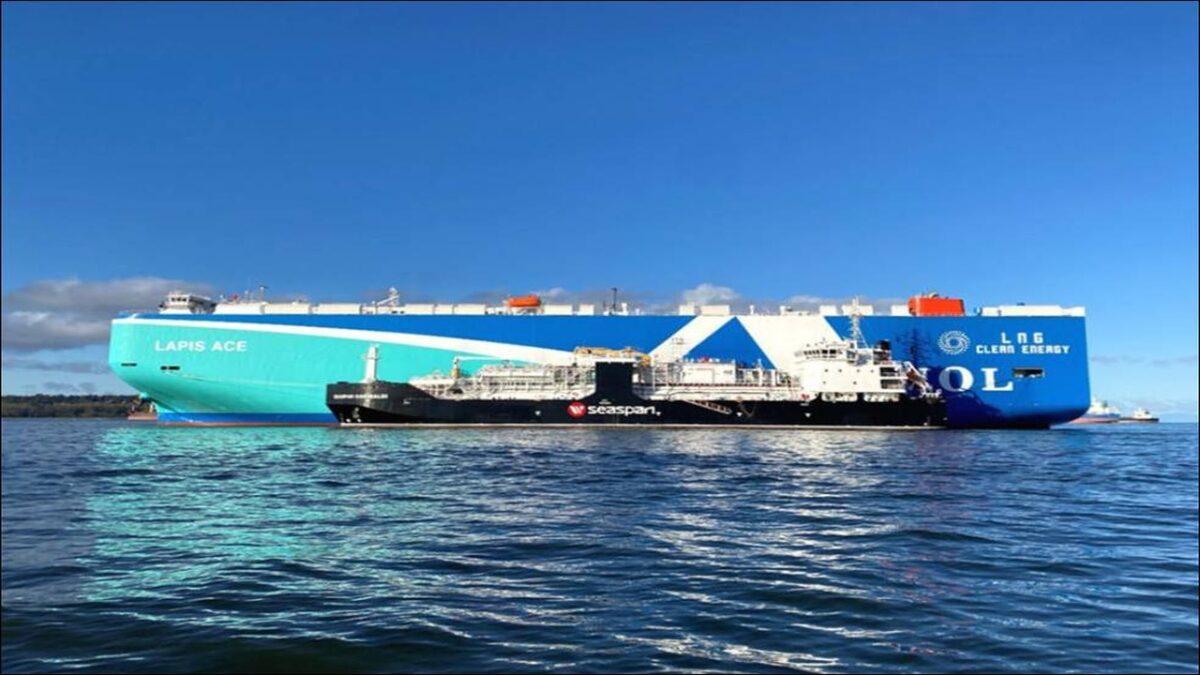
In a significant stride towards fostering sustainable maritime operations, Japanese shipping giant MOL (Mitsui O.S.K. Lines) has officially formalized an annual LNG bunkering agreement with Canada-based Seaspan Energy. This pivotal MOL LNG bunkering deal will see Seaspan Energy providing liquefied natural gas (LNG) fuel to MOL’s fleet of advanced car carriers operating within the bustling Port of Vancouver, Canada. This collaboration underscores a shared commitment to environmental stewardship and operational efficiency within the global shipping industry, particularly as the sector increasingly pivots towards cleaner energy solutions. The initial bunkering operation under this landmark contract was successfully completed on April 29, signifying the immediate activation of this vital partnership. This development is not merely a transaction; it represents a forward-thinking investment in the future of sustainable shipping and strengthens the energy transition efforts in North America’s maritime trade routes. MOL’s expanding roster of LNG-fuelled car carriers is poised to benefit immensely from this stable and reliable fuel supply arrangement, ensuring consistent and environmentally responsible transport services.
A Strategic Partnership for Cleaner Shipping in Vancouver
The alliance between MOL and Seaspan Energy is a testament to the maritime industry’s unwavering dedication to reducing its carbon footprint. The Port of Vancouver, strategically located on Canada’s west coast, serves as a crucial gateway for international trade, making it an ideal hub for advancing green shipping initiatives. This annual bunkering deal solidifies the port’s growing reputation as a key player in the provision of alternative marine fuels. For MOL, a company at the forefront of adopting innovative technologies, securing a robust LNG fuel supply is paramount to its strategic growth and environmental objectives. The availability of consistent LNG bunkering services through Seaspan Energy enables MOL to seamlessly integrate its next-generation LNG-powered car carriers into its busy North American trade routes, optimizing operational flow while minimizing ecological impact. The mutual commitment to cleaner operations extends beyond the immediate fuel supply, with both companies hinting at future explorations into more advanced sustainable options, such as bio-LNG, further cementing their leadership in the maritime energy transition.
Seaspan Energy, a prominent provider of marine energy solutions, brings extensive expertise and infrastructure to this partnership. Their capability to deliver LNG bunkering services efficiently and safely is critical for high-volume operations like those of MOL’s car carrier fleet. The precision and reliability demonstrated during the inaugural bunkering operation highlight Seaspan’s commitment to supporting the maritime sector’s shift to cleaner fuels. Harly Penner, president of Seaspan Energy, emphasized the significance of this enduring partnership, stating, “MOL was the first car carrier operator to receive LNG bunkering services in the Port of Vancouver, and we are proud to continue supporting their operations in Vancouver through this annual LNG bunkering agreement.” This long-term accord ensures that the essential logistics of fuel supply remain robust, allowing MOL to focus on its core business of delivering vehicles efficiently and sustainably across continents. The collaborative effort sets a benchmark for how major shipping lines and energy providers can work in concert to achieve ambitious environmental goals, paving the way for wider adoption of low-carbon fuels.
Advancing LNG as a Premier Marine Fuel Option
Liquefied Natural Gas (LNG) has emerged as a leading transition fuel in the maritime industry’s journey towards decarbonization. Its adoption significantly reduces sulfur oxide (SOx) and particulate matter emissions by nearly 100%, nitrogen oxide (NOx) emissions by up to 85%, and carbon dioxide (CO2) emissions by approximately 20-25% compared to conventional heavy fuel oil. These substantial environmental benefits align perfectly with international regulations, such as those set by the International Maritime Organization (IMO), and also meet the increasing demands from consumers and stakeholders for more environmentally responsible shipping practices. MOL’s continuous investment in LNG-fueled vessels, particularly its car carriers, demonstrates a proactive approach to meeting these challenges and securing a competitive edge in a rapidly evolving market.
This sustained commitment to LNG as a marine fuel underscores a broader trend within the global maritime sector. Many shipping lines are recognizing LNG not just as a compliance solution but as a strategic asset that offers long-term operational advantages. The stability of LNG pricing, coupled with its cleaner combustion properties, contributes to a more predictable and sustainable operational cost structure. Moreover, the technological advancements in LNG engine design and bunkering infrastructure have made its adoption increasingly feasible and attractive. The development of dual-fuel engines that can seamlessly switch between LNG and conventional fuels provides operational flexibility, ensuring reliability even in areas where LNG bunkering infrastructure might still be developing. The LNG fuel supply chain, while still growing, is becoming more resilient and widespread, particularly in major shipping lanes and key port areas like Vancouver.
MOL’s Pioneering Role in North American LNG Bunkering
MOL has consistently demonstrated its leadership in embracing innovative and environmentally friendly solutions. The company’s journey with LNG bunkering on the west coast of North America began with its inaugural operation in March 2025. This early adoption positioned MOL as a pioneer, showcasing the feasibility and benefits of LNG as a marine fuel in a vital economic corridor. The subsequent and consistent series of LNG bunkering operations, culminating in this annual agreement with Seaspan Energy, solidifies MOL’s footprint and expertise in this specialized field. This proactive stance not only benefits MOL’s own operations but also serves as a strong signal to the broader industry, encouraging other shipping companies to explore and adopt similar sustainable practices.
The strategic focus on North American trade routes for its LNG-fueled car carriers is a calculated move by MOL. These routes are characterized by significant cargo volumes and increasing regulatory scrutiny regarding emissions. By ensuring a stable and secure LNG fuel supply through partnerships like the one with Seaspan Energy, MOL can guarantee uninterrupted, high-performance service while adhering to the strictest environmental standards. The expansion of LNG infrastructure and bunkering capabilities in major North American ports is crucial for scaling up green shipping initiatives. MOL’s investment and continuous engagement play a direct role in driving this necessary infrastructure development, creating a virtuous cycle where demand for cleaner fuels stimulates supply, and expanded supply supports further adoption. This integrated approach to fleet management and fuel procurement positions MOL as a leader in sustainable shipping for the foreseeable future.
Exploring Future Horizons: Bio-LNG and Decarbonization Pathways
The conversation between MOL and Seaspan Energy about potentially exploring collaboration in bio-LNG supply signals an exciting next chapter in their partnership and for the maritime industry at large. Bio-LNG, produced from sustainable biomass sources, offers an even lower carbon footprint than conventional LNG, as it can be considered carbon-neutral on a well-to-wake basis. As a ‘drop-in’ fuel, bio-LNG can be used in existing LNG-fueled engines and infrastructure, offering a seamless transition to more advanced decarbonization solutions. This forward-looking perspective demonstrates a commitment not just to current environmental improvements but to long-term, systemic change in the pursuit of net-zero emissions.
This proactive exploration aligns with the global imperative for accelerated decarbonization across all sectors, including shipping. The maritime industry is under immense pressure to meet ambitious targets set by international bodies and national governments. While LNG serves as an excellent transitional fuel, the ultimate goal involves moving towards truly zero-emission fuels. Bio-LNG, synthetic LNG (e-LNG), ammonia, methanol, and hydrogen are all part of the future fuel mix, each with its own set of challenges and opportunities. Partnerships like the one between MOL and Seaspan Energy are vital for researching, developing, and deploying these next-generation marine fuels. By continually innovating and adapting to new technologies, both companies are playing a crucial role in shaping a greener, more sustainable future for global trade and transportation. This collaborative spirit ensures that the maritime sector remains at the forefront of environmental responsibility.
Economic and Environmental Impact of Sustainable Maritime Fuel
Beyond the immediate operational benefits, the MOL LNG bunkering deal carries significant economic and environmental implications. Economically, the establishment of robust LNG bunkering infrastructure in ports like Vancouver stimulates local economies by creating jobs, fostering technological innovation, and attracting further investment in green maritime technologies. It strengthens the competitive position of the port and its associated supply chain entities, offering an advantage to shipping lines that prioritize sustainability.
Environmentally, the widespread adoption of LNG as a marine fuel, spearheaded by influential players like MOL, contributes substantially to cleaner air quality in port cities and along critical shipping lanes. The reduction in harmful emissions directly impacts public health and protects marine ecosystems. Furthermore, the commitment to potentially transition to bio-LNG reinforces a circular economy model, where waste products are repurposed into valuable, clean energy resources. This comprehensive approach to sustainability, encompassing both immediate emission reductions and future-proof fuel strategies, positions MOL and Seaspan Energy as leaders in the global movement towards a cleaner, more resilient maritime industry. This deal is more than just a fuel supply contract; it’s a beacon of progress for environmental responsibility in international shipping.