Dual-Fuel Container, Vehicle Carrier Fleet Surpasses 500 | Mariner News
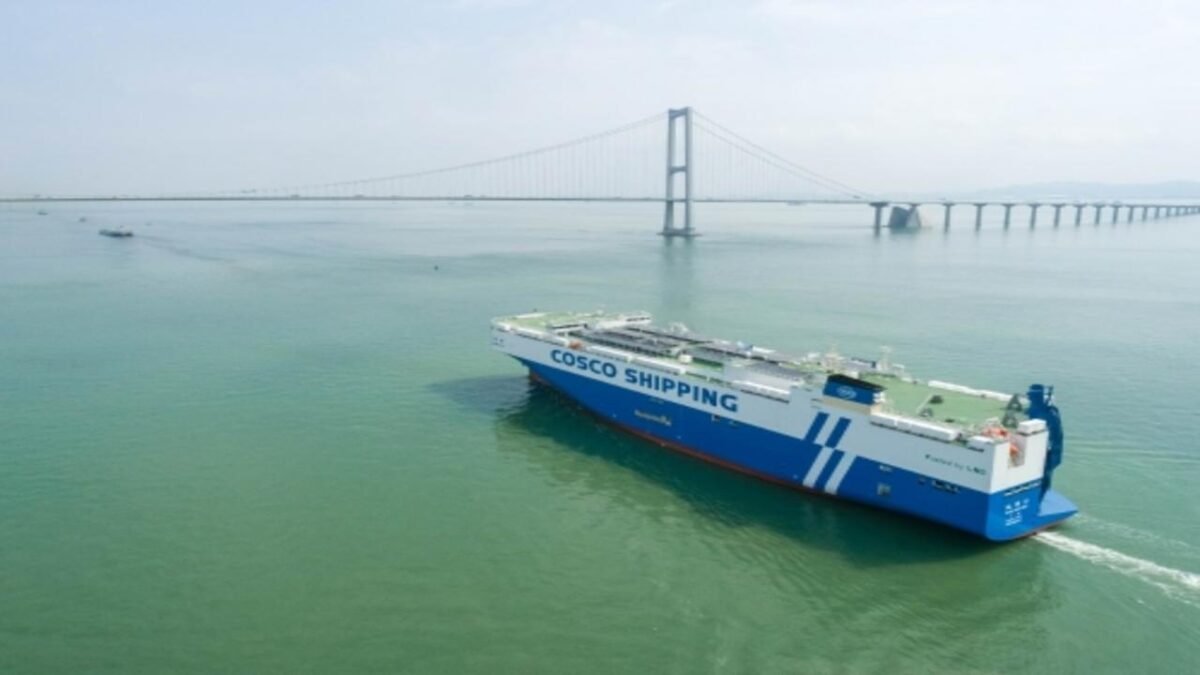
The global fleet of dual-fuel container ships and vehicle carriers has rapidly surpassed 500 operational vessels, representing a massive $200 billion investment in delivered and on-order tonnage, according to the World Shipping Council (WSC).
As of September 2026, 503 such ships were in service, a 41% increase from 358 a year prior. The WSC’s latest dashboard also reveals an additional 849 dual-fuel vessels currently on order, indicating continued strong commitment to alternative fuels within these sectors.
Alternative-fuel-capable ships now account for 65% of all container ship orders and a striking 97% of vehicle carrier orders by deadweight tonnage. This contrasts sharply with a 23% share across the wider global fleet, highlighting a significant divergence in decarbonization strategies across shipping segments.
This concentration of investment in specific segments underscores a rapidly bifurcating fleet development, where container and vehicle carriers are forging ahead with substantial capital commitments towards future-proofed tonnage. The sheer scale of orders will necessitate parallel investment in bunkering infrastructure and alternative fuel supply chains, particularly for methanol, LNG, and other emerging fuels.
Despite this surge in alternative-fuel orders, conventional-fuelled ship orders have also increased over the past year. This concurrent trend reflects ongoing uncertainty surrounding greenhouse gas regulations at the International Maritime Organization (IMO).
The simultaneous ordering of conventional vessels suggests a hedging strategy by some owners, who may be betting on slower regulatory implementation or the viability of future retrofit solutions, potentially creating competitive advantages or disadvantages based on asset flexibility as regulations solidify.
WSC President and Chief Executive Joe Kramek emphasized the long-term nature of vessel investments, stating, “Shipping companies and fuel producers need certainty to make the investments that will shape the future fleet and its fuel supply.” This highlights that even with significant progress in specific segments, regulatory ambiguity continues to complicate broader industry-wide transitions.