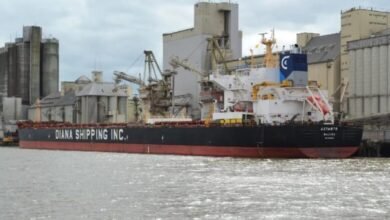
Diana Shipping Ups Genco Bid: Dry Bulk Merger News | Mariner News
In a significant development poised to reshape the dry bulk shipping landscape, Diana Shipping has raised its bid for Genco Shipping & Trading, signaling an aggressive move toward consolidation within the maritime sector. This revised offer underscores Diana Shipping’s strategic intent to expand its fleet and market share, creating a formidable force in the global transport of bulk commodities. The potential acquisition of Genco, a well-established player with a diverse fleet of dry bulk vessels, could mark one of the most impactful mergers in recent memory, drawing considerable attention from investors, analysts, and industry stakeholders keenly observing the evolving dynamics of the dry bulk market. This escalated bid comes at a time when the shipping industry is navigating a complex environment of fluctuating freight rates, geopolitical shifts, and a renewed focus on fleet modernization and efficiency, making strategic growth initiatives like this increasingly vital for long-term success and resilience.
The Strategic Imperative Behind Diana Shipping’s Aggressive Pursuit
Diana Shipping Inc.’s decision to raise its bid for Genco is rooted in a clear strategic imperative: achieving significant economies of scale and enhancing operational synergies. For years, the dry bulk shipping sector has grappled with fragmentation, leading to competitive pressures and sometimes volatile profitability. By integrating Genco’s substantial fleet, Diana Shipping aims to create a larger, more diversified operational footprint, capable of commanding greater influence in charter negotiations and optimizing route efficiencies. This move isn’t merely about adding ships; it’s about consolidating market power, reducing per-unit operating costs, and leveraging a combined asset base to navigate the cyclical nature of the dry bulk trade more effectively. The synergy potential extends beyond operations to include administrative overheads, procurement, and access to capital markets, all of which could see substantial improvements under a unified structure. This expansion strategy reflects a broader trend within the maritime industry, where larger entities are increasingly seeking to absorb smaller or mid-sized competitors to build more robust and sustainable business models.
The dry bulk market, responsible for transporting essential raw materials like iron ore, coal, and grain, experiences periods of high demand and supply imbalances. A larger, more diversified fleet offers greater flexibility to adapt to these market fluctuations, deploying vessels to regions with the strongest demand and optimizing utilization rates across various vessel segments, from Capesizes to Supramaxes. Diana Shipping’s pursuit of Genco is therefore a calculated maneuver to build a stronger, more resilient enterprise, better equipped to withstand market downturns and capitalize on periods of strong demand. The combined entity would also likely benefit from improved bargaining power with shipyards, financial institutions, and charterers, ultimately translating into enhanced profitability and shareholder value. This strategic rationale highlights the crucial role that consolidation plays in fortifying shipping companies against the inherent volatility of global trade.
Analyzing the Financials and Market Implications of the Revised Offer
Details surrounding the revised offer from Diana Shipping for Genco Shipping & Trading are critical for understanding the financial implications for both companies and the broader market. An increased bid typically reflects a strong belief in the target company’s underlying value and future earnings potential, even if it means paying a premium. Investors and analysts will be closely scrutinizing the structure of the offer – whether it’s an all-cash deal, a stock-for-stock exchange, or a hybrid – and its impact on the balance sheets of both entities. A higher valuation for Genco could signify an anticipated boost in future dividends or capital appreciation for existing Genco shareholders, making the offer more attractive. Conversely, for Diana Shipping shareholders, the key will be to assess whether the potential synergies and long-term strategic benefits justify the acquisition cost, ensuring that the deal is accretive rather than dilutive to earnings per share.
The market’s initial reaction to news of a heightened bid for Genco would likely involve movements in the stock prices of both Diana Shipping and Genco. Genco’s shares could see an upward spike as the market anticipates a successful acquisition at a higher valuation, while Diana Shipping’s stock might experience some volatility as investors weigh the potential benefits against the financial outlay and integration risks. Beyond immediate stock movements, the implications extend to the perception of the dry bulk shipping sector as a whole. A successful, significant merger like this could ignite further consolidation discussions, signaling a maturing industry where scale is increasingly paramount. It could also influence the valuation benchmarks for other dry bulk companies, potentially leading to a re-rating across the sector as investors recalibrate their expectations for industry consolidation and future profitability.
The Evolving Landscape of Dry Bulk Shipping and Consolidation
The dry bulk shipping industry is in a perpetual state of evolution, influenced by global economic growth, commodity demand, trade routes, and regulatory changes. In recent years, the sector has witnessed periods of oversupply and depressed freight rates, prompting many companies to explore strategic alternatives, including mergers and acquisitions. The potential Diana Shipping Genco acquisition exemplifies this trend of consolidation, where companies seek to achieve greater efficiency and market stability through scale. Environmental regulations, such as those aimed at decarbonization, are also playing a significant role, driving the need for capital investment in greener technologies and more efficient vessels. Larger, combined entities often possess greater financial muscle to undertake these expensive fleet modernizations, providing a competitive edge in a rapidly changing regulatory environment.
Moreover, the geopolitical landscape profoundly impacts dry bulk trade, with shifting alliances, trade disputes, and regional conflicts influencing shipping patterns and demand. A more robust, diversified fleet resulting from a merger like this offers greater flexibility to adapt to such external shocks, rerouting vessels and optimizing deployments to mitigate risks. The fragmented nature of the dry bulk market has historically made it susceptible to price volatility, but strategic consolidation initiatives aim to temper this. By reducing the number of independent players and increasing the market share of larger entities, the industry can potentially achieve more stable pricing structures and improve overall profitability. This trend is not unique to dry bulk; it mirrors similar consolidation waves seen in other maritime segments, underscoring a broader industry-wide shift towards optimizing scale and operational efficiency.
Challenges and Opportunities for a Combined Dry Bulk Giant
The integration of two large shipping companies like Diana Shipping and Genco presents both significant challenges and substantial opportunities. On the challenge front, merging distinct corporate cultures, operational procedures, and IT systems requires meticulous planning and execution. Ensuring a seamless transition while maintaining business continuity and retaining key talent is paramount. Debt restructuring, harmonizing vessel specifications, and optimizing fleet deployment without disrupting existing charter agreements can also be complex undertakings. There’s always the risk that anticipated synergies may not materialize as quickly or as comprehensively as projected, or that integration costs could exceed initial estimates, potentially eroding some of the deal’s value. Effective communication and strong leadership will be crucial in navigating these integration hurdles successfully.
However, the opportunities presented by a combined Diana Shipping and Genco are equally compelling. The most apparent benefits include enhanced fleet diversification, covering a wider range of vessel sizes (from Capesize to Panamax and Supramax), allowing for greater flexibility in serving diverse client needs and commodity types. This diversification can smooth out earnings volatility by reducing reliance on any single vessel segment. Furthermore, the combined entity would possess a stronger financial profile, potentially leading to lower borrowing costs and greater access to capital for future investments, such as fleet renewal or expansion into new markets. Operational efficiencies from bulk purchasing of fuel, spare parts, and insurance, along with optimized port calls and crewing strategies, could lead to significant cost savings. Ultimately, a larger, more integrated dry bulk shipping company would be better positioned to capitalize on global trade growth, secure long-term contracts with major charterers, and drive sustainable shareholder value in the years to come. This strategic move aims to create a market leader, resilient and adaptable to the dynamic forces shaping global maritime trade.
Investor Implications and the Future Outlook for Dry Bulk Shipping
For investors, the potential Diana Shipping Genco acquisition carries significant implications. Shareholders of Genco will weigh the revised offer against the company’s standalone growth prospects, considering whether the increased premium adequately compensates them for surrendering future independent upside. For Diana Shipping shareholders, the focus will shift to the long-term value creation potential of the combined entity. This includes scrutinizing the accretion to earnings, the impact on debt levels, and the company’s ability to successfully integrate Genco’s operations and achieve projected synergies. The success of this merger could serve as a bellwether for future consolidation activities within the dry bulk shipping space, potentially encouraging other players to explore similar strategic alignments to enhance their competitive positions.
Looking ahead, the dry bulk shipping sector continues to face a mix of headwinds and tailwinds. Global economic recovery, particularly in emerging markets, promises sustained demand for raw materials. However, geopolitical tensions, trade protectionism, and the imperative for decarbonization will necessitate ongoing strategic adjustments. A stronger, more consolidated entity formed by Diana Shipping and Genco would be better equipped to invest in eco-friendly vessels, adopt advanced digital technologies for fleet management, and navigate complex international regulations. This strategic consolidation represents more than just a merger; it embodies a forward-looking approach to building resilience, optimizing operational efficiency, and securing a leading position in the essential business of global dry bulk transportation. The maritime world watches intently as this significant bid unfolds, poised to redefine a key segment of global commerce.