CMA CGM Takes Delivery of Another Methanol Boxship | Mariner News
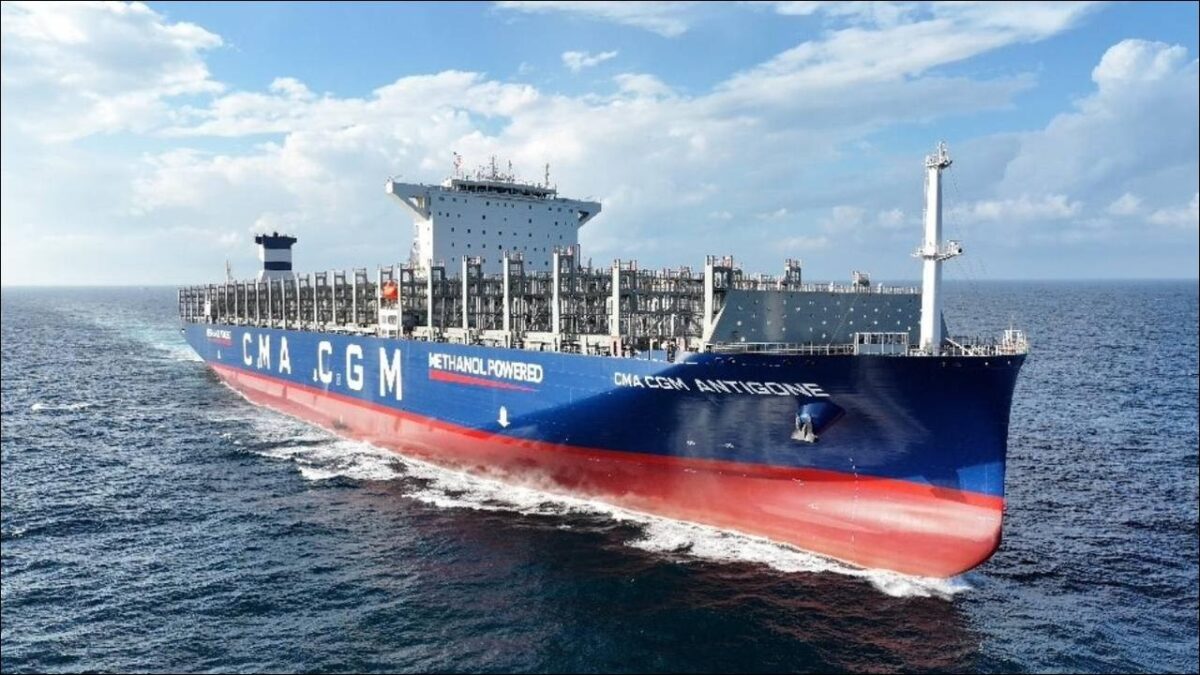
The global maritime industry is charting a course towards a more sustainable future, and at the forefront of this transformation is CMA CGM, a leader in container shipping. In a significant stride towards decarbonization, the French shipping giant has officially taken delivery of another state-of-the-art methanol-fuelled container ship. This new addition underscores the company’s proactive strategy to embrace alternative fuels and significantly reduce its environmental footprint, further solidifying its position as a pioneer in green shipping innovations. The vessel, a formidable 15,000 TEU (Twenty-foot Equivalent Unit) capacity boxship, marks another pivotal moment in CMA CGM’s ambitious fleet renewal program aimed at integrating more eco-friendly vessels into its extensive global network. The handover ceremony, held at China’s prestigious Jiangnan Shipyard, celebrated not just the delivery of a single vessel but the ongoing commitment to a series of advanced ships designed for enhanced sustainability and operational efficiency. This continuous investment highlights a clear industry trend: a growing emphasis on sustainable maritime transport solutions that balance economic viability with ecological responsibility. The implications of such investments resonate throughout the entire shipping ecosystem, from port infrastructure development to the intricate supply chains that rely on cleaner logistics. CMA CGM’s strategic decisions are setting new benchmarks for the industry, influencing how carriers worldwide approach fleet modernization and environmental stewardship in an increasingly regulated and environmentally conscious global economy.
CMA CGM’s Decarbonization Drive: A Fleet of the Future
CMA CGM’s dedication to sustainability is evident in its multi-faceted approach to fleet modernization. The delivery of this new methanol-fuelled boxship is part of a broader strategy that also includes significant investments in liquefied natural gas (LNG) powered vessels. This dual-fuel strategy provides flexibility and leverages proven technologies while new green fuels scale up. The company recognizes that a single solution might not suffice for the diverse operational demands of global shipping and is therefore exploring a portfolio of low-carbon energy sources. By adding another 15,000 TEU vessel capable of running on green methanol, CMA CGM is not only meeting current environmental regulations but is also positioning itself ahead of future stringent emission targets set by international bodies like the International Maritime Organization (IMO). These ambitious goals, particularly the IMO’s 2030 and 2050 targets for reducing greenhouse gas emissions, necessitate immediate and substantial shifts in fuel choices and vessel designs. The integration of advanced engine technologies that facilitate the use of alternative fuels is central to achieving these objectives. Each new vessel delivered represents a step closer to a net-zero future, reducing the maritime sector’s reliance on traditional heavy fuel oil and mitigating the associated environmental impacts. This forward-thinking approach by CMA CGM demonstrates a tangible commitment to safeguarding marine ecosystems and contributing positively to global climate action efforts.
This latest 15,000 TEU ship, reportedly the CMA CGM Berenice, is the fifth in a series of such vessels delivered to the French carrier from Jiangnan Shipyard. Each of these eco-friendly vessels represents a significant technological leap, equipped with dual-fuel engines that can operate on conventional marine fuels as well as methanol. This flexibility is crucial during the transition period as the infrastructure for green methanol production and bunkering continues to develop globally. The scale of CMA CGM’s order book for these alternative fuel ships signals a strong market signal that the industry is ready and willing to invest in cleaner alternatives, provided the necessary supply chain and bunkering facilities are developed. The economic advantages of such vessels are becoming increasingly apparent, including potential for carbon credit trading, reduced exposure to carbon taxes, and enhanced brand reputation among environmentally conscious customers. Furthermore, these investments are driven not just by regulatory pressures but also by genuine corporate responsibility and the understanding that sustainable practices are essential for long-term business resilience and growth in the competitive shipping landscape. The successful integration and operation of these advanced vessels will provide invaluable data and experience, further refining the industry’s understanding of optimal pathways to maritime decarbonization.
The Pivotal Role of Methanol in Maritime Fuel Transition
Methanol as a marine fuel is gaining considerable traction within the shipping industry due to its numerous advantages. It is a clean-burning fuel that significantly reduces emissions of sulfur oxides (SOx), nitrogen oxides (NOx), and particulate matter, thereby improving air quality, especially in port areas. Crucially, when produced from renewable sources such as biomass or renewable electricity (e-methanol), it can offer a near-zero carbon footprint on a well-to-wake basis. This makes it a highly attractive option for companies like CMA CGM that are serious about achieving ambitious decarbonization targets. The relative ease of handling and storage compared to other alternative fuels like hydrogen or ammonia also contributes to methanol’s appeal. Existing infrastructure can often be adapted with fewer modifications, making the transition more manageable for ports and bunkering operators. The shipping segment has notably led orders for methanol-fuelled newbuilds, demonstrating a strong industry-wide confidence in its potential as a long-term solution. This trend is not confined to container ships; a growing number of tankers, bulk carriers, and cruise ships are also being ordered with methanol dual-fuel capabilities, signaling a broad acceptance across various shipping segments.
However, the widespread adoption of methanol as a primary marine fuel is not without its challenges. The most pressing issue is the urgent need to scale up the availability of green methanol. While conventional methanol is widely available, its production often relies on fossil fuels, which negates the environmental benefits. The focus must be on increasing the production of renewable methanol to truly achieve the desired emission reductions. This requires substantial investments in new production facilities, leveraging renewable energy sources and sustainable feedstocks. Furthermore, port authorities and bunkering service providers must rapidly expand their infrastructure to meet the anticipated surge in demand for methanol bunkering. This includes developing specialized storage facilities, dedicated bunkering vessels, and robust safety protocols for handling the fuel. Collaborative efforts between shipping companies, fuel producers, technology providers, and governments will be essential to overcome these hurdles and create a resilient and efficient green methanol supply chain. The success of pioneers like CMA CGM in operating these vessels will be instrumental in demonstrating the viability and safety of methanol as a marine fuel, encouraging further investment and accelerating the industry’s transition.
Jiangnan Shipyard: A Hub of Eco-Ship Innovation and Engineering Excellence
China’s Jiangnan Shipyard has emerged as a critical partner in the global push for sustainable shipping, particularly in the construction of eco-friendly vessels. The shipyard’s consistent delivery of advanced ships, including the latest methanol-fuelled container ship for CMA CGM, highlights its expertise and capacity for innovation in maritime engineering. These partnerships are vital as they translate ambitious environmental goals into tangible assets that sail the world’s oceans. The delivery of the CMA CGM Berenice is a testament to Jiangnan Shipyard’s commitment to cutting-edge technology and high-quality construction. Building vessels with dual-fuel capabilities, especially for a complex fuel like methanol, requires sophisticated design, advanced manufacturing processes, and rigorous safety standards. The collaboration between shipping lines and shipyards is a symbiotic relationship where industry demands for greener solutions drive technological advancements, and shipyards, in turn, provide the engineering prowess to make these solutions a reality. Jiangnan Shipyard’s success in this niche market positions it as a leader in the construction of future-proof vessels that are compliant with current and anticipated environmental regulations. Their role extends beyond mere construction; they are actively contributing to the research and development of new designs and systems that enhance fuel efficiency and reduce emissions across various vessel types. This level of expertise and dedication is crucial for the entire maritime sector as it navigates the complexities of decarbonization and embraces a new era of clean energy ships.
The technological advancements showcased in these newbuilds include optimized hull designs to minimize drag, advanced propulsion systems for maximum efficiency, and sophisticated energy management systems to reduce overall fuel consumption. The integration of methanol dual-fuel engines requires precise engineering to ensure safe and efficient operation. This involves designing specific fuel tanks, piping systems, and ventilation protocols tailored for methanol, which differs significantly from traditional marine fuels. The successful execution of these complex engineering projects by shipyards like Jiangnan plays a critical role in building confidence across the industry for widespread adoption of new fuel technologies. Furthermore, the capacity of these shipyards to deliver a series of such vessels rapidly is instrumental in accelerating the transition of the global fleet towards greener alternatives. Without reliable and capable shipbuilders, even the most ambitious decarbonization strategies would remain theoretical. Jiangnan Shipyard’s ongoing collaboration with major carriers like CMA CGM underscores its pivotal position in shaping the future of global maritime logistics and enabling the industry to meet its challenging environmental targets.
The Broader Impact: Towards a Sustainable Global Supply Chain
CMA CGM’s proactive stance in investing in methanol-fuelled ships extends beyond its own fleet; it sends a powerful signal to the entire global supply chain. As major carriers commit to sustainable maritime transport, it creates a ripple effect, encouraging other stakeholders—from cargo owners and logistics providers to ports and bunkering companies—to prioritize environmental considerations. Cargo owners, in particular, are increasingly demanding greener shipping options to meet their own corporate sustainability goals. The availability of eco-friendly vessels like the new CMA CGM Berenice allows businesses to reduce their scope 3 emissions (indirect emissions from activities not controlled by the organization but that it is indirectly responsible for, up and down its value chain), enhancing their brand image and appealing to environmentally conscious consumers. This creates a virtuous cycle where demand for sustainable logistics drives further investment in green technologies, accelerating the industry’s overall transformation. The continuous integration of alternative fuels into the maritime sector contributes significantly to global efforts to combat climate change, aligning with the United Nations Sustainable Development Goals.
Moreover, the long-term economic benefits of these investments are becoming clearer. While the initial capital expenditure for methanol-fuelled vessels might be higher, the operational cost savings from reduced fuel consumption, potential for carbon credit earnings, and avoidance of future carbon taxes can make them economically attractive in the long run. The enhanced operational resilience due to fuel flexibility further adds to their value. As more green methanol becomes available and bunkering infrastructure develops, the cost of this fuel is expected to become more competitive, further incentivizing its adoption. This strategic foresight by CMA CGM not only positions the company as an industry leader but also demonstrates a clear pathway for the entire maritime sector to achieve its ambitious decarbonization goals. The successful deployment of these innovative vessels will provide crucial real-world data and operational experience, paving the way for even more advanced and sustainable shipping solutions in the years to come. Ultimately, every methanol-fuelled boxship sailing the seas brings the world closer to a truly sustainable global supply chain, benefiting both the environment and the economy.