Bulker Contacts Wharf: Master & Pilot Fault in Kaohsiung | Mariner News
A recent investigation by the Taiwan Transportation Safety Board (TTSB) has shed critical light on a maritime incident where a bulker contacted a wharf during departure, attributing the accident to significant failures in communication and planning between the vessel’s master and pilot. This incident involving the Hong Kong-flagged bulk carrier Pacific Century at Taiwan’s bustling Port of Kaohsiung underscores the paramount importance of precise Master-Pilot Information Exchange (MPX) and clear agreement on complex maneuvering procedures. The findings serve as a stark reminder for the global shipping industry about the human element in navigational safety and the potential repercussions of procedural oversights in port operations.
The Kaohsiung Port Incident: A Detailed Account
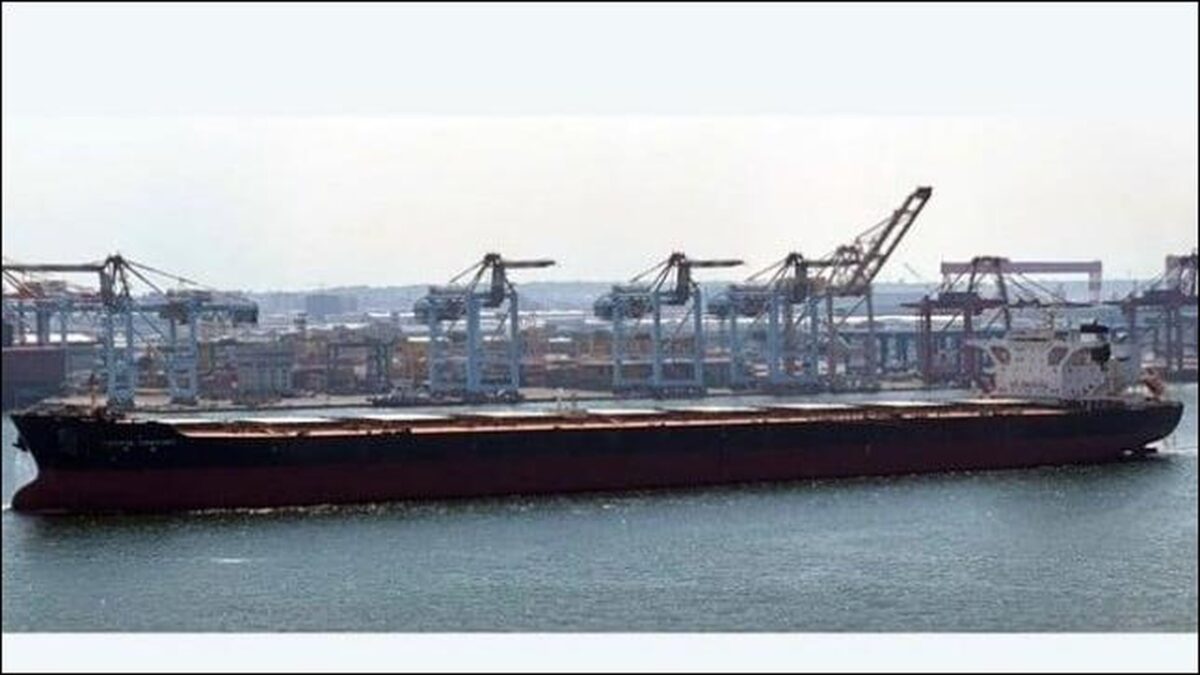
The incident, which occurred on June 9 last year, involved the 295-meter, 94,955 gross tonnage bulk carrier Pacific Century. While attempting to depart from Wharf No. 89 at the Port of Kaohsiung, a critical hub in East Asia, the vessel made contact with the wharf structure. This collision resulted not only in damage to the bulker’s rudder and the wharf facility itself but also tragically led to the capsizing and sinking of a working boat moored alongside the wharf. The force of the propeller wash generated by the Pacific Century during its departure maneuvers directly impacted the smaller vessel, causing its demise.
Kaohsiung, as Taiwan’s largest harbor, handles an immense volume of maritime traffic, processing approximately 8.8 million TEUs of container traffic and over 220 million metric tonnes of total cargo annually. With 28,899 vessel calls recorded in the preceding year, the port’s high operational tempo necessitates flawless execution of every maneuver, especially during arrivals and departures. Any deviation from established safety protocols in such a busy environment carries substantial risks, not only to property but also to human lives and the smooth flow of international trade. The incident involving the Pacific Century highlights how even routine operations can become hazardous without stringent adherence to safety standards and robust communication frameworks.
Unraveling the Communication Breakdown
At the heart of the Pacific Century incident was a critical breakdown in communication and a lack of clear agreement during the Master-Pilot Information Exchange (MPX) phase. The TTSB investigation revealed that while a basic MPX was completed between the pilot and the master, crucial specifics regarding the departure maneuver were not adequately discussed or agreed upon. Specifically, investigators found a significant oversight concerning the lateral clearance required for safely pulling the vessel away from its berth, as well as the precise timing and procedure for initiating astern propulsion and sternway movement.
The MPX is a foundational element of safe pilotage, designed to ensure a shared mental model of the intended maneuver between the vessel’s master and the pilot. It typically covers aspects such as the vessel’s characteristics, port conditions, intended course, speed, tug usage, and potential hazards. In this instance, the failure to clearly establish and mutually agree upon these intricate details meant that both the master and the pilot were operating with potentially different expectations or incomplete information regarding the sequence of actions necessary for a safe departure. This disconnect, however subtle, proved to be a critical vulnerability that directly contributed to the unfortunate contact with the wharf. The absence of a precise, step-by-step plan, understood and confirmed by both key navigators, created an environment ripe for error, leading to the bulker contact wharf event.
The Role of Master and Pilot in Vessel Departure
The roles of the ship’s master and the harbor pilot are complementary yet distinct, especially during complex maneuvers like port departure. The master retains overall command and ultimate responsibility for the vessel’s safety and the protection of the marine environment. The pilot, a local expert, provides specialized knowledge of the port’s unique geography, currents, traffic patterns, and regulatory requirements. Their combined expertise is meant to ensure the safest passage for the vessel.
During departure, the pilot typically advises on maneuvers, speed, and tug usage, while the master monitors the pilot’s actions, ensuring they align with the vessel’s capabilities and safety protocols. Effective communication is the linchpin of this relationship. Any ambiguities, unaddressed assumptions, or disagreements must be clarified and resolved before or during the maneuver. The TTSB report emphasizes that the failure of both parties to sufficiently clarify and agree on the lateral clearance and the sequence of propulsion commands for the bulk carrier was a direct causative factor. This highlights a fundamental principle: responsibility for safe navigation is shared, and both master and pilot bear the onus of ensuring a comprehensive understanding of the planned operation. The incident serves as a vital case study for the maritime industry, reiterating the necessity for robust collaboration and accountability to prevent future bulker contact wharf scenarios.
Lessons Learned from Maritime Incidents
Every maritime incident, particularly those involving a vessel contact wharf, offers invaluable lessons that can inform and improve global maritime safety practices. The TTSB’s comprehensive investigation into the Pacific Century incident provides concrete recommendations aimed at enhancing navigational safety and preventing similar occurrences. These recommendations often focus on reinforcing established procedures, improving training, and fostering a stronger safety culture within shipping companies and pilotage services.
One of the primary takeaways is the absolute necessity of a thorough and clearly documented Master-Pilot Information Exchange (MPX). This exchange should not be a mere formality but a substantive discussion where all critical aspects of the maneuver are explicitly covered, understood, and agreed upon. This includes specific details such as tug allocation and power, precise course and speed alterations, anticipated environmental factors, and contingency plans. Furthermore, the incident highlights the importance of effective bridge resource management (BRM), where all members of the bridge team actively participate, communicate, and monitor the vessel’s progress, acting as a crucial safety net for both the pilot and the master. The findings advocate for continuous professional development for both masters and pilots, with an emphasis on communication skills, situational awareness, and the ability to challenge assumptions or perceived unsafe practices constructively.
Enhancing Maritime Safety and Operational Excellence
To mitigate the risk of future maritime incidents like the bulker contact wharf scenario, the shipping industry must continuously strive for operational excellence and an unwavering commitment to safety. This involves several key strategies. Firstly, pilotage services and shipping companies should review and update their Master-Pilot Information Exchange (MPX) protocols, ensuring they are comprehensive, standardized, and regularly audited for compliance. Training programs should place a greater emphasis on practical communication exercises and crisis management scenarios, preparing both masters and pilots for unexpected challenges during complex maneuvers.
Secondly, the adoption and effective utilization of modern navigation technology, such as Electronic Chart Display and Information Systems (ECDIS) with real-time positioning, and port specific information overlays, can significantly enhance situational awareness. These tools can provide objective data to aid decision-making and act as an independent check on planned maneuvers. Moreover, fostering a robust safety culture, where open reporting of near misses and full engagement in safety investigations are encouraged, is paramount. This allows organizations to learn from potential failures before they escalate into serious incidents. By embracing these advancements and reinforcing fundamental safety principles, the maritime sector can significantly reduce the likelihood of vessel contact incidents and uphold the highest standards of safety and efficiency in global shipping operations. The lessons from the Pacific Century serve as a blueprint for continuous improvement across the entire maritime domain, promoting safer passage for all vessels and protecting vital port infrastructure.