ABS, Polaris Lead Unmanned Bridge Development | Mariner News
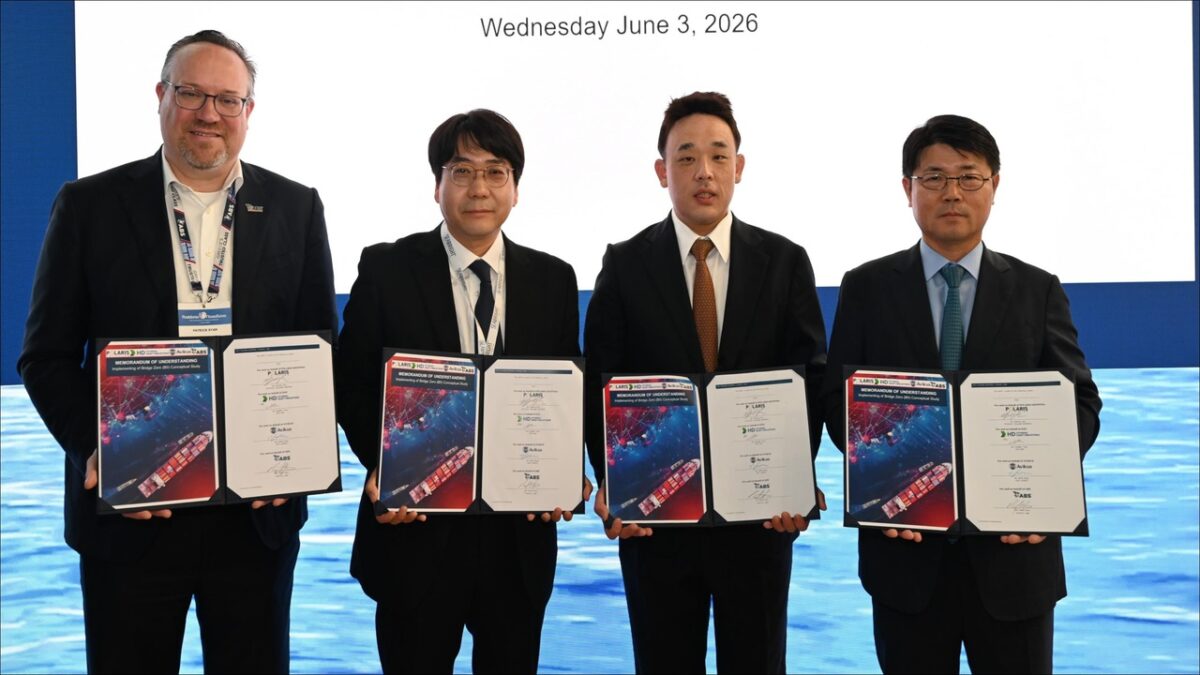
In a pivotal move set to redefine maritime operations, ABS, Polaris Shipping, HD Hyundai Heavy Industries (HHI), and autonomous navigation solutions provider AVIKUS have officially signed a four-party Concept Study Agreement for the implementation of a Conditional Unmanned Bridge. This groundbreaking collaboration signifies a major leap forward in the journey towards autonomous shipping, promising to enhance efficiency and safety across deep-sea voyages. The agreement focuses on developing a robust autonomous navigation concept that will allow for unmanned bridge operations under specific, low-risk conditions on one of Polaris Shipping’s 325K Very Large Ore Carriers (VLOCs). This strategic initiative not only positions the involved parties at the forefront of maritime technology but also aligns perfectly with the evolving IMO Maritime Autonomous Surface Ships (MASS) Code, setting a realistic pathway for the deployment of advanced vessel automation in the commercial shipping sector.
Pioneering Maritime Autonomy: The Unmanned Bridge Vision
The vision behind the Conditional Unmanned Bridge concept is not merely to remove human presence from the bridge entirely, but rather to introduce a phased autonomous navigation system. This innovative approach recognizes the complexities of global shipping routes and focuses on enabling unmanned bridge operations during specific, controlled scenarios, primarily in open-ocean passages where navigational risks are significantly lower. This pragmatic strategy is widely regarded across the industry as the most viable and realistic form of autonomous shipping to be implemented in the near term, offering a clear path for progressive vessel automation.
This conditional framework is crucial for building trust and gathering essential data for further advancements in maritime autonomy. By systematically evaluating the performance and safety of the autonomous systems under defined parameters, the industry can gradually expand the scope of unmanned operations. The focus on VLOCs provides an ideal platform for testing and refining these technologies, given their long-haul routes and often predictable oceanic conditions. This phased rollout ensures that safety remains paramount, allowing for thorough validation and regulatory alignment before broader adoption.
The concept also acknowledges the critical role of human oversight and intervention when necessary, ensuring that experienced mariners remain an integral part of the operational safety net. It’s about smart automation, augmenting human capabilities rather than outright replacing them, thereby fostering a more resilient and efficient shipping ecosystem. This measured approach is key to successfully integrating new digital shipping technologies into traditional maritime practices, ensuring a smooth transition towards a more automated future.
Collaboration at the Forefront of Digital Shipping
The strength of this agreement lies in the diverse expertise brought by each signatory, creating a powerful synergy for advancing vessel automation. ABS, a leading global classification society, plays a crucial role in providing structured safety evaluations. Patrick Ryan, ABS Senior Vice President and Chief Technology Officer, emphasized the technical complexity, stating, “The technical complexity of the concept lies not in any single system, but in the interactions between autonomous navigation, vessel design and the conditions during unmanned bridge periods.” ABS will leverage hazard identification, functional safety analysis, and meticulous alignment with the IMO MASS Code to ensure an evidence-based picture of the unmanned bridge concept’s safety and operational integrity.
Polaris Shipping, a prominent vessel owner and operator of VLOCs, brings invaluable operational insights and provides the crucial platform for real-world application. Their commitment to integrating cutting-edge maritime technology demonstrates a forward-thinking approach to enhancing their fleet’s efficiency and future-proofing their operations. DoHoon Kim, COO of Polaris Shipping, highlighted their dedication to pioneering safe and smart shipping solutions, underlining the commercial and practical aspects of this collaboration.
HD Hyundai Heavy Industries (HHI), a global shipbuilding giant, is instrumental in integrating the autonomous systems into the vessel’s design and infrastructure. Their deep engineering knowledge ensures that the hardware and software components seamlessly communicate and function within the ship’s complex environment. HHI’s expertise is critical in ensuring the structural and systemic integrity required for an unmanned bridge system.
AVIKUS, as the autonomous navigation solutions provider, contributes the core technological intelligence. Their advanced systems are designed to perceive the marine environment, plan optimal routes, and execute navigational decisions with precision. The collaboration with AVIKUS ensures that the autonomous capabilities are robust, reliable, and capable of handling the dynamic conditions of deep-sea voyages, making them a central pillar of this innovative project.
Navigating the Future: Challenges and Opportunities in Autonomous Shipping
The journey towards widespread autonomous shipping, particularly with advanced concepts like the Conditional Unmanned Bridge, is fraught with both significant challenges and unparalleled opportunities. From a technical standpoint, the integration of multiple complex systems—including sensors, artificial intelligence for decision-making, communication networks, and remote monitoring capabilities—presents a formidable task. Ensuring the resilience of these systems against cybersecurity threats and their ability to perform reliably across diverse environmental conditions is paramount. The interaction between these autonomous navigation systems and existing vessel design principles demands innovative engineering and thorough testing protocols to guarantee navigational safety.
Beyond the technical hurdles, regulatory frameworks are evolving. The IMO MASS Code is a testament to the global maritime community’s commitment to establishing international standards, yet its development is an ongoing process. This agreement serves as a vital real-world case study, providing tangible data and operational experience that can inform and accelerate the formulation of comprehensive regulations. Addressing liability, insurance, and legal responsibilities in scenarios involving autonomous vessels will require significant collaborative effort from industry stakeholders and governmental bodies.
However, the opportunities presented by this advancement are transformative. Autonomous vessel operations promise significant enhancements in operational efficiency through optimized route planning, reduced fuel consumption, and improved schedule reliability. This directly translates into economic benefits for shipping companies, fostering a more competitive global supply chain. Furthermore, the potential for reducing human error, a significant factor in maritime incidents, offers a compelling argument for increased safety. By automating routine and monotonous tasks, crew members can focus on critical oversight, maintenance, and complex decision-making, potentially leading to improved crew welfare and new skill requirements for mariners. The digital shipping revolution is not just about technology; it’s about reimagining the very fabric of maritime commerce.
The IMO MASS Code and Industry Alignment
The development of the Conditional Unmanned Bridge aligns strategically with the International Maritime Organization’s (IMO) efforts to create a comprehensive framework for Maritime Autonomous Surface Ships (MASS). The IMO’s MASS Code aims to address critical safety, security, and environmental aspects of autonomous operations, setting the global standard for this nascent technology. By focusing on a phased and conditional approach, the ABS-Polaris-HHI-AVIKUS consortium is directly contributing to the practical understanding and empirical data necessary for the IMO to refine and finalize its regulatory guidelines.
This proactive engagement by key industry players is essential for ensuring that future regulations are not only robust but also practical and implementable. The insights gained from operating a VLOC with a conditional unmanned bridge will offer invaluable lessons on system performance, human-machine interface requirements, and the real-world implications of varying levels of autonomy. This collaborative effort helps bridge the gap between technological innovation and regulatory readiness, fostering an environment where maritime technology can advance responsibly and safely.
The concept’s focus on specific low-risk conditions, such as open-ocean passages, reflects the cautious and methodical approach advocated by the IMO for integrating autonomous functions. This iterative development process, wherein technology is proven in controlled environments before expanding its scope, builds confidence among regulators, operators, and the public alike. It underscores a shared commitment to maintaining the highest standards of navigational safety while embracing the transformative potential of vessel automation.
Economic and Environmental Implications of Vessel Automation
The implications of vessel automation, epitomized by the Unmanned Bridge project, extend far beyond just operational efficiency, touching upon significant economic and environmental factors within the bulk shipping sector. Economically, the shift towards more autonomous operations promises substantial long-term benefits. Optimized route planning, driven by advanced algorithms that consider weather patterns, currents, and port congestion, can lead to significant reductions in fuel consumption and therefore operating costs. This economic advantage positions early adopters like Polaris Shipping favorably in a competitive global market, fostering a more sustainable business model for cargo transport.
Environmentally, the reduction in fuel consumption directly translates into lower greenhouse gas emissions, contributing positively to the maritime industry’s ambitious decarbonization goals. Autonomous systems can maintain optimal speeds and operational profiles more consistently than human operators, minimizing environmental impact. Furthermore, the data collected from highly instrumented autonomous vessels can provide unprecedented insights into vessel performance and environmental interactions, paving the way for further innovations in sustainable shipping practices and smarter fleet management.
The evolution of crew roles is another critical aspect. While some fear job displacement, the reality is likely a shift towards new, specialized roles focused on remote monitoring, data analysis, system maintenance, and cybersecurity. This transformation presents an opportunity for upskilling the maritime workforce, creating new career pathways in digital shipping and maritime technology. Investing in autonomous solutions today is an investment in the future resilience, competitiveness, and environmental stewardship of the global shipping industry, driving forward the transition to a smarter, more connected maritime future.
The agreement among ABS, Polaris Shipping, HD HHI, and AVIKUS for the Conditional Unmanned Bridge represents a landmark moment in maritime history. It underscores a collective commitment to pioneering safe, efficient, and sustainable shipping solutions through advanced vessel automation. By tackling the technical complexities, aligning with global regulatory bodies like the IMO, and embracing a pragmatic, phased approach, this consortium is not just developing new technology; it is actively shaping the future of global maritime commerce. This collaboration is a powerful testament to the transformative potential of combining diverse expertise to navigate the exciting, yet challenging, waters of autonomous shipping.