US Navy Detains Vessel Evading Hormuz Blockade | Mariner News
In a significant development that underscores the ever-present tensions in vital global shipping lanes, the US Navy has opened fire on and detained a vessel attempting to evade a Hormuz blockade in the Arabian Sea. This dramatic incident involved a US guided-missile destroyer intercepting a container ship that allegedly refused to comply with repeated warnings, leading to direct military action and highlighting the critical role of naval forces in enforcing international maritime rules and sanctions. The event has sent ripples through the shipping industry and geopolitical circles, drawing attention once again to the precarious balance of power and security in one of the world’s most strategic waterways.
The High-Stakes Interception in the Arabian Sea
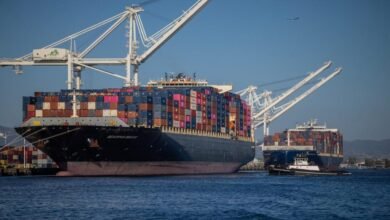
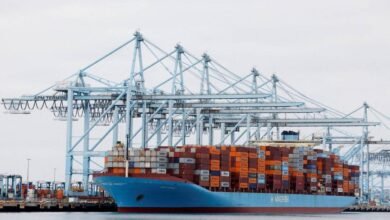
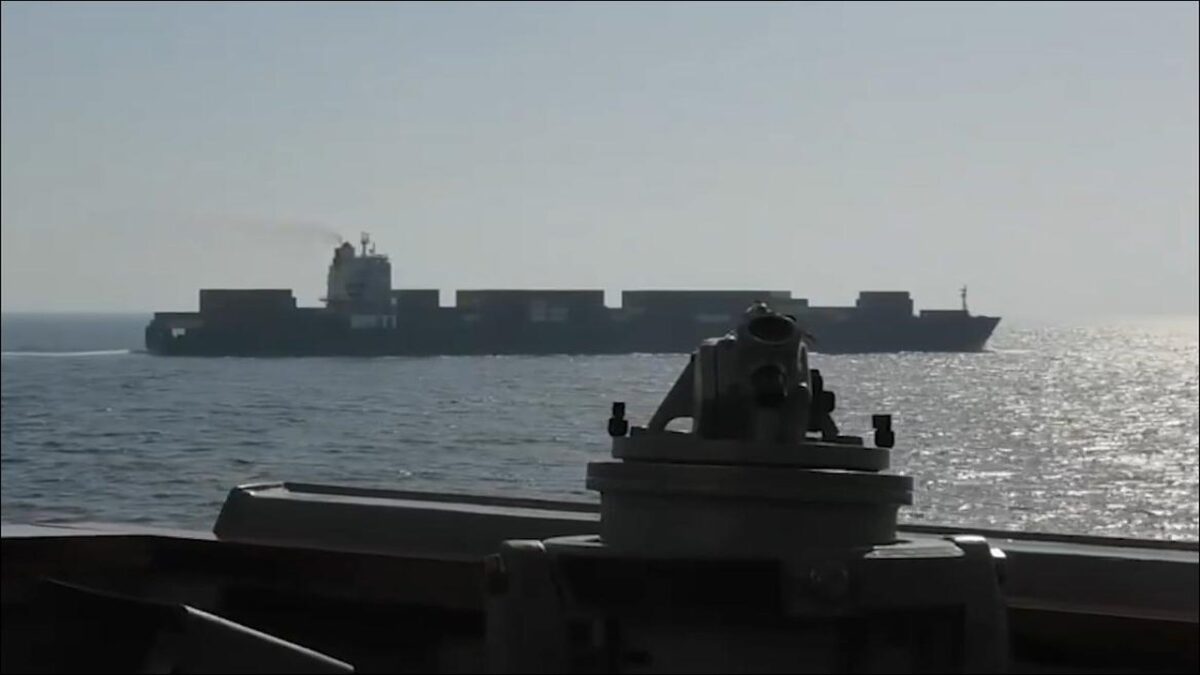
The incident unfolded on a recent Sunday, when the USS Spruance, a US Navy guided-missile destroyer, engaged the container ship Touska. According to reports from US Central Command, the Touska, an Iranian-flagged vessel, was transiting the north Arabian Sea at 17 knots, en route to Bandar Abbas, Iran. This route placed it squarely in violation of a US blockade targeting vessels that have previously called at Iranian ports, a measure designed to enforce international sanctions against the nation. The US Navy’s objective was clear: to prevent the vessel from proceeding with its intended journey, thus upholding the integrity of the blockade.
The sequence of events began with multiple warnings issued by American forces over a six-hour period. These warnings, communicated to the Iranian-flagged vessel, clearly stated that it was in violation of the existing US blockade. Despite these explicit instructions and the prolonged period for compliance, the crew of the Touska reportedly failed to heed the repeated demands to alter course or stop. Faced with a non-compliant vessel continuing its evasion maneuvers, the USS Spruance escalated its response in accordance with its rules of engagement, which allow for defensive action when warnings are ignored in such situations.
Subsequently, the Spruance directed the Touska’s crew to evacuate its engine room, a critical step before kinetic action was taken. Following this directive, the guided-missile destroyer disabled the Touska’s propulsion by firing several precise rounds from its 5-inch MK 45 Gun into the container ship’s engine room. This targeted action effectively immobilized the vessel, preventing further evasion. After the ship was rendered non-compliant, US Marines from the 31st Marine Expeditionary Unit boarded the Touska, taking control of the vessel. The container ship now remains in US custody, marking a decisive end to the high-seas pursuit and enforcement action.
Understanding the Strategic Importance of the Strait of Hormuz
The Strait of Hormuz is unequivocally one of the most significant and volatile maritime chokepoints on Earth. Connecting the Persian Gulf with the Arabian Sea and the Gulf of Oman, this narrow waterway is the only sea passage from the Persian Gulf to the open ocean, making it indispensable for global energy transport. Roughly one-fifth of the world’s total oil consumption and a significant portion of its liquefied natural gas (LNG) pass through this strait daily. Its strategic importance makes it a focal point for geopolitical maneuvering, military presence, and international disputes, particularly concerning Iran, which borders the Strait.
For decades, the Strait has been a flashpoint for international tensions, with various nations, including the United States, maintaining a naval presence to ensure freedom of navigation and regional stability. The term “blockade” in this context often refers to the enforcement of sanctions or restrictions on specific types of shipping, rather than a total cessation of all maritime traffic. The US policy regarding vessels that have visited Iranian ports falls into this category, aiming to exert economic pressure through maritime interdiction. Any attempt to evade these established restrictions is viewed as a direct challenge to international mandates and regional security frameworks, often leading to swift and firm responses from naval forces tasked with enforcement.
The unique geography of the Strait, coupled with the dense concentration of commercial shipping and naval assets, creates an inherently complex environment. Incidents like the recent US Navy vessel detention underscore the constant vigilance required to maintain order and enforce international law in these critical waters. The balance between allowing safe passage for legitimate commerce and interdicting non-compliant vessels is a delicate one, often fraught with political and military sensitivities. Such events are a stark reminder of the ongoing maritime challenges and the high stakes involved for global trade and energy security.
International Law and Maritime Rules of Engagement
The US Navy’s actions in the Arabian Sea, particularly the use of force to disable and detain a merchant vessel, bring to the forefront complex questions of international law and established rules of engagement. Under international maritime law, particularly the United Nations Convention on the Law of the Sea (UNCLOS), the principle of freedom of navigation is paramount, allowing vessels to traverse international waters without interference. However, this freedom is not absolute and can be subject to limitations, especially when related to national security, piracy, or the enforcement of legitimate international sanctions.
When a vessel, such as the Touska, is deemed to be in violation of established blockades or sanctions and refuses to comply with warnings, naval forces operate under specific rules of engagement. These rules typically dictate a graduated response, starting with verbal warnings, escalating to warning shots, and, if absolutely necessary, targeted kinetic action to disable a non-compliant vessel. The explicit instruction to evacuate the engine room before firing indicates an adherence to protocols designed to minimize casualties, even in a hostile interdiction scenario. The subsequent boarding by the Marine Expeditionary Unit is also a standard procedure for securing and investigating non-compliant vessels at sea.
The legality of the US blockade itself, specifically pertaining to vessels that have visited Iranian ports, is rooted in the broader framework of international sanctions imposed to address various geopolitical concerns. While the use of force at sea is always a serious matter, the US position likely rests on the argument that the Touska’s deliberate evasion of a legitimate blockade, after ample warning, constituted a threat to the enforcement of these sanctions. Such incidents inevitably lead to international scrutiny and debate among legal scholars and diplomatic bodies regarding the precise boundaries of naval power projection and the enforcement of international mandates in global waters.
Repercussions for Global Shipping and Regional Stability
The US Navy’s interdiction of the vessel attempting to evade the Hormuz blockade will undoubtedly have significant repercussions for the global shipping industry and the already fragile stability of the Middle East. For shipowners and operators, such incidents heighten the perceived risks of navigating through the Arabian Sea and the Strait of Hormuz. Insurance premiums for voyages through these areas may see an uptick, reflecting the increased operational hazards. Moreover, shipping companies may reconsider routes or implement stricter compliance checks to avoid similar confrontations, potentially leading to delays and higher operational costs.
Beyond economic impacts, the incident carries considerable geopolitical weight. It serves as a stark reminder of the robust US naval presence in the region and its willingness to enforce maritime security measures. This firm stance can be interpreted in various ways: as a deterrent to other vessels contemplating similar evasive actions, or, conversely, as an escalatory step that could further inflame regional tensions. Nations with vested interests in the region will be closely watching for any diplomatic or military responses from Iran or its allies, which could further destabilize critical shipping lanes.
The long-term implications for regional stability are complex. While the immediate objective of preventing sanctions evasion was met, the use of force introduces an element of unpredictability. It reinforces the notion that the Strait of Hormuz and surrounding waters remain a contentious zone where commercial interests are inextricably linked with geopolitical rivalries and security operations. The maritime community will continue to navigate these challenges, constantly adapting to an evolving security landscape where such dramatic incidents can occur with little warning.
The Broader Context of Naval Presence and Enforcement Operations
The presence of the US Navy and other international naval forces in the Middle East is a cornerstone of global maritime security. Their missions extend beyond traditional defense to include counter-piracy operations, freedom of navigation patrols, and the enforcement of international mandates, such as sanctions. The recent incident involving the USS Spruance and the container ship Touska is a clear illustration of these ongoing enforcement operations, which are vital for upholding the rules-based international order at sea.
Naval assets like the guided-missile destroyer USS Spruance are equipped with advanced surveillance and interdiction capabilities, enabling them to monitor vast stretches of ocean and respond effectively to threats. The ability to track a vessel transiting at 17 knots, issue multiple warnings, and then precisely disable its propulsion demonstrates a sophisticated level of operational readiness and tactical execution. These capabilities are crucial in a region where illicit activities, from smuggling to sanctions evasion, pose constant challenges to legitimate maritime commerce.
This incident reinforces the US commitment to maintaining maritime security in the Arabian Sea and enforcing its policy regarding Iranian-related shipping. It also highlights the persistent challenges faced by naval forces in distinguishing between legitimate commercial activities and those designed to circumvent international laws. As geopolitical landscapes continue to shift, the role of naval power in safeguarding global trade routes and enforcing international norms will remain a paramount aspect of global security strategies, ensuring that vital arteries of commerce, such as the Strait of Hormuz, remain as safe and secure as possible for all compliant vessels.
In conclusion, the US Navy’s recent action to detain a vessel evading the Hormuz blockade after opening fire marks a significant moment in the ongoing efforts to maintain maritime security and enforce international sanctions in a highly strategic region. This incident underscores the complexities and inherent risks involved in naval interdiction operations, the critical importance of the Strait of Hormuz for global commerce, and the delicate balance required to preserve regional stability. As the international community monitors the aftermath, the event serves as a potent reminder of the constant vigilance and firm resolve necessary to navigate the intricate geopolitical currents of the world’s oceans.