New Zealand Boosts Offshore Gas Exploration with $21M Investment | Mariner News
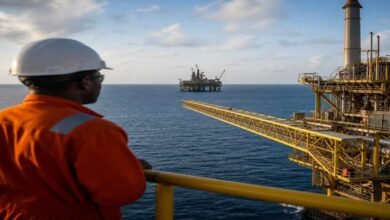
New Zealand is advancing its strategy to restart domestic gas production with a $21 million investment from its Gas Security Fund (GSF) into two new offshore exploration projects. This funding marks further progress following the reversal of the country’s 2018 ban on offshore oil and gas exploration.
Resources Minister Shane Jones and Associate Finance Minister Chris Bishop announced the financing, drawn from the GSF, a $113 million state-owned investment facility designed to ramp up gas production in New Zealand.
One of the primary beneficiaries is EnZed Energy’s Kaheru offshore gas exploration project in the Taranaki Basin. It will receive $12.19 million through a time-limited equity arrangement. The Kaheru project has a total estimated cost of $40.2 million, with EnZed Energy aiming to secure the remaining $28.1 million from other investors.
The time-limited equity arrangement for Kaheru highlights a governmental approach focused on de-risking initial exploration phases to catalyze broader private investment, rather than outright subsidization. This structured financial commitment aims to validate commercial viability while leveraging state capital to attract the majority of the project’s funding from other investors, thereby encouraging market participation and shared risk.
EnZed Energy was granted a 12-year exploration permit in July, covering approximately 546 square kilometers in the offshore Taranaki Basin, located east of the producing Kupe field. This was the first such permit issued by New Zealand since the 2018 ban reversal.
The initial phase of the project will prospect the Kaheru field to ascertain the presence of commercially recoverable gas. Minister Shane Jones stated that the project targets an estimated 182 petajoules (PJ) of additional gas reserves, which is equivalent to nearly 25 percent of New Zealand’s January 2026 proven and probable gas reserves.
The potential discovery of 182 PJ of gas from Kaheru alone underscores a significant potential boost to national energy security. This scale of domestic production could substantially reduce the nation’s future reliance on imported gas, directly impacting long-term energy import infrastructure needs and related maritime logistics. This pivot towards maximizing indigenous resource utilization, after years of an exploration ban, signals a committed policy focus on domestic energy independence, potentially stimulating demand for specialized offshore survey and drilling vessel services in the Taranaki Basin.