LPG Marine Fuel & Carbon Capture for Decarbonisation | Mariner News
In a pivotal move towards a greener maritime future, Lloyd’s Register (LR) has identified `LPG marine fuel` combined with `onboard carbon capture systems` as a compelling and viable pathway for `shipping decarbonisation`. This forward-thinking assessment, detailed in LR’s recent “Fuel for Thought: LPG” report, highlights liquefied petroleum gas (LPG) as an increasingly significant `alternative marine fuel` with substantial potential, especially when its inherent benefits are augmented by advanced `carbon capture technology`. As the maritime industry faces mounting pressure to reduce its environmental footprint, LR’s insights provide a timely and strategic perspective on leveraging readily available fuels for ambitious emissions reduction goals.
The Immediate Advantages of LPG as a Marine Fuel
LPG has rapidly emerged as one of the most accepted `alternative marine fuels`, particularly within the specialized gas carrier segment. LR’s comprehensive report underscores LPG’s capacity to deliver `considerable emissions reductions` compared to conventional heavy fuel oil (HFO) and marine gas oil (MGO). The environmental benefits are striking: fossil LPG slashes sulfur oxides (SOx) emissions by approximately 97%, nitrogen oxides (NOx) by about 20%, and particulate matter by a remarkable 90% when compared to heavy fuel oil. Furthermore, it offers roughly a 20% reduction in carbon emissions. Beyond tank-to-wake figures, LR also referenced research indicating that LPG can lower `well-to-wake greenhouse gas emissions` by around 17% compared with MGO, providing a more holistic view of its environmental performance.
This robust performance profile has solidified LPG’s position in the maritime sector, particularly for vessels built or converted to handle gas cargo. With over 275 gas carriers either operating on LPG or on order, its widespread acceptance in this niche is undeniable. The global availability of LPG bunkering infrastructure, though still developing for broader applications, also presents a significant advantage. Its relatively mature supply chain and established safety protocols further enhance its appeal as a practical, commercially viable fuel option in the immediate to medium term, directly supporting `maritime emissions reduction` efforts across the fleet. The clear operational and environmental gains make LPG an attractive proposition for owners and operators seeking to comply with increasingly stringent environmental regulations while maintaining operational efficiency and reliability.
Supercharging Decarbonisation with Carbon Capture Integration
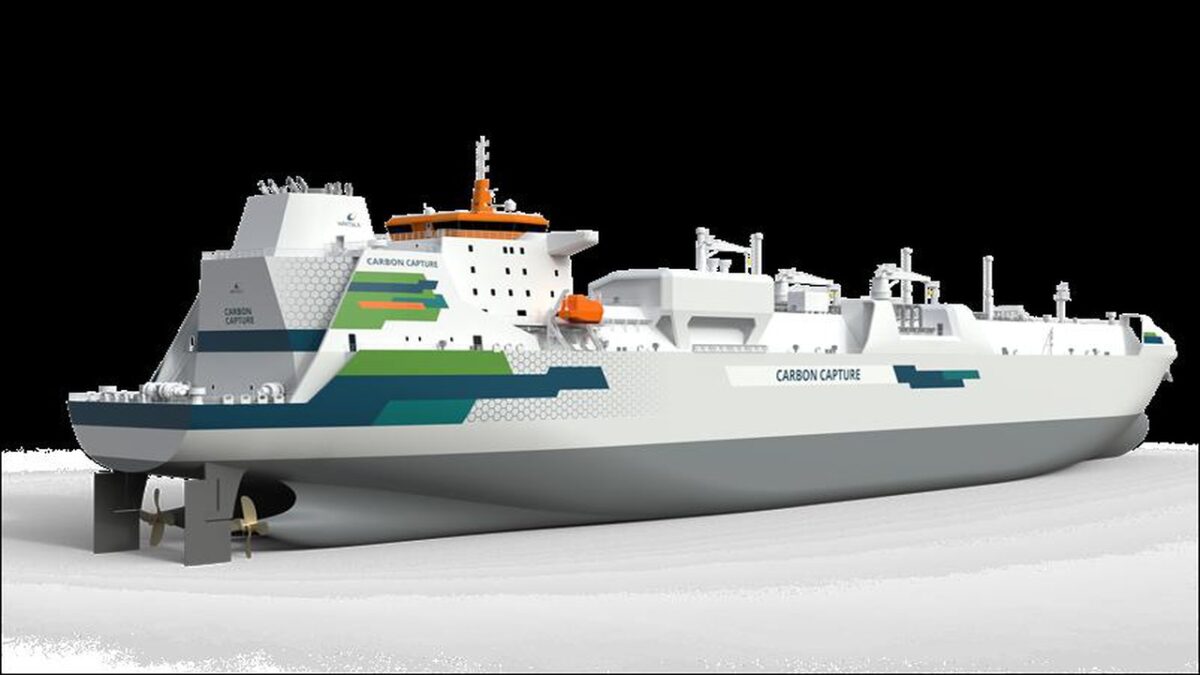
While LPG offers significant emissions reductions on its own, its true transformative potential for `shipping decarbonisation` is unlocked when paired with `onboard carbon capture systems`. LR’s report delves into how these innovative technologies can elevate LPG from a low-carbon fuel to a near-zero or even net-zero emission solution. Carbon capture technology, which involves capturing CO2 directly from the vessel’s exhaust gases, can effectively negate the remaining carbon emissions produced by burning fossil LPG. This integration is a game-changer, addressing the “last mile” of decarbonisation that often presents the greatest challenge for fossil-derived fuels.
The combination of `LPG marine fuel` and `carbon capture technology` also opens doors to `future renewable fuel pathways`. As bio-LPG or synthetic LPG (e-LPG) become more widely available and commercially viable, their integration into vessels equipped with carbon capture could achieve genuinely `net-zero emissions`. This modular approach allows for a flexible `green fuel pathway`, enabling vessels to transition from fossil LPG to renewable LPG without significant modifications to their existing fuel systems or carbon capture units. This foresight in planning offers long-term resilience and future-proofing for maritime assets, aligning with aggressive `sustainable shipping solutions` and the global drive towards `environmental sustainability` within the maritime sector. The technological readiness for onboard carbon capture is advancing rapidly, making this a tangible solution for immediate and future deployment.
Beyond Gas Carriers: Expanding LPG’s Reach in Global Shipping
While LPG has become the `fuel of choice` for large gas carriers, this segment accounts for only approximately 8% of global shipping emissions. This leaves a massive 92% from other vessel types that still rely heavily on conventional, high-emission fuels. LR’s report provocatively highlights this disparity, signaling a colossal opportunity for broader adoption of `LPG fuel` outside its traditional niche. Industry projections confirm that most new Very Large Gas Carriers (VLGCs) entering service will be LPG-fuelled or LPG-ready, demonstrating market confidence within its established sector. The challenge now is to extend this success to other vessel segments.
Expanding LPG’s reach requires addressing several key factors, including infrastructure development for bunkering across more ports globally, vessel design modifications for `LPG fuel` storage and handling in non-gas carriers, and economic incentives for shipowners to invest in `alternative marine fuels` and `carbon capture systems`. The scalability of LPG production and distribution networks offers a compelling argument for its broader application. As the `maritime industry trends` toward diverse fuel options, LPG’s characteristics – lower cost than some alternatives, ease of storage compared to cryogenics like hydrogen, and significant emissions reduction – position it favorably for wider adoption, particularly for medium-range vessels and potentially even large container ships with appropriate modifications. This strategic expansion is vital for achieving holistic `shipping decarbonisation` targets.
The Broader Landscape of Sustainable Shipping and LR’s Vision
Lloyd’s Register’s “Fuel for Thought: LPG” report is more than just an endorsement of a single fuel; it’s a contribution to the complex, multi-faceted dialogue surrounding `sustainable shipping`. The classification society consistently emphasizes that there will be no single ‘silver bullet’ fuel for `maritime emissions reduction`. Instead, a portfolio of `alternative marine fuels` – including ammonia, methanol, hydrogen, and LNG – will be necessary, each suited to different vessel types, operational profiles, and trade routes. LR’s rigorous research and analysis, exemplified by this report, play a crucial role in providing clarity and data-driven insights to shipowners, operators, policymakers, and investors navigating this complex transition.
LR’s commitment extends to guiding the industry through the technical, operational, and regulatory challenges of adopting `green fuel pathways`. By highlighting the strong potential of `LPG marine fuel` with `carbon capture`, they empower stakeholders to make informed decisions that align with global `decarbonisation strategies` and IMO targets. This leadership is critical in fostering innovation, encouraging collaboration, and accelerating the pace of change within the `shipping value chain`. The overarching vision is one where `environmental sustainability` is integrated into every aspect of maritime operations, from ship design and propulsion to bunkering and port operations.
Navigating the Future of Maritime Energy
The findings from Lloyd’s Register underscore a clear message: `LPG marine fuel` coupled with `carbon capture technology` offers a practical and impactful solution for accelerating `shipping decarbonisation`. This combination provides a pathway for immediate emissions reductions while offering flexibility for future transitions to renewable LPG, aligning with long-term climate goals. The strategic implications are profound, suggesting a need for increased investment in `LPG bunkering infrastructure`, the development of more sophisticated `onboard carbon capture systems`, and continued research into `alternative marine fuels` and propulsion technologies.
For shipowners and operators, the report serves as a strong signal to consider `LPG fuel` and carbon capture for both newbuilds and retrofits, offering a competitive edge in a rapidly evolving regulatory landscape. Policymakers can leverage these insights to create supportive frameworks that incentivize the adoption of these `sustainable shipping solutions`. Ultimately, achieving genuine `maritime emissions reduction` demands a collaborative effort across the entire `maritime industry`, and LR’s report provides a robust framework for making significant strides towards a cleaner, more sustainable future on the high seas. The conversation around `green fuels` is evolving, and LPG, enhanced by carbon capture, is set to play a pivotal role.