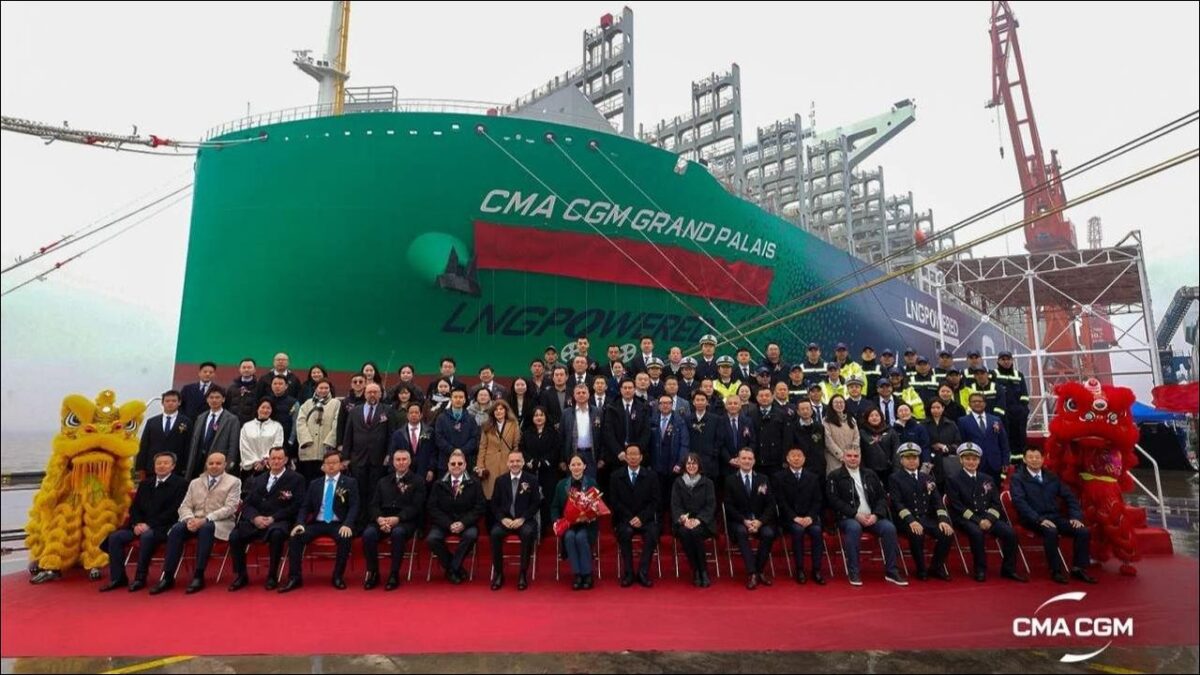
CMA CGM LNG Boxship Sails Asia-Europe Route | Mariner News
The global maritime industry is experiencing a profound transformation, with sustainability now at the forefront of innovation. Leading this charge, French container shipping giant CMA CGM has announced the highly anticipated deployment of its latest LNG-fuelled boxship, the CMA CGM Notre Dame, on the critical Asia-Europe service. This strategic move signifies a major milestone in the company’s commitment to decarbonizing its operations and advancing environmentally responsible practices within international maritime logistics. The integration of such a technologically advanced vessel underscores CMA CGM’s pioneering role in delivering cleaner, more efficient solutions for global trade, setting a new benchmark for sustainable maritime shipping and addressing the growing demand for eco-friendly supply chain solutions.
Charting a Green Course on the Asia-Europe Trade
The CMA CGM Notre Dame’s deployment on the French Asia Line (FAL) connecting Asia and Northern Europe is a strategic enhancement for one of the world’s most vital trade arteries. This bustling corridor facilitates the immense flow of goods between Asia’s manufacturing powerhouses and Europe’s key consumer markets. By allocating its newest, most advanced vessel to this route, CMA CGM reinforces its dedication to optimizing service offerings, ensuring both reliability and efficiency for its global clientele. The vessel’s maiden call at Shanghai’s Yangshan Port on May 22 marked its official entry into this pivotal service, symbolizing the company’s long-term vision for sustainable growth in global container shipping. This integration promises not only boosted capacity but also a significant reduction in the environmental impact associated with transporting goods along this crucial economic pathway.
The CMA CGM Notre Dame: A Beacon of Eco-Innovation
The CMA CGM Notre Dame is a remarkable feat of modern naval architecture, boasting an impressive 24,212 TEU capacity, making it one of the largest container ships in the world. Crucially, it holds the distinction of being the world’s largest LNG-powered French-flagged containership, signaling a significant leap forward in cleaner ocean transport. This vessel is the inaugural ship in a series of ten identical LNG-fuelled giants, all scheduled for delivery between 2026 and 2028. Beyond its colossal size, the Notre Dame integrates cutting-edge environmental features designed for peak efficiency. These include an expansive 18,600 m3 LNG fuel tank for extended voyages on cleaner energy, an aerodynamic windshield system to reduce wind resistance and fuel consumption, and advanced AI-assisted navigation. These innovations collectively drive operational efficiency while drastically lowering its ecological footprint.
LNG Propulsion: A Leap Towards Decarbonization
At the heart of the CMA CGM Notre Dame’s sustainability lies its sophisticated Liquefied Natural Gas (LNG) propulsion system. LNG is widely recognized as a cleaner marine fuel compared to traditional heavy fuel oil, offering immediate and substantial environmental benefits. Its combustion virtually eliminates sulfur oxides (SOx) and particulate matter, drastically improving air quality in port areas and along shipping lanes. Furthermore, it significantly reduces nitrogen oxide (NOx) emissions by up to 85% and cuts carbon dioxide (CO2) emissions by approximately 20-25%. These reductions are pivotal in helping the maritime industry meet increasingly stringent international regulations, such as those set by the International Maritime Organization (IMO). Coupled with AI-assisted navigation and intelligent energy management, the vessel’s systems work in synergy to maximize fuel efficiency, ensuring optimal performance with minimal environmental impact.
CMA CGM’s Sustainable Fleet Strategy
The deployment of the CMA CGM Notre Dame is a cornerstone of CMA CGM’s ambitious commitment to achieve Net Zero Carbon by 2050. By investing heavily in a series of ten ultra-large LNG-powered containerships, the company is solidifying its chosen pathway for fleet decarbonization over the coming decade. This proactive strategy positions CMA CGM as a leader in global green maritime innovation, showcasing a pragmatic approach to environmental stewardship that balances economic viability with ecological responsibility. The upcoming official naming ceremony of the CMA CGM Notre Dame in Le Havre in early July will further highlight the company’s dedication to these goals. This significant investment not only renews CMA CGM’s fleet but also actively drives the development of bunkering infrastructure and influences broader industry trends towards greener logistics solutions worldwide, encouraging other carriers to follow suit in adopting LNG-powered containership technology.
Driving Global Trade with Environmental Responsibility
The introduction of the CMA CGM Notre Dame offers a dual advantage for global trade, enhancing both economic performance and environmental sustainability. Economically, these ultra-large container vessels enable significant economies of scale, lowering the per-unit cost of shipping and contributing to more competitive global pricing. Their advanced operational systems improve schedule reliability, which is crucial for modern, time-sensitive supply chains. Environmentally, the drastic reduction in harmful emissions directly translates into cleaner air for port communities and a healthier marine ecosystem. This empowers shippers and logistics providers to meet their own corporate sustainability objectives, offering tangible proof of their commitment to environmental responsibility. By choosing greener transport options, businesses can enhance brand reputation, attract eco-conscious consumers, and contribute to a more sustainable global supply chain.
The Future of Container Logistics: Embracing LNG and Beyond
While LNG provides immediate and substantial emission reductions, CMA CGM’s vision extends beyond. LNG is seen as a vital transitional fuel, paving the way for future zero-emission alternatives. The industry is actively exploring bio-LNG and synthetic e-methane, which are “drop-in” fuels derived from renewable sources, promising even greater carbon neutrality for existing LNG fleets. The successful operation of vessels like the CMA CGM Notre Dame provides invaluable experience in managing complex alternative fuel systems, accelerating the readiness for future fuels like green methanol, ammonia, and hydrogen. This continuous innovation, coupled with the development of robust bunkering infrastructure at major ports, will be key to achieving a fully decarbonized maritime sector. CMA CGM’s pioneering efforts with its CMA CGM LNG-fuelled boxship series are instrumental in driving this essential evolution towards a truly sustainable future for container logistics.
The entry of the CMA CGM Notre Dame, a magnificent LNG-powered containership, into the bustling Asia-Europe service represents far more than just another vessel joining a trade route. It is a powerful testament to the maritime industry’s unwavering dedication to innovation and sustainability. This colossal CMA CGM LNG-fuelled boxship, with its advanced environmental technologies and immense carrying capacity, not only enhances the efficiency and reliability of global supply chains but also significantly contributes to the urgent goal of reducing shipping’s ecological footprint. As the first of a series of ten such pioneering vessels, the Notre Dame sets a formidable standard for future fleet designs and operational practices. Its deployment firmly establishes CMA CGM as a leader in sustainable maritime shipping, signaling a clear path towards a greener, more responsible future for international commerce. The journey towards net-zero emissions is ongoing, but with vessels like the CMA CGM Notre Dame leading the charge, the industry is unequivocally steering towards a brighter, cleaner horizon for global trade.