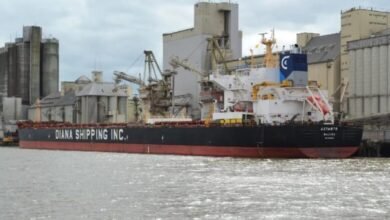
Genco Urges Shareholders: Reject Diana Shipping Offer | Mariner News
In a significant development for the dry bulk shipping sector, the leadership of Genco Shipping & Trading Limited, often referred to simply as Genco, has issued a renewed and emphatic appeal to its Genco shareholders to reject the unsolicited acquisition offer from Diana Shipping Inc. This latest plea underscores a deep-seated conviction within Genco’s executive team and board that Diana’s proposal fundamentally undervalues their company and does not serve the long-term best interests of its investors. The maritime community watches closely as this corporate drama unfolds, highlighting critical questions about valuation, strategic direction, and shareholder empowerment within the competitive dry bulk market.
Genco’s board has consistently maintained a united front, unanimously recommending that shareholders vote against the Diana Shipping offer. Their primary argument centers on the belief that the bid fails to recognize Genco’s inherent value, its robust operational performance, its modern fleet, and its strong future growth prospects as a leading dry bulk carrier. Management emphasizes Genco’s independent strategy, which has focused on disciplined capital allocation, fleet modernization, and a commitment to returning capital to shareholders, asserting that these initiatives position the company for superior standalone value creation compared to any potential combination under Diana’s proposed terms.
The Core of Genco’s Rejection Strategy
At the heart of Genco’s refusal is a meticulous financial analysis and a firm belief in its intrinsic worth. The company’s leadership has communicated that Diana Shipping’s all-stock offer significantly undervalues Genco’s fleet of Capesize, Panamax, Ultramax, and Supramax vessels, failing to account for their quality, age, and market positioning. Genco’s strategic vision involves leveraging its operational excellence and strong balance sheet to navigate the cyclical nature of the dry bulk shipping industry, capitalizing on favorable market conditions while mitigating risks during downturns. The board contends that accepting Diana’s bid would essentially cede control and potential future gains to a competitor whose strategic alignment and financial performance might not match Genco’s trajectory.
Furthermore, Genco has highlighted its strong corporate governance practices and its dedication to transparency with investors. The company has pointed to its consistent track record of dividend payouts and its ongoing efforts to optimize its fleet, including recent scrubber installations and newbuild deliveries, as evidence of its commitment to enhancing shareholder returns. This proactive approach contrasts sharply with the perceived lack of strategic rationale and undervaluation presented by the unsolicited Diana offer, leading Genco to advise its investors against accepting a proposal that it views as opportunistic rather than value-accretive.
Analyzing Diana Shipping’s Unsolicited Bid
Diana Shipping’s rationale behind its bid for Genco has been presented as an opportunity for consolidation within the fragmented dry bulk sector, aiming to create a larger, more diversified entity with enhanced scale and operational synergies. However, the specifics of Diana’s all-stock proposal have been met with skepticism from Genco’s side, which argues that the terms do not adequately compensate Genco shareholders for the inherent value of their holdings. While consolidation can offer benefits like increased market leverage and reduced operational costs, the valuation offered in this specific instance has been a major sticking point.
Market analysts have also weighed in, with many acknowledging the potential strategic merits of consolidation in a cyclical industry like dry bulk shipping. Nevertheless, the financial terms and the perceived lack of a substantial premium in Diana’s offer have led some to question the compelling nature of the bid from Genco’s shareholder perspective. Diana Shipping, a fellow dry bulk carrier, faces its own set of market conditions and strategic challenges, and its proposal to acquire Genco is a bold move to expand its fleet and market presence, potentially shifting the competitive landscape in the maritime space. The unsolicited nature of the bid further complicates matters, often signaling a more aggressive, less collaborative approach to merger and acquisition activities.
Protecting Shareholder Value: Genco’s Stance
Genco’s commitment to maximizing shareholder value is a recurring theme in its communications regarding the Diana offer. The company’s management has meticulously outlined its standalone strategy, emphasizing its distinct competitive advantages, including a modern, efficient fleet, a robust balance sheet, and a proven operational model. Genco argues that its current trajectory, driven by internal growth initiatives and prudent financial management, offers a more compelling long-term return for its investors than the terms proposed by Diana Shipping. The company has underscored its ability to navigate the complexities of the global shipping industry independently, leveraging its expertise to adapt to evolving market demands and regulatory changes.
Furthermore, Genco’s board has taken steps to ensure that shareholders are fully informed about the potential risks and benefits of both options: accepting Diana’s offer or continuing as an independent entity. They have highlighted the potential dilution of Genco shareholders’ equity, the strategic fit of the combined entities, and the execution risks associated with integrating two large shipping companies. By doing so, Genco aims to empower its investors with the information necessary to make a truly informed decision, one that aligns with their financial goals and risk tolerance. The emphasis is on long-term sustainable growth and shareholder wealth creation, values which Genco believes are best served by rejecting the current bid.
The Broader Implications for the Dry Bulk Market
This high-stakes corporate maneuver between Genco and Diana Shipping carries broader implications for the entire dry bulk market. Any significant merger or acquisition within this segment can influence fleet capacity, competitive dynamics, and even freight rates. The dry bulk shipping industry, characterized by its cyclical nature and sensitivity to global economic growth and commodity trade, frequently experiences periods of consolidation as companies seek scale, efficiency, and market power. Should this deal, or similar ones, proceed, it could trigger further M&A activity, reshaping the competitive landscape and potentially leading to a more concentrated market.
Moreover, the outcome of this particular shareholder appeal will send a strong message regarding corporate governance and the effectiveness of board recommendations in fending off unsolicited bids. It will highlight how investors prioritize immediate returns versus long-term strategic value and management’s vision. For other dry bulk carriers and maritime firms, this situation serves as a case study in navigating unsolicited proposals and communicating a clear, compelling standalone strategy to their respective investor bases. The market watches not just for the immediate outcome, but for the precedents it sets for future corporate actions in the global shipping domain.
What Genco Shareholders Need to Consider
For individual Genco shareholders, the decision of whether to accept or reject Diana Shipping’s offer is multifaceted and requires careful consideration. Investors should meticulously review all materials provided by both companies, focusing on the financial terms of the offer, the strategic rationale presented by Diana, and Genco’s compelling arguments for independent value creation. Key factors include the implied valuation of Genco shares under the offer, the pro forma financial health and strategic direction of a combined entity, and the potential for Genco’s standalone strategy to yield greater returns in the future.
Shareholders are advised to consult with financial advisors and conduct their own due diligence, evaluating the long-term prospects of both Genco as an independent entity and a combined company with Diana Shipping. The market outlook for dry bulk shipping, global trade patterns, and macroeconomic forecasts will also play a crucial role in shaping the perceived value of either path. Ultimately, the decision rests with each shareholder to weigh the immediate certainty of Diana’s offer against the potential for higher future returns under Genco’s continued independent leadership. Their vote will be a critical determinant of Genco’s future trajectory and a significant moment in the current dry bulk shipping climate.
Conclusion
Genco’s persistent appeal to its shareholders to reject the Diana Shipping offer is a powerful testament to its leadership’s conviction in the company’s standalone strategy and intrinsic value. This ongoing corporate battle underscores the complexities of mergers and acquisitions in the capital-intensive shipping industry and the paramount importance of shareholder engagement and clear communication. As the deadline for the offer approaches, the collective decision of Genco’s investors will not only determine the future of this prominent dry bulk carrier but also send ripples throughout the broader maritime sector. The focus remains squarely on maximizing value for all shareholders, a principle that Genco’s management is resolutely defending against what it perceives as an inadequate and opportunistic bid.