Inland Cargo Vessel Sinks Near Antwerp Port | Mariner News
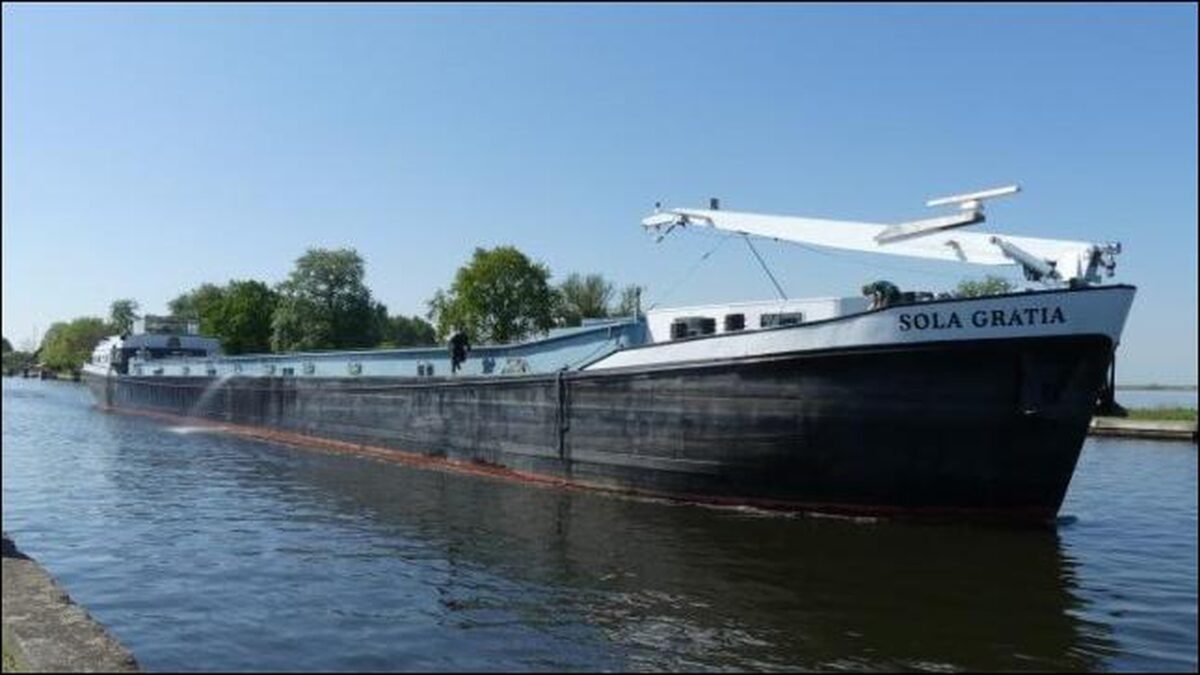
The tranquil waters near the bustling Port of Antwerp were disrupted recently when an inland cargo vessel sank following a collision, prompting an immediate emergency response and raising questions about waterway safety. This significant maritime incident, involving the freighter Sola Gratia, occurred over the weekend, sending ripples through the local shipping community and attracting considerable attention from maritime news outlets. The vessel, laden with sand, was making its inbound journey towards the vital Port of Antwerp when it encountered difficulties, ultimately leading to its submersion in the Scheldt River. The swift actions of emergency services ensured the safety of the crew, mitigating potential loss of life, yet the incident highlights the ever-present challenges in marine transport and port operations.
The casualty unfolded on a Friday night as the cargo ship Sola Gratia navigated the approach to Antwerp, one of Europe’s largest and busiest maritime hubs. As it neared the Royers Lock complex, a critical junction for many vessels, the freighter reportedly struck mooring bollards situated on the riverbank. This impact, according to the master’s testimony to responders, resulted in the loss of maneuverability, a critical factor that often precedes severe maritime accidents. The inability to control the vessel’s direction and speed in a busy waterway can quickly escalate into a dangerous situation, as was evident in this unfortunate event. The specific cause of the loss of maneuverability—whether mechanical failure, navigational error, or other factors—will undoubtedly be a central focus of subsequent investigations into this serious shipping accident.
Investigating the Inland Cargo Vessel Incident Near Antwerp
The immediate aftermath of the inland cargo vessel sinking saw a rapid deployment of emergency services. The master and the other crewmember aboard the Sola Gratia found themselves in the water after abandoning the distressed ship. Fortunately, the quick response of the fire brigade led to their successful rescue from the Scheldt River. They were subsequently handed over for medical evaluation, a standard procedure to ensure their well-being after such a traumatic event. While the rescue operation was a success, the focus quickly shifted to understanding the root causes of the incident and addressing its environmental implications. Preliminary reports suggest the vessel lost control, a common theme in many navigation accidents, prompting maritime authorities to launch a thorough investigation.
The investigation into the Sola Gratia maritime casualty will delve into various aspects to determine why the inland cargo vessel sank near the strategically important Port of Antwerp. Experts will examine the vessel’s maintenance records, the crew’s qualifications and recent activities, and the prevailing environmental conditions at the time of the accident. Factors such as visibility, current strength, and potential equipment malfunctions will all be scrutinized. Understanding how the vessel lost maneuverability is paramount, as this information can inform future safety protocols and prevent similar incidents. The complexity of navigating busy inland waterways, particularly near major port infrastructure like the Royers Lock complex, demands high precision and operational reliability, making such investigations crucial for overall waterway safety.
Salvage Operations and Environmental Concerns in the Scheldt
With the inland cargo vessel submerged in the Scheldt, attention quickly turned to the inevitable environmental risks. The vessel, while not a large tanker, carried fuel and lubricants, leading to a small but concerning petroleum leak into the river. Such fuel spills, even minor ones, require immediate attention to minimize ecological damage to the delicate riverine ecosystem. Cleanup contractors were swiftly engaged to mitigate the fuel spill, deploying containment booms and absorbent materials to prevent its widespread dissemination. These rapid response measures are vital in protecting water quality and biodiversity in busy shipping lanes, emphasizing the proactive approach necessary for environmental protection in marine transport.
Formulating comprehensive salvage plans for the sunken vessel is an intricate process, requiring careful consideration of various factors including the vessel’s size, its location on the riverbed, the depth of the water, and the prevailing river currents. Salvage experts are meticulously assessing the situation, developing strategies to safely raise the Sola Gratia from the Scheldt. This complex operation will involve specialized equipment and skilled personnel to ensure the vessel’s recovery without further environmental impact or disruption to navigation. The urgency of these salvage operations is underscored by the need to fully assess the damage to the vessel and prevent any long-term obstacles to marine traffic, though in this particular case, the immediate impact on port operations was minimal.
Impact on Port of Antwerp Operations and Navigation Safety
Remarkably, despite the severity of an inland cargo vessel sinking in such a critical maritime area, the Port of Antwerp’s overall operations were not significantly disrupted. This was primarily due to a fortunate circumstance: the Royers Lock, near where the incident occurred, was already out of service for extensive expansion work. Lennart Verstappen, spokesperson for the Port of Antwerp-Bruges, confirmed this, stating that the problems would have been considerably greater had the lock been actively in use. The Royers Lock primarily serves inland vessels, meaning that large seagoing ships, which utilize other access points, were entirely unaffected by the casualty. This mitigating factor prevented what could have been a major bottleneck and logistical nightmare for one of Europe’s pivotal ports.
The incident, while not impacting major shipping traffic, serves as a stark reminder of the continuous need for stringent navigation safety measures and robust infrastructure within busy port environments. The Port of Antwerp-Bruges, a hub for international trade, processes vast quantities of cargo daily, making the safety of its waterways paramount. The ongoing expansion work at the Royers Lock aims to enhance future capacity and safety, demonstrating the port’s commitment to modernizing its facilities. This incident, therefore, underscores the importance of such infrastructural investments, not only for efficiency but also for ensuring the resilience of maritime transport against unforeseen shipping accidents. Maintaining clear navigation channels and modern port infrastructure is key to preventing disruptions and ensuring the smooth flow of goods through this vital European gateway.
Broader Context of Maritime Incidents and Safety Protocols
This casualty follows other recent maritime incidents that highlight the persistent challenges in shipping safety. Just days prior to the Sola Gratia incident, the Port of Antwerp’s Deurganckdok district experienced a significant bunker fuel spill, which subsequently spread to adjacent areas causing disruption and further environmental concern. These events collectively underscore the intricate web of risks inherent in marine transport and the constant vigilance required from port authorities, vessel operators, and regulatory bodies. Each incident, regardless of its scale, provides invaluable lessons that contribute to the ongoing refinement of safety protocols, emergency response mechanisms, and environmental protection strategies across the global shipping industry. The interconnectedness of shipping operations means that a single accident can have cascading effects, from environmental damage to economic disruption, making robust safety frameworks essential.
The global shipping industry is continuously evolving, with advancements in technology, navigation systems, and crew training designed to enhance safety. However, human error, mechanical failures, and unpredictable environmental conditions remain persistent factors contributing to maritime accidents. Regulatory bodies, such as the International Maritime Organization (IMO) and national port authorities, work tirelessly to establish and enforce international standards for vessel construction, operational procedures, and crew certification. These frameworks are critical in preventing incidents like the inland cargo vessel sinking near Antwerp, ensuring that marine transport remains as safe and sustainable as possible. Regular drills, comprehensive risk assessments, and continuous education for seafarers are fundamental components of this proactive approach to safety.
Ensuring Future Waterway Security and Shipping Industry Resilience
Moving forward, the focus will remain on enhancing waterway security and strengthening the resilience of the shipping industry in regions like the Port of Antwerp. This involves a multi-faceted approach encompassing technological upgrades, improved navigational aids, continuous professional development for maritime personnel, and collaborative efforts between port authorities, emergency services, and environmental agencies. Investing in advanced surveillance systems, better weather forecasting tools, and innovative vessel designs that prioritize safety and environmental protection are crucial steps. Furthermore, fostering a culture of safety and responsibility among all stakeholders in marine transport is paramount to reducing the frequency and severity of future shipping accidents. The lessons learned from the Sola Gratia incident will undoubtedly feed into these ongoing efforts.
The incident near the Port of Antwerp, while concerning, provides an opportunity to reinforce existing safety measures and explore new strategies for preventing similar events. The recovery of the inland cargo vessel and the cleanup of the fuel spill are immediate priorities, but the long-term objective is to ensure that the Scheldt River and other vital waterways remain safe and navigable for all vessels. As maritime traffic continues to grow globally, the importance of robust safety protocols, effective emergency response, and continuous investment in port infrastructure cannot be overstated. By diligently addressing the challenges posed by incidents like the Sola Gratia sinking, the maritime community can work towards a safer, more efficient, and environmentally responsible future for global shipping and trade.