Eastern Pacific Shipping Takes Delivery of First Ammonia VLAC
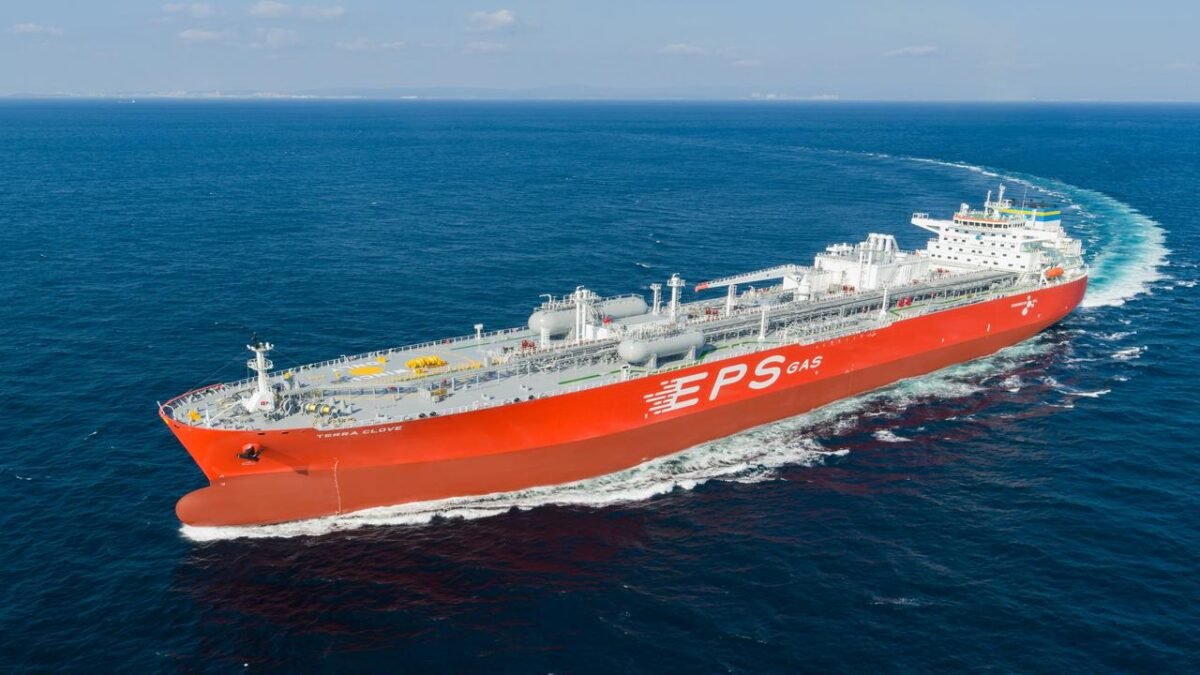
Eastern Pacific Shipping has taken delivery of the Terra Clove, the world’s first ammonia dual-fuel Very Large Ammonia Carrier (VLAC). The 93,000m³ vessel was built by HD Hyundai Heavy Industries and represents the first commercial application of the Everllence B&W 6G60ME-C10.5-LGIA ammonia dual-fuel two-stroke engine.
The naming ceremony in Ulsan, attended by representatives from the Maritime and Port Authority of Singapore, ABS, and the Mærsk Mc-Kinney Møller Center for Zero Carbon Shipping, signals the formal entry of ammonia-burning propulsion into the deep-sea tanker segment. While the vessel retains the ability to operate on conventional marine fuels, the integration of the LGIA engine architecture marks a critical test for the adoption of ammonia as a primary fuel source.
Technological and Commercial Implications
The commissioning of the Terra Clove provides the industry with its first high-fidelity dataset on the performance of ammonia-fueled two-stroke main engines in an active trading environment. Beyond the technical validation of the propulsion system, the move highlights a pivot in VLAC employment strategy. By utilizing the cargo itself—ammonia—as a fuel, owners are effectively insulating their operational costs from the price volatility of traditional bunker fuels, provided they have access to green ammonia infrastructure.
From a regulatory and safety perspective, this delivery sets the technical benchmark for the forthcoming adoption of ammonia bunkering protocols. The involvement of major classification societies and regulatory bodies in the vessel’s development suggests that the operational guidelines established for the Terra Clove will serve as the template for future alternative-fuel gas carrier standards. As this vessel enters service, its ability to maintain dual-fuel flexibility while managing the unique toxicity and combustion challenges of ammonia will dictate the pace at which the sector transitions away from conventional heavy fuel oils.