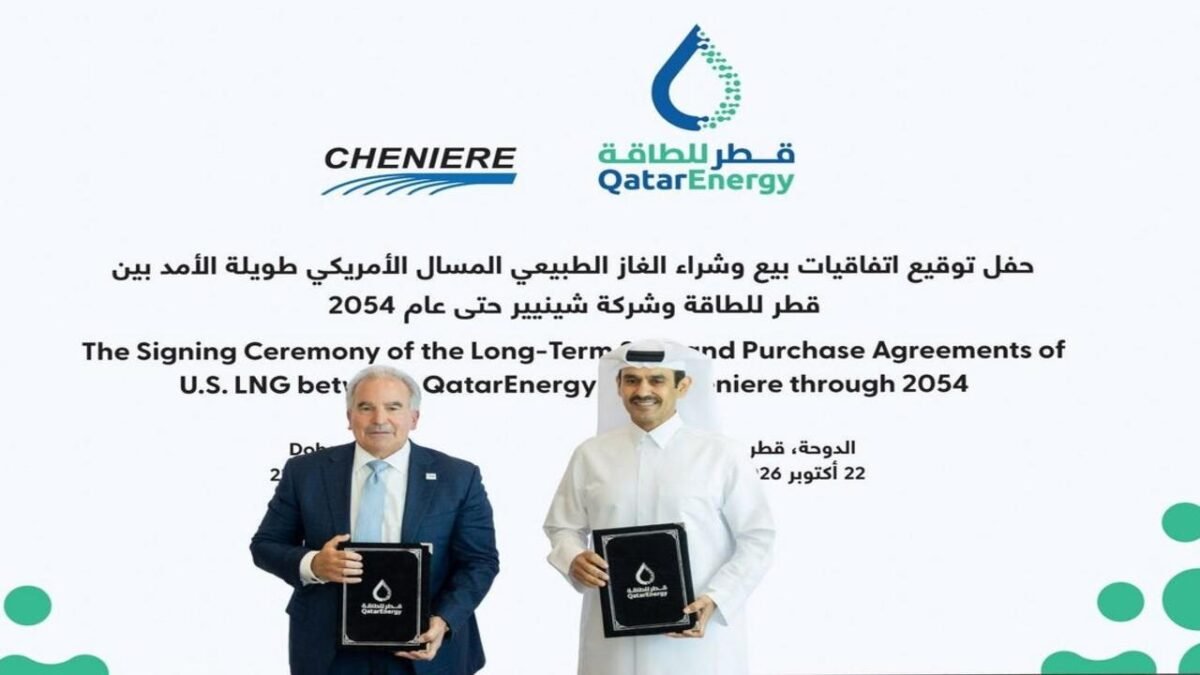
Cheniere and QatarEnergy Seal 30-Year LNG Supply Deal
Cheniere Energy has finalized a pair of long-term sale and purchase agreements (SPAs) with QatarEnergy, securing the supply of 4 million tonnes per annum (mtpa) of liquefied natural gas through 2054. The deal involves Cheniere subsidiaries Sabine Pass Liquefaction and Corpus Christi Liquefaction, with deliveries set to commence in the early 2030s.
Strategic Implications of the FOB Structure
The agreement is structured on a free-on-board (FOB) basis, with pricing indexed to the Henry Hub benchmark plus a fixed fee. For the LNG shipping market, this shift in control is significant. By opting for FOB terms, QatarEnergy assumes responsibility for the shipping logistics and freight procurement for these volumes. This effectively extends the reach of Qatar’s massive, state-backed shipping fleet and chartering apparatus into U.S. Gulf export terminals for the next three decades.
Capacity Expansion and Market Signaling
One mtpa of the total 4 mtpa volume is contingent upon a positive final investment decision (FID) for the first phase of the Sabine Pass Expansion Project. This structure functions as an implicit financial backstop, tethering future expansion capacity directly to one of the world’s largest gas exporters. The move signals a tightening of long-term integration between U.S. supply infrastructure and Qatar’s global portfolio, potentially reducing the volume of U.S. gas sold into the spot market as more capacity becomes locked into multi-decade destination-flexible or fixed-party contracts.
Operational Horizon
The 2054 sunset date for these contracts represents an unusually long commercial window in the current energy landscape. For shipowners and energy infrastructure investors, this underscores a commitment to long-haul, cross-basin trade lanes that will define LNG shipping demand well beyond the typical 15-to-20-year vessel charter cycle. The reliance on Henry Hub pricing, combined with the extreme duration of the commitment, cements the role of the U.S. Gulf as a foundational node in QatarEnergy’s broader effort to balance its supply-side optionality.