US Navy Hits Tanker Heading to Iran: Maritime Blockade | Mariner News
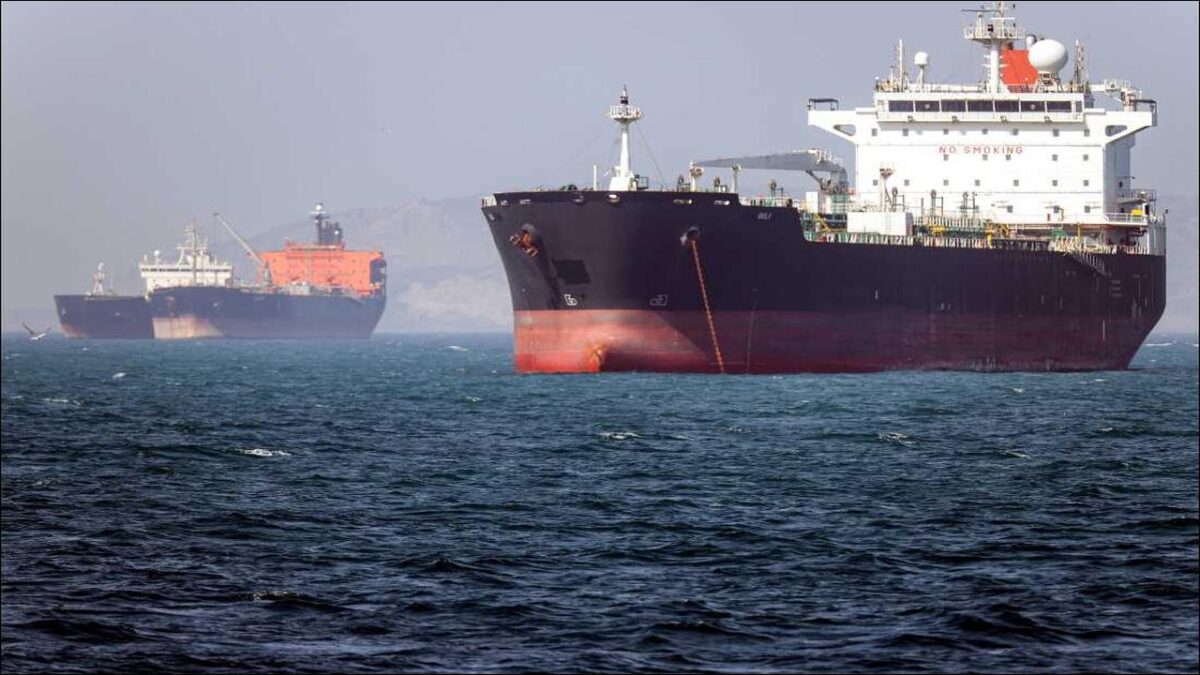
The volatile waters of the Persian Gulf have once again become a focal point of international concern following a decisive military action by the United States. In a significant development that underscores the escalating geopolitical tensions in the region, US forces confirmed on Tuesday that they hit a tanker, the Botswana-flagged M/T Lexie, which was reportedly sailing towards Iran’s strategic Kharg Island. This incident, confirmed by US Central Command (CENTCOM), involved disabling the unladen vessel with a Hellfire missile after its crew allegedly ignored multiple warnings over a 24-hour period. The strike, targeting the ship’s engine room, prevented the tanker from reaching its destination, signaling a firm escalation in the enforcement of a maritime blockade that the US has maintained in the region since mid-April. This event sends a clear message regarding the US commitment to disrupting what it perceives as illicit maritime activities and preventing potential Iranian aggression, adding a new layer of complexity to an already fraught geopolitical landscape. The implications for regional shipping, energy markets, and international relations are profound, demanding close attention from global stakeholders.
Escalating Tensions and CENTCOM’s Blockade Measures
The recent targeting of the M/T Lexie by US forces is not an isolated incident but rather a direct consequence of a rapidly deteriorating security situation in the Persian Gulf. Tensions have been steadily climbing following a series of aggressive actions, including recent missile and drone attacks launched by Iran across the Gulf. These attacks have significantly undermined ongoing ceasefire negotiations, which appear to have stalled, leaving the region on edge. In response to what it describes as a persistent threat, CENTCOM initiated robust blockade measures on April 13, aimed at controlling maritime traffic entering and leaving Iranian ports. This ongoing operation seeks to curtail activities deemed destabilizing or in violation of international norms, primarily focusing on preventing the flow of strategic materials or support to Iran.
Since the commencement of these blockade measures, CENTCOM reports a significant level of intervention. Specifically, six commercial vessels have been disabled, mirroring the fate of the M/T Lexie, while an astonishing 122 vessels have been redirected from their intended courses towards Iranian ports. These actions highlight the extensive nature of the US operation and its broad scope in monitoring and intercepting maritime traffic. The targeting of an unladen tanker, despite its non-cargo status, suggests a zero-tolerance approach to any vessel perceived as non-compliant or engaging in activities that violate the established blockade. This proactive stance underscores the high stakes involved and the US’s determination to project power and maintain its enforcement capabilities in critical international waters.
The use of a Hellfire missile to disable the tanker’s engine room represents a significant escalation in tactics, moving beyond warnings and redirections to direct kinetic action. This level of intervention against a commercial vessel, even if unladen and non-compliant, raises questions about the rules of engagement and the broader implications for freedom of navigation in international shipping lanes. For shipping companies, particularly those involved in tanker operations or transit through the Strait of Hormuz, these developments introduce an unprecedented level of risk and uncertainty. The military precision demonstrated in the strike, disabling the vessel without destroying it, indicates a strategic approach designed to achieve enforcement objectives while minimizing collateral damage, yet the act itself carries immense geopolitical weight.
The Anatomy of a Maritime Blockade and its Legal Ambiguities
Understanding the nature of CENTCOM’s “blockade measures” is crucial for appreciating the gravity of the M/T Lexie incident. Historically, a maritime blockade is an act of war, where a belligerent nation prevents access to or egress from enemy ports. However, CENTCOM’s language refers to “blockade measures,” suggesting a more nuanced, perhaps extra-legal, interpretation or application in a context that is not formally a declared war, despite a ceasefire being in effect. This distinction is vital for international law and global shipping, as it blurs the lines between peacetime enforcement and wartime actions. The legal justification for such extensive and forceful interdictions in international waters, especially against commercial vessels that are not directly engaged in combat, is complex and subject to intense scrutiny.
These measures, as enforced by US forces, effectively create a zone of constrained maritime movement around Iranian ports. While framed as necessary for regional stability and preventing illicit trade, they directly impact commercial shipping, raising concerns about the principle of freedom of navigation, a cornerstone of international maritime law. Tankers and other merchant vessels operating in the region must now contend with an environment where military intervention is a very real possibility, even outside territorial waters. The requirement for vessels to heed repeated warnings and comply with directions from US forces, under penalty of being disabled, transforms routine transit into a high-stakes endeavor.
The incident with the M/T Lexie highlights the inherent dangers for crew members and vessel operators. Even an unladen ship, seemingly posing no immediate threat, can become a target if it fails to comply with military directives. This scenario presents a complex challenge for ship captains, who must navigate the fine line between adhering to international maritime safety protocols and responding to military demands in a rapidly unfolding, high-pressure situation. The decision to use a Hellfire missile, typically an air-to-surface precision weapon, on a commercial vessel underscores the seriousness with which the US is enforcing these measures, potentially setting a precedent for future interventions against non-compliant shipping in contested regions. The implications for marine insurance, risk assessment, and operational planning for tanker fleets traversing the Persian Gulf are immediate and significant, requiring a re-evaluation of established practices and contingency plans.
Geopolitical Ramifications and Global Energy Market Impact
The US strike on the tanker M/T Lexie reverberates far beyond the immediate waters of the Persian Gulf, carrying significant geopolitical ramifications and potential impacts on global energy markets. Iran, a major oil producer, relies heavily on maritime trade for its economy, particularly the export of crude oil and petroleum products. While the M/T Lexie was unladen, the very act of preventing a vessel from reaching an Iranian port, particularly Kharg Island, a crucial oil export terminal, signals a direct challenge to Iran’s economic lifeline. This action intensifies pressure on Iran at a time when its relations with the West are already severely strained, potentially exacerbating regional instabilities and further complicating efforts to revive diplomatic channels.
The broader international community watches these developments with apprehension. Major powers and global trade partners are concerned about the implications for the free flow of goods, especially energy resources, through the critical Strait of Hormuz. Any disruption to tanker traffic in this choke point can send ripple effects across global supply chains, leading to volatility in oil prices and impacting energy security worldwide. While there has been no immediate dramatic surge in oil prices following the incident, the underlying risk premium for crude oil transport through the Gulf is likely to increase, pushing up shipping costs and potentially consumer prices in the long run. The incident serves as a stark reminder of the fragile balance in the region and how quickly localized military actions can have global economic consequences.
Furthermore, the US action could provoke a range of responses from Iran, which has historically shown a willingness to retaliate against perceived aggressions. The possibility of further escalations, including naval confrontations, cyberattacks on critical maritime infrastructure, or even renewed targeting of merchant shipping by state or proxy actors, cannot be discounted. Such retaliatory measures would further endanger commercial vessels, including the many tankers that regularly transit these vital waterways, and could lead to a significant disruption of global trade. The international community, therefore, finds itself in a precarious position, grappling with the need to de-escalate tensions while acknowledging the complex security imperatives articulated by the US and its allies.
Navigating the Perilous Waters: Advice for Shipping Operators
For international shipping companies, particularly those operating tankers and other bulk carriers in the Persian Gulf and surrounding regions, the M/T Lexie incident serves as an urgent and severe warning. The rules of engagement have demonstrably tightened, and the consequences of non-compliance with military directives from US forces are now unequivocally clear. It is imperative for all maritime operators to immediately review and update their standard operating procedures, risk assessment protocols, and contingency plans for transiting these high-risk areas. The safety of crew members must remain the paramount concern, necessitating clear communication channels and robust training for responding to military interrogations and instructions.
Shipowners and operators must ensure their vessels are equipped with all necessary communication systems and that crews are fully aware of designated maritime security zones, exclusion areas, and communication frequencies for US Central Command and other coalition forces. Adherence to international maritime security guidance, such as those issued by industry bodies and naval forces, becomes more critical than ever. Detailed voyage planning, including comprehensive threat assessments and alternative routing options, should be mandatory for any vessel, especially tankers, considering transit through the Strait of Hormuz or towards Iranian ports. The potential for delays, diversions, or even kinetic intervention is a now a tangible risk that must be thoroughly accounted for.
Moreover, the incident will undoubtedly impact marine insurance premiums and the availability of coverage for vessels operating in the designated high-risk areas. Operators should engage closely with their insurers to understand the implications for their policies and to ensure adequate coverage for war risks, political risks, and potential damages or delays. The legal ramifications of operating under such conditions, particularly concerning potential breaches of sanctions or non-compliance with military blockades, also need careful consideration, potentially requiring specialized legal counsel. Ultimately, for tanker companies and the broader shipping industry, navigating these perilous waters demands heightened vigilance, meticulous planning, unwavering compliance, and a clear understanding of the evolving geopolitical and military landscape to safeguard assets, cargo, and most importantly, human lives.
The US strike on the M/T Lexie, a tanker bound for Iran, marks a critical juncture in the ongoing saga of geopolitical tensions in the Persian Gulf. It underscores the firm stance of the United States in enforcing its maritime blockade measures and preventing what it deems illicit activities towards Iran. This incident, utilizing a Hellfire missile to disable a commercial vessel, represents a significant escalation, with profound implications for international shipping, energy security, and regional stability. As global stakeholders grapple with these developments, the imperative for de-escalation, clear communication, and adherence to international maritime law becomes ever more pressing. The future trajectory of shipping in the Gulf, and indeed broader geopolitical stability, hinges on how these complex challenges are navigated in the coming weeks and months. The incident serves as a stark reminder of the interconnectedness of global trade and security, urging all parties to proceed with caution and strategic foresight.