Ukraine to Auction Seized Russian-Linked Bulker | Mariner News
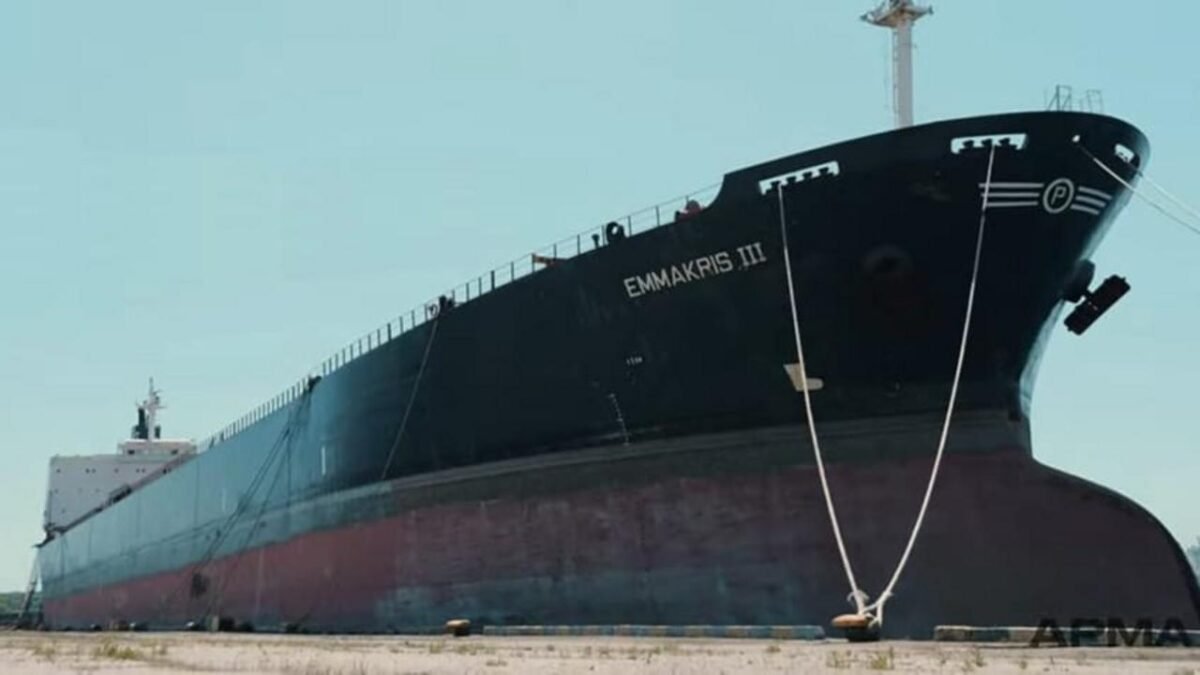
Ukraine’s Asset Recovery and Management Agency (ARMA) is preparing to auction the seized 73,000 dwt bulker Emmakris III, which has been trapped in the port of Chornomorsk since the start of the war in February 2022. This development marks a concrete advancement in Ukraine’s protracted efforts to monetize assets identified with Russian beneficial ownership, following years of legal disputes over the vessel.
ARMA presented evidence in court that the bulker, built in Japan in 2000, has beneficial ownership linked to the Russian company Linter, based in Rostov-on-Don. This is despite its registered owners reportedly being in the UAE, and Equasis reporting its management from Turkey. Ukraine took control of the Panama-flagged vessel in 2024, reportedly following a court success in 2025 that prevented its removal. Equasis also reported the vessel was renamed Akris in 2025, though Ukraine continues to use its former name.
The Emmakris III was in Chornomorsk to load approximately 60,000 tons of grain for the Egyptian government when the conflict began. Pictures show the vessel sitting abandoned and riding high in the water, indicating its operational dormancy since then.
Earlier, ARMA had attempted to sell the ship. In 2024, it sought a manager to use the bulker for grain storage while legal proceedings continued. The current decision to proceed with an outright auction suggests a strategic shift towards immediate disposition over long-term operational management in a war-affected port, or a successful resolution of previous legal and logistical hurdles.
A 2024 inspection and appraisal valued the vessel at $2.6 million, with ARMA asserting it was in a “healthy state” at the time. The most recent listing describes its condition as “satisfactory.” However, its continued abandonment in Chornomorsk, an active warzone port, presents significant operational and security challenges for any potential buyer. These factors will likely influence the bidding process and entail substantial costs for recommissioning and removal, making the acquisition less about immediate asset value and more about the logistical and risk management capabilities of the buyer.
The auction represents more than just the sale of a single vessel; it underscores the intricate and often lengthy legal and operational process of asset recovery and monetization in conflict zones. It offers a tangible example for the maritime industry of the challenges involved in dealing with vessels caught in geopolitical disputes and associated asset freezes.