Norway Builds World’s Most Advanced Ocean Testing Basin | Mariner News
In a monumental stride towards pioneering maritime innovation, Norway is building the most advanced testing basin ever constructed, poised to redefine the future of ocean technology. This ambitious undertaking, known as the Norwegian Ocean Technology Centre in Trondheim, represents an unparalleled commitment to advancing marine research and development. Far from a mere construction project, this facility is a beacon for global industry, promising to unlock breakthroughs in everything from sustainable shipping practices to offshore renewable energy. It embodies Norway’s long-standing dedication to harnessing the power and potential of its vast marine environment, ensuring its position at the forefront of oceanic engineering for decades to come.
The Vision Behind Norway’s Ocean Technology Centre
The ambitious project to establish the Norwegian Ocean Technology Centre in Trondheim stems from a clear recognition of the limitations of purely digital simulations in marine engineering. While advanced computer models offer incredible insights, they cannot fully replicate the complex, dynamic forces of the open sea. This gap in capabilities highlighted the urgent need for a state-of-the-art physical testing environment, a place where theoretical designs could be rigorously validated under conditions mimicking the harshest ocean realities. The vision is to bridge the divide between computational modeling and real-world performance, ensuring that future marine technologies are robust, efficient, and safe.
Leading this transformative initiative are key players such as SINTEF Ocean and Statsbygg, the Norwegian government’s building and property development agency. SINTEF Ocean, a globally recognized institution for applied research in marine technology, will be a primary user and beneficiary of the facility, providing crucial expertise and driving its research agenda. Statsbygg, meanwhile, is overseeing the colossal construction effort, navigating challenges that project director Arild Mathisen describes as the most demanding of his career. Their combined efforts underscore Norway’s strategic investment in marine science and its ambition to foster global innovation.
This cutting-edge facility is designed to serve a diverse array of industries, including shipping, offshore energy, and aquaculture. By offering unparalleled testing capabilities, the centre will enable researchers and engineers to develop more sustainable solutions, improve operational efficiency, and enhance safety standards across the marine sector. It’s a visionary investment that will empower innovators to push boundaries, ultimately contributing to a healthier ocean and a more resilient blue economy. The ability to conduct comprehensive physical tests will accelerate the development of next-generation marine structures and vessels.
Engineering an Unprecedented Maritime Testing Facility
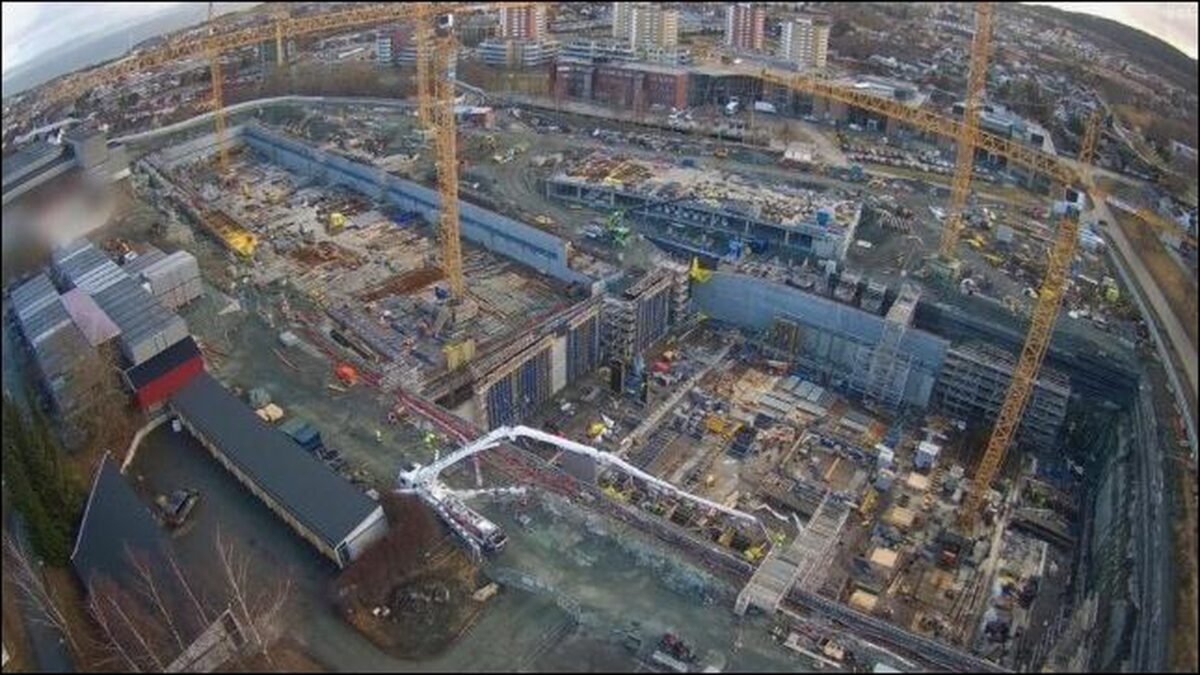
The scale of Norway’s advanced testing basin is nothing short of breathtaking. The approximately 300-meter-long subterranean chamber at Tyholt in Trondheim is vast enough to house engineering marvels such as the London Eye, Oslo Plaza, and the Arc de Triomphe in Paris, lined up one after another. This immense size is crucial for replicating realistic oceanic conditions, allowing for the precise testing of large-scale models and components. Such dimensions provide an environment where the most intricate hydrodynamic interactions can be observed and measured with unprecedented accuracy.
Constructing a facility of this magnitude and complexity has presented formidable engineering challenges. Arild Mathisen, Statsbygg’s project director, unequivocally states that “nothing like this has ever been built in Norway, or anywhere else in the world.” The sheer technical difficulty of excavating such a massive pit and integrating two state-of-the-art test basins within it demands innovative solutions and meticulous planning. Every aspect of the construction, from the structural integrity of the basin walls to the precision of the water flow systems, must meet exceptionally rigorous standards.
Indeed, the challenges extend beyond mere size. The project requires integrating advanced instrumentation, sophisticated wave-making machinery, and precise current generators to simulate a vast range of ocean environments. The commitment to achieving “beyond state-of-the-art” capabilities means pushing the boundaries of civil engineering and marine technology. This commitment ensures that once operational, the centre will offer capabilities that are simply unmatched globally, providing researchers with an unparalleled platform for discovery and development. The intricate details of water circulation and temperature control also add layers of complexity.
Revolutionizing Maritime Research and Development
The core mission of Norway’s advanced testing basin is to revolutionize maritime research and development by providing an indispensable platform for physical testing. Vegar Johansen, CEO of SINTEF Ocean, emphasizes that despite advancements in computer simulations, a significant amount of data cannot be accurately derived without physical models. This facility will allow engineers to combine the insights from sophisticated digital programs with empirical data obtained from real-world simulations, leading to more robust designs and a deeper understanding of marine dynamics. This integrated approach minimizes risks and accelerates the innovation cycle.
Within the massive test basins, a wide array of marine structures can be put through their paces under precisely controlled conditions. This includes detailed testing of ship models to optimize hull designs for fuel efficiency and stability, crucial for the sustainability agenda of the global shipping industry. Additionally, innovative aquaculture cages can be tested for their resilience against strong currents and waves, ensuring the safety and productivity of fish farms. The facility also caters to the burgeoning offshore wind energy sector, enabling rigorous evaluation of turbine foundations and floating structures for maximum energy capture and longevity.
Johansen explains the critical importance of these physical tests: “The tests provide us with reliable and absolutely necessary data for how the structure would handle conditions at sea.” This reliable data is essential for validating theoretical models, identifying potential design flaws, and optimizing performance before expensive prototypes are built or deployed in the harsh marine environment. By simulating realistic conditions, the centre offers a crucial advantage in the development process, significantly reducing uncertainties and enhancing the safety and efficiency of new marine technologies. Companies eager to be among the first to utilize these unique facilities have already submitted numerous requests.
Driving Innovation for a Sustainable Maritime Future
Norway’s advanced ocean technology center is not just an engineering feat; it’s a strategic investment in a sustainable maritime future. By enabling precise testing and refinement of new designs, the facility will play a pivotal role in developing greener shipping solutions. This includes researching more efficient propulsion systems, optimizing vessel hydrodynamics to reduce fuel consumption and emissions, and exploring alternative fuels and power sources. The insights gained here will directly contribute to global efforts to decarbonize the maritime industry and achieve environmental sustainability goals.
Beyond traditional shipping, the centre is set to become a global hub for advancing offshore renewable energy technologies. The ability to test large-scale models of offshore wind turbines, wave energy converters, and tidal power systems under realistic and extreme conditions is invaluable. This will accelerate the development and deployment of robust, cost-effective, and highly efficient marine energy solutions, contributing significantly to the world’s clean energy transition. Norway’s leadership in this field will attract international collaboration and investment in offshore wind and other blue energy sectors.
The facility’s comprehensive testing capabilities will also drive innovation in aquaculture, a vital sector for global food security. By allowing for the rigorous evaluation of new cage designs and operational techniques, the centre will help develop more resilient and environmentally friendly farming practices. This includes reducing the risk of escapes, mitigating environmental impacts, and improving fish welfare, all contributing to the long-term sustainability and growth of the aquaculture industry. The continuous development of marine structures for these critical sectors underscores Norway’s commitment to the blue economy.
Looking Ahead: The Future of Ocean Technology
The completion of Norway’s advanced testing basin will solidify its position as a global leader in ocean technology and maritime research. This cutting-edge facility will not only attract top scientists and engineers from around the world but also foster international collaboration on critical issues facing our oceans. By providing an unparalleled environment for innovation, the centre will accelerate the pace of discovery and development, yielding solutions that benefit industries and ecosystems globally. It’s a testament to Norway’s vision for a future powered by sustainable marine resources.
The long-term impact of this ocean technology center extends to shaping policy and industry standards for marine operations worldwide. The reliable data and insights generated here will inform regulatory bodies, influencing safety protocols, environmental guidelines, and design requirements for all types of marine structures and vessels. This proactive approach ensures that new technologies are not only innovative but also responsibly developed and deployed, fostering a safer and more sustainable marine environment for all. The comprehensive research conducted here will have far-reaching implications for international maritime law and engineering best practices.
Ultimately, the Norwegian Ocean Technology Centre represents more than just a massive construction project; it is an investment in human ingenuity and our collective future. By pushing the boundaries of what is possible in maritime engineering and research, Norway is creating a legacy of innovation that will drive progress in sustainable shipping, renewable energy, and ocean resource management for generations to come. This state-of-the-art testing basin is poised to become the cornerstone of future marine advancements, cementing Norway’s reputation as a pioneer in blue economy solutions. It invites the world to join in the quest for a more sustainable and prosperous interaction with our oceans.