MEPC 84: Shipping Regulatory Direction & Clarity | Mariner News
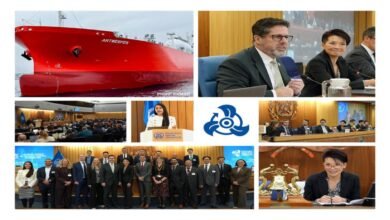
The recent 84th session of the International Maritime Organization’s (IMO) Marine Environment Protection Committee, widely known as MEPC 84, convened in London with high expectations from the global shipping industry. While the maritime sector keenly awaited definitive guidance on its decarbonization pathway, expert analysis from Lloyd’s Register (LR) suggests that MEPC 84, though unlikely to deliver complete clarity on future global rules, could significantly signal the direction of regulatory evolution. This pivotal meeting addressed critical topics surrounding maritime environmental protection, particularly focusing on reviving a comprehensive Net-Zero Framework (NZF) that had previously faced adoption challenges.
Lloyd’s Register, a prominent classification society, underscored the importance of this meeting, highlighting that investment decisions for ships ordered today, which will operate for decades, are being made without a fully defined regulatory framework. This uncertainty over the shape of future GHG measures now constitutes a material commercial risk for shipowners and operators. The outcomes from MEPC 84, therefore, are not merely about environmental policy; they directly impact the financial stability, operational strategies, and technological adoption within the shipping sector, setting the stage for how shipping decarbonization will unfold in the coming years.
Decoding MEPC 84’s Mission for Global Shipping
MEPC 84’s agenda was primarily centered on advancing the IMO’s ambitious goal of reducing greenhouse gas (GHG) emissions from international shipping. A key focus was the attempt to resurrect and gain consensus on a Net-Zero Framework (NZF), a comprehensive plan designed to guide the maritime industry towards achieving carbon neutrality. The challenges in reaching a global agreement are substantial, given the diverse interests and varying capacities of IMO member states. These discussions form the bedrock of future IMO regulations, aiming to provide a harmonized approach to environmental compliance across the fleet.
For the shipping sector, the outcome of these deliberations is crucial. The lack of clear, universally accepted global shipping rules creates an environment of unpredictability, making long-term planning difficult for shipowners and investors. MEPC 84 was therefore tasked with making progress, however incremental, towards establishing robust and equitable environmental standards that can be adopted worldwide. The decisions made or directions indicated at this committee meeting will inevitably influence how shipping decarbonization strategies are formulated and implemented in various regions, impacting everything from vessel design to fuel choices.
The Commercial Imperative of Regulatory Clarity
Lloyd’s Register’s assessment powerfully articulates the growing concern within the maritime community: the absence of regulatory clarity poses a significant commercial risk. Ships are long-term assets, often with lifespans extending to 25-30 years. Investing in new vessels or retrofitting existing ones requires foresight into the future regulatory landscape, especially concerning GHG emissions and alternative fuels. Without a clear regulatory framework, shipowners face the daunting task of making multi-million-dollar investment decisions in maritime technology and propulsion systems without certainty regarding future compliance requirements.
This uncertainty directly impacts financial planning, asset valuation, and competitive advantage. Companies that invest heavily in a particular alternative fuel or emission reduction technology might find their investments devalued if subsequent IMO regulations favor a different pathway. Conversely, those that delay investment due to lack of clarity risk falling behind in a rapidly evolving market. LR’s statement underscores the urgent need for a defined regulatory environment to foster confidence and accelerate the adoption of sustainable maritime solutions, ensuring viable pathways for future fuels and advanced maritime technology.
Navigating the Peril of Fragmented Maritime Regulations
One of the most pressing concerns highlighted by Lloyd’s Register is the potential emergence of a fragmented system of regional regulation if a clear global framework fails to materialize. In the absence of unified IMO regulations, individual nations or blocs of countries might implement their own environmental standards and GHG measures, leading to a patchwork of disparate rules. This scenario would create immense compliance challenges and operational complexities for international shipping, a sector inherently global in nature.
Imagine a vessel having to comply with one set of emissions standards when sailing in European waters, another in Asian Pacific routes, and yet another when calling at specific national ports. Such a system would be a nightmare for shipowners, increasing administrative burdens, operational costs, and the risk of penalties. It would also hinder the equitable distribution of decarbonization efforts and could distort competition. The maritime industry thrives on predictability and harmonization, making the establishment of a coherent global framework for maritime environmental protection a paramount objective for sustained progress towards shipping decarbonization.
Bridging Ambition with Practical Implementation
While regulatory ambition for shipping decarbonization is laudable and necessary, LR stresses the critical need for it to be matched with safe and practical implementation. The transition to alternative fuels like ammonia, methanol, hydrogen, and advanced biofuels, as well as the integration of new maritime technologies such such as carbon capture and wind-assisted propulsion, presents significant technical and operational hurdles. These innovations require robust standards, comprehensive safety protocols, and credible assurance mechanisms before they can be widely adopted across the global fleet.
Scaling up these future fuels and technologies safely requires extensive research, development, pilot projects, and clear guidelines from classification societies and regulatory bodies. Without this practical support, ambitious targets risk becoming unattainable or, worse, leading to unsafe operational practices. The industry needs assurances that the chosen decarbonization pathways are not only environmentally sound but also technically feasible, economically viable, and, most importantly, safe for crew, vessels, and the marine environment. MEPC 84’s discussions touched upon these vital aspects, emphasizing that practical decarbonization pathways are essential for lasting success.
MEPC 84: A Staging Post on the Decarbonization Journey
Lloyd’s Register characterizes MEPC 84 not as a final destination for regulatory clarity, but rather as a crucial ‘staging point’ in the ongoing journey towards shipping decarbonization. Decisions taken during this session, even if not fully conclusive, are expected to significantly shape future IMO environmental regulations and influence the trajectory of global shipping’s green transition. It represents a vital step in the incremental process of building consensus and refining the framework for maritime environmental protection.
This perspective encourages the industry to view progress in stages, appreciating the long-term commitment required to transform an entire global sector. Each MEPC meeting contributes to the evolving understanding and framework necessary for net-zero shipping. Even without delivering complete answers, the signals from MEPC 84 provide invaluable intelligence for shipowners, operators, and maritime technology providers to adapt their strategies and continue their innovation efforts, moving closer to the ambitious decarbonization pathways outlined by the IMO.
Innovating for a Greener Maritime Future
The maritime industry is not passively waiting for complete regulatory clarity; innovation is already at the forefront of efforts to achieve a greener future. Companies are investing heavily in research and development for future fuels, piloting projects for energy efficiency solutions, and exploring cutting-edge maritime technology designed to reduce emissions. From advanced hull designs to optimized voyage planning systems, the drive towards sustainable shipping is palpable and widespread.
Collaboration across the maritime value chain – between shipyards, engine manufacturers, fuel suppliers, and technology developers – is accelerating the pace of change. These concerted efforts are critical in demonstrating the feasibility of net-zero shipping solutions and in overcoming the technical and economic barriers to their widespread adoption. MEPC 84, by setting clearer directional signals, further empowers these innovative endeavors, helping to focus resources on the most promising avenues for shipping decarbonization.
The Guiding Hand of Classification Societies
In this era of unprecedented change and regulatory evolution, classification societies like Lloyd’s Register play an indispensable role. They act as trusted advisors and technical experts, guiding the industry through complex regulatory compliance issues, conducting risk assessment for new technologies, and providing credible assurance for the safety and performance of new maritime environmental standards. Their expertise is vital in translating ambitious regulations into practical, safe, and verifiable solutions for the global fleet.
LR’s proactive engagement in anticipating regulatory direction and highlighting potential challenges empowers shipowners to make informed decisions. By offering insights and technical support, these organizations help bridge the gap between policy formulation and practical implementation, ensuring that the transition to sustainable shipping is both effective and secure. Their role in assessing new technology adoption and certifying vessels and systems will be increasingly critical as the industry embraces a wide array of alternative fuels and maritime solutions.
In conclusion, while MEPC 84 may not have delivered the full clarity many in the shipping industry hoped for, it undeniably served as a critical forum for discussing and shaping the future of maritime environmental protection. Lloyd’s Register’s insights underscore the ongoing challenges posed by regulatory uncertainty but also highlight the imperative of establishing a clear, unified global framework for shipping decarbonization. The meeting provided crucial signals about the direction of IMO regulations and the continued emphasis on scaling up alternative fuels and new technologies safely and practically. The journey towards net-zero shipping is complex and incremental, with each MEPC session marking another vital step forward, reinforcing the industry’s collective commitment to a more sustainable maritime future.