Genevos Develops Hydrogen Fuel Cell System for Maritime | Mariner News
The global maritime sector, a crucial artery of international trade, is facing unprecedented pressure to decarbonize its operations and significantly reduce its environmental footprint. In a landmark move poised to revolutionize sustainable shipping, Genevos, a leading France-based marine fuel cell developer, has officially joined a pivotal €7 million EU-backed project. This ambitious initiative aims to engineer, develop, and validate a scalable 1 MW hydrogen fuel cell system for maritime applications, specifically targeting the power needs of larger vessels. This collaboration underscores a powerful commitment to achieving zero-emission shipping and represents a significant leap forward in integrating clean hydrogen technology into the heart of marine propulsion. As the world seeks greener alternatives, the development of robust and commercially viable hydrogen fuel cell solutions is paramount for a truly decarbonized future in the global shipping industry.
Revolutionizing Maritime: Genevos Spearheads Hydrogen Fuel Cell Innovation
Genevos’ entry into this high-profile EU project, known as the MARINER initiative, positions the company at the forefront of maritime energy transformation. The project’s overarching goal is to design and validate a modular 1 MW proton exchange membrane (PEM) fuel cell system, a technology celebrated for its high efficiency and zero emissions. This 1 MW capacity is critical; it signifies a serious push beyond smaller demonstration vessels towards providing substantial power for larger, deep-sea ships, which are currently major contributors to global greenhouse gas emissions. The urgency for such a development is underscored by escalating environmental regulations and a collective industry demand for sustainable, clean energy solutions that can replace traditional fossil fuels. Genevos’s specialized expertise in marine fuel cell development is anticipated to be instrumental in overcoming the unique challenges of integrating advanced power systems into the harsh and demanding marine environment.
The significance of this venture extends beyond technological advancement; it is a clear signal of the maritime industry’s commitment to adopting sustainable practices. Genevos’ involvement brings crucial engineering acumen to the table, ensuring that the hydrogen fuel cell system for maritime applications is not only technically sound but also practical, safe, and commercially scalable. This strategic partnership exemplifies how European innovation and collaborative efforts are paving the way for a future where ships can operate without contributing to air pollution or carbon emissions, marking a significant stride towards a healthier planet and a more sustainable global supply chain. The project’s success will undoubtedly set a new benchmark for clean marine propulsion and inspire further investment in green shipping technologies.
The drive for zero-emission shipping is no longer a distant aspiration but an immediate imperative. Traditional marine fuels contribute significantly to air pollution, including sulfur oxides (SOx), nitrogen oxides (NOx), and particulate matter, in addition to carbon dioxide (CO2). Hydrogen fuel cell technology offers a compelling solution by producing only water as a byproduct, making it an ideal candidate for truly clean propulsion. Genevos, with its focus on developing resilient and efficient marine fuel cell systems, is directly addressing this critical need. The challenge lies in scaling these technologies to meet the demanding power requirements and operational profiles of large ocean-going vessels, a hurdle that the MARINER initiative is specifically designed to overcome through targeted research, development, and rigorous testing.
The MARINER Initiative: A Deep Dive into Europe’s Green Shipping Vision
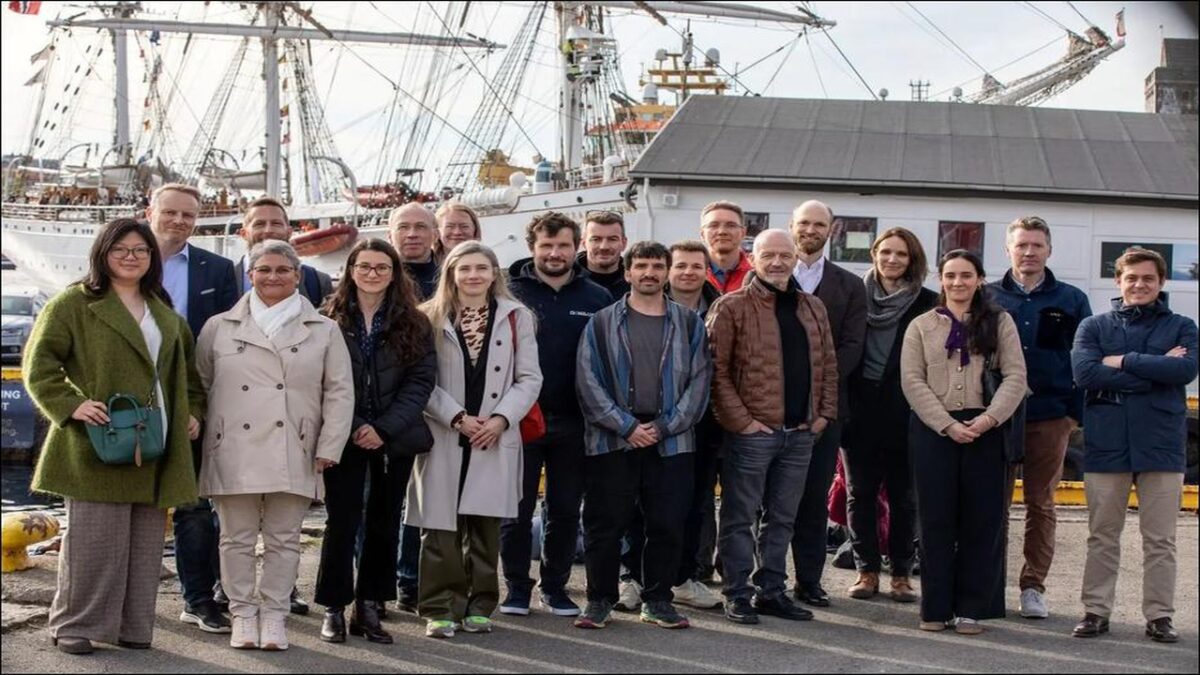
Coordinated by NORCE Research, a prominent independent research institute, the MARINER initiative is a testament to Europe’s ambitious vision for a greener future. Funded under Horizon Europe, the EU’s key funding program for research and innovation, and specifically through the Clean Hydrogen Partnership, this €7 million project represents a substantial investment in developing cutting-edge hydrogen fuel cell system for maritime technology. The partnership’s objective is clear: to accelerate the development and deployment of clean hydrogen solutions across various sectors, with maritime being a crucial focus area. This multi-stakeholder collaboration brings together leading research institutions, technology developers like Genevos, and industry partners, all working in concert to create a robust and scalable marine fuel cell solution.
This strategic EU backing highlights the critical role that collaborative, international efforts play in driving technological breakthroughs for environmental sustainability. By pooling resources and expertise, the MARINER initiative aims to tackle complex engineering challenges that individual companies might find prohibitive. The project’s scope encompasses not only the core fuel cell technology but also the ancillary systems required for safe and efficient operation onboard a vessel, including hydrogen storage, power management, and safety protocols. Such comprehensive development is essential to ensure that the resulting marine fuel cell system is not just technologically advanced but also commercially viable and regulatory compliant, preparing it for widespread adoption across the diverse landscape of the European and global shipping fleets.
The MARINER initiative’s focus on a modular 1 MW PEM fuel cell system design is particularly innovative. Modularity allows for greater flexibility in system integration, meaning the technology can be adapted to various vessel sizes and power requirements by combining multiple units. This approach addresses one of the key challenges in marine electrification: the diverse operational profiles and spatial constraints of different ship types. The goal is to create a versatile platform that can power anything from coastal ferries to large cargo carriers, ultimately democratizing access to zero-emission propulsion. This forward-thinking design principle is crucial for the long-term scalability and commercial success of hydrogen fuel cell systems in the maritime domain, making clean shipping solutions accessible to a broader segment of the industry.
Genevos’ Engineering Prowess: Powering the Future of Marine Propulsion
Genevos’ role in the MARINER project is pivotal, backed by a significant €2.2 million in dedicated funding. Their expertise will be concentrated on the critical tasks of engineering and delivering the complete marine fuel cell system. This involves not only the design and integration of the fuel cell stacks themselves but also the development of the balance-of-plant components, including fuel processing, thermal management, power electronics, and control systems. Genevos’ deep understanding of the unique demands of the marine environment—such as vibrations, salt spray, temperature fluctuations, and stringent safety regulations—will be crucial in ensuring the system’s robustness, reliability, and longevity. Their contribution is essential for transforming theoretical designs into a tangible, operational hydrogen fuel cell system for maritime use.
The technical challenges in developing a marine fuel cell system of this magnitude are considerable. Integrating a 1 MW power plant into the confined spaces of a ship, while ensuring optimal performance and safety, requires sophisticated engineering solutions. Genevos will leverage its extensive experience in developing compact, high-performance fuel cell modules that can withstand the rigors of sea operations. This includes designing for efficient heat dissipation, robust structural integrity, and simplified maintenance procedures. Their work will encompass every stage from conceptual design to detailed engineering, prototyping, and ultimately, delivering a fully functional system ready for extensive testing under real-world conditions.
Furthermore, Genevos’ involvement extends to ensuring the system’s compliance with international maritime standards and regulations, which are continuously evolving to accommodate new fuel technologies. This regulatory foresight is vital for the eventual commercial deployment of hydrogen-powered vessels. Their focus on practical, deliverable solutions for marine propulsion underscores their commitment not just to innovation, but to creating tangible, market-ready products. The €2.2 million investment in Genevos highlights the trust placed in their capabilities to bring this advanced hydrogen fuel cell system for maritime applications from concept to reality, propelling the entire industry closer to its zero-emission targets.
Advancing Fuel Cell Technology: Scalability, Durability, and Safety for Maritime
Central to the MARINER project’s validation phase is rigorous testing designed to prove the commercial readiness of the hydrogen fuel cell system. This includes testing a containerized 1 MW system under genuine maritime conditions for an impressive duration of over 1,000 hours. This extensive real-world trial is indispensable for assessing the system’s performance, reliability, and operational efficiency in the challenging marine environment, far beyond controlled laboratory settings. The data gathered from these sea trials will provide invaluable insights into how the system performs under varying load conditions, weather patterns, and operational cycles, directly informing its final design and deployment strategies. This practical validation is a critical step towards building confidence in hydrogen as a reliable marine fuel.
In parallel with the full-scale system testing, the project will conduct accelerated testing of a smaller 200 kW module. This component-level testing is crucial for assessing the long-term durability and degradation characteristics of the fuel cell technology. By subjecting the module to intensified operational cycles and environmental stresses, researchers can predict its lifespan and identify any potential weaknesses that might emerge over extended periods of use. This dual approach – comprehensive full-scale validation and focused accelerated durability testing – ensures that the developed hydrogen fuel cell system for maritime applications will not only perform well initially but also maintain its efficiency and reliability throughout its operational life, offering attractive total cost of ownership for ship owners.
Beyond the core hardware, the MARINER initiative also incorporates crucial supporting elements for future commercialization. This includes the development of advanced digital monitoring tools, which will enable real-time performance tracking, predictive maintenance, and optimized energy management. Robust safety procedures for handling and storing hydrogen onboard vessels are also a cornerstone of the project, addressing critical industry concerns. Finally, a thorough lifecycle analysis will evaluate the environmental and economic impact of the hydrogen fuel cell system from production to end-of-life, providing a holistic view of its sustainability credentials. These comprehensive efforts are geared towards supporting the seamless and widespread future commercial deployment of hydrogen-powered shipping across global trade routes.
Charting a Course for Sustainable Shipping: Impact on Larger Vessels
While hydrogen fuel cell systems for maritime have seen successful demonstrations on smaller vessels, such as tugs, ferries, and research boats, their commercial-scale deployment on large ocean-going ships remains largely uncharted territory. The MARINER project directly addresses this critical gap, aiming to prove the viability and scalability of hydrogen propulsion for vessels that typically consume vast amounts of heavy fuel oil. A 1 MW system is a significant step towards powering container ships, bulk carriers, and tankers, which represent the backbone of global trade and are currently the most challenging segment to decarbonize due to their immense energy demands and long operational ranges.
The successful development and validation of such a powerful hydrogen fuel cell system for maritime use would unlock enormous potential for reducing the carbon footprint of the entire shipping industry. Imagine large cargo vessels navigating international waters with zero emissions, contributing to cleaner air in port cities and significantly reducing greenhouse gas emissions on a global scale. This innovation would not only help shipping companies meet increasingly stringent environmental regulations but also position them as leaders in sustainable logistics, appealing to eco-conscious consumers and supply chain partners. The economic benefits, including potential fuel cost savings from green hydrogen and avoidance of carbon taxes, could further accelerate adoption.
The transition to hydrogen-powered large vessels also offers strategic advantages beyond environmental compliance. It reduces reliance on volatile fossil fuel markets and diversifies energy sources for the maritime sector. Furthermore, it stimulates the development of green hydrogen infrastructure, including production, storage, and bunkering facilities at major ports worldwide, creating new economic opportunities and contributing to a circular economy. The insights gained from MARINER’s focus on large ships will provide a blueprint for a wider industry transformation, influencing naval architecture, port operations, and regulatory frameworks to facilitate a smooth shift towards truly sustainable marine transport, with the hydrogen fuel cell system for maritime at its core.
Driving Decarbonization: Hydrogen’s Role in a Greener Maritime Sector
Hydrogen is increasingly recognized as a cornerstone of the future energy landscape, particularly for hard-to-abate sectors like maritime shipping. Its potential as a zero-emission fuel, especially when produced via renewable energy (green hydrogen), makes it an ideal candidate to replace conventional fossil fuels. Unlike other alternative fuels that may still produce some emissions or require complex carbon capture technologies, hydrogen, when utilized in a fuel cell, emits only water vapor, offering a truly clean propulsion solution. This aligns perfectly with the maritime industry’s ambitious targets to achieve net-zero emissions by the middle of the century, as mandated by international bodies and increasingly demanded by global communities.
Despite its promise, the widespread adoption of hydrogen in the maritime sector faces hurdles, including the need for robust bunkering infrastructure, efficient onboard storage solutions, and the economic viability of green hydrogen production at scale. Projects like the MARINER initiative are vital in addressing these challenges head-on. By focusing on practical engineering, rigorous testing, and comprehensive lifecycle analysis of a hydrogen fuel cell system for maritime, the project contributes directly to overcoming technological and operational barriers. Furthermore, it fosters collaboration among stakeholders to build the necessary ecosystem for hydrogen-powered shipping, from production to portside supply.
The success of Genevos and the MARINER initiative will therefore have far-reaching implications, not just for the participating organizations but for the entire global maritime industry. It serves as a beacon of innovation, demonstrating that transitioning to sustainable fuels like hydrogen is not only possible but also essential for the long-term health of our planet and the future resilience of global trade. As the project progresses, it will undoubtedly provide valuable lessons and benchmarks, accelerating the pace of decarbonization and inspiring further investment in clean technologies. The development of an effective hydrogen fuel cell system for maritime is not merely a technical achievement; it is a fundamental step towards a greener, more sustainable era for shipping, reducing its environmental impact and securing a cleaner future for generations to come.