
Maersk Tankers Wins EU Funding for Ammonia Retrofit Project
Maersk Tankers has secured backing from the EU Innovation Fund for its Ripple project, an initiative to retrofit four Very Large Ammonia Carriers (VLACs) with dual-fuel ammonia two-stroke engines. The selection marks a milestone in decarbonization efforts, as the company prepares to demonstrate the commercial and operational viability of ammonia as a primary marine fuel for large-scale gas carriers.
The project involves a first-of-its-kind retrofit for VLACs within the EU, leveraging the vessel design to integrate ammonia propulsion. Maersk Tankers estimates that the adoption of ammonia across these four vessels will mitigate over 1.2 metric tonnes of CO2e over a 10-year operational period.
Funding for the initiative is part of a broader 3.4 billion euro investment round announced by the European Commission, which recycles revenues from the EU Emissions Trading System (ETS) into maritime decarbonization technologies. The selection of the Ripple project highlights a shift in policy toward incentivizing not just newbuilds, but the modification of existing tonnage to meet rigorous environmental standards.
Strategic Implications
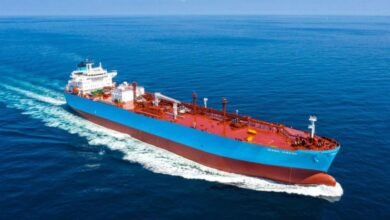
While the primary goal of the Ripple project is emissions reduction, the successful execution of these retrofits carries significant implications for the gas shipping market. By installing ammonia-capable propulsion on existing 93,000 cbm-class hulls, Maersk Tankers is positioning its fleet to maintain competitive chartering utility as ammonia demand grows. This move potentially establishes a baseline for the technical and safety standards required for retrofitting larger gas carriers, a segment where engine integration complexity is notably higher than in traditional vessel classes.
The inclusion of these vessels in the EU funding scheme may also offer a template for other operators looking to hedge against rising ETS costs. By retrofitting rather than replacing the current 10-vessel series, the company is testing the economic feasibility of extending asset life cycles while navigating the transition to alternative fuels.
Next Steps
Following the selection, Maersk Tankers and the European Commission will enter negotiations to finalize grant agreements, including specific budgets and implementation timetables. The regulatory body expects to complete this process by the first quarter of 2027. Maersk Tankers has already taken delivery of the first two vessels in its 10-vessel series, the first of which is the 93,000 cbm Jane Maersk.