HD Hyundai and Kiewit Plan New Gulf Coast Shipyard
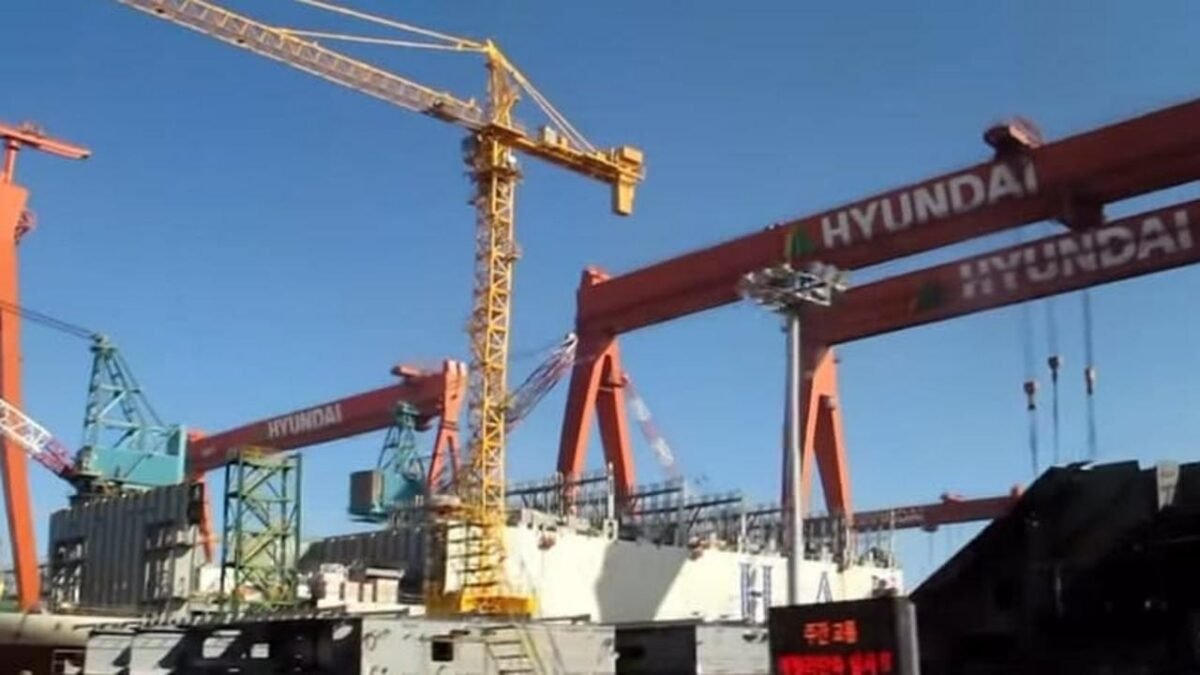
HD Hyundai and Kiewit Maritime have entered a joint venture to establish HD Kiewit Shipbuilding, a new facility aimed at expanding U.S. shipbuilding capacity along the Gulf Coast. The venture intends to leverage Kiewit’s existing industrial sites and large-scale fabrication footprint alongside HD Hyundai’s established shipyard operating expertise and technology. Construction of the yard is slated to begin in 2027, with the companies targeting full-scale operations by 2029.
Strategic Shift in Modular Shipbuilding
The move marks a significant evolution in how South Korean shipbuilders are engaging with the U.S. market. Rather than competing directly for high-complexity combatant construction, the venture is positioning itself to support the broader shipbuilding ecosystem through ship block and module fabrication. By focusing on modular production, HD Hyundai is signaling a play for the growing backlog of U.S. naval auxiliary and commercial vessel work, which often faces bottlenecks in traditional domestic shipyards that struggle with labor and throughput capacity.
Industrial Integration
By utilizing an existing industrial site, the partners aim to bypass the significant environmental and infrastructure permitting delays associated with greenfield shipyard projects. The venture intends to combine Kiewit’s deep-water access and established heavy-fabrication capabilities with Hyundai’s production-line efficiencies. This strategy suggests a goal of bringing repetitive, high-volume production techniques into a region traditionally dominated by custom, project-based engineering.
Workforce and Market Implications
When fully operational, the site is projected to support up to 3,000 jobs. Beyond vessel production, the partnership explicitly plans to cooperate on maritime infrastructure. For the broader market, the inclusion of a major international partner in the Gulf Coast region may introduce new competitive pressures on domestic block-fabrication pricing, potentially lowering lead times for vessel repair and construction programs that currently rely on geographically dispersed supply chains.