Maersk Expands Ethanol Fuel Use on Dual-Fuel Boxship | Mariner News
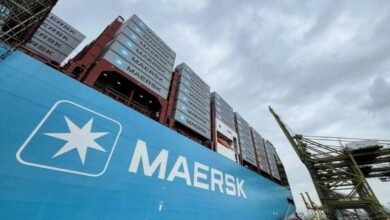
In a pivotal move signaling a robust commitment to decarbonizing the global maritime industry, shipping giant A.P. Moller-Maersk has significantly scaled up its ethanol fuel trials. The company recently completed a landmark bunkering operation, fueling its larger methanol dual-fuel container ship, the Antonia Mærsk, with 100% ethanol in Barcelona. This development marks a substantial progression in Maersk’s strategy to explore diverse, low-emission marine fuel options, showcasing ethanol’s growing viability as a sustainable alternative. The successful bunkering of a vessel of this scale underscores Maersk’s dedication to operationalizing green technologies and pushes the boundaries of what is possible in sustainable container shipping. The integration of Maersk ethanol bunkering into larger vessels is a critical step towards achieving a greener future for global logistics and reducing the carbon footprint of international trade, paving the way for more environmentally responsible shipping practices across the sector.
This latest trial builds on previous successes, most notably the bunkering of the feeder vessel Laura Maersk. Carried out on July 9 at APM Terminals Barcelona, the operation on the Antonia Mærsk represents a significant step forward, moving from smaller vessels to larger, more impactful container carriers. Maersk views ethanol as one of several crucial pathways to significantly cut emissions from shipping, broadening the spectrum of low-emission fuel choices available to the maritime sector. The experience garnered from extensive methanol operations is now being strategically leveraged to develop the necessary procedures and infrastructure to support ethanol bunkering at a wider array of ports globally. This proactive approach, involving close collaboration with port authorities and industry partners, highlights a holistic strategy to overcome the logistical challenges associated with transitioning to alternative marine fuels. The company’s persistent trials exemplify its leadership in pioneering sustainable maritime solutions.
Maersk’s strategic focus on alternative marine fuels like ethanol aligns with the increasing global demand for sustainable shipping practices. As regulators, consumers, and investors exert greater pressure for environmental accountability, the maritime industry faces an urgent imperative to transition away from traditional fossil fuels. The successful integration of ethanol into the operational framework of a large dual-fuel boxship like the Antonia Mærsk provides tangible proof of concept for renewable energy sources in deep-sea shipping. This move not only enhances Maersk’s own environmental credentials but also sets a precedent for other major shipping lines to accelerate their decarbonization efforts. By actively investing in and testing these innovative fuel solutions, Maersk is directly contributing to the long-term sustainability of global supply chains and pushing for a more eco-friendly transportation ecosystem.
Maersk’s Bold Step Towards Sustainable Shipping
The decision to bunker the Antonia Mærsk with 100% ethanol is a testament to Maersk’s proactive and ambitious agenda in sustainable shipping. This larger container vessel, designed with dual-fuel capabilities, can seamlessly switch between conventional fuels and greener alternatives, offering operational flexibility while significantly reducing its environmental impact. The bunkering process in Barcelona was executed with precision, drawing upon the invaluable experience gained from previous methanol operations. This continuity and adaptability underscore the synergy between different alcohol-based fuels and their potential for widespread adoption. By extending these trials to larger vessels, Maersk is demonstrating confidence in ethanol’s performance and scalability, moving beyond pilot projects to integrate these solutions into their core fleet operations. This strategic expansion is crucial for proving the commercial viability and operational reliability of new fuels.
Maersk’s commitment isn’t just about individual bunkering events; it’s about fostering an ecosystem where sustainable fuels can thrive. The company is actively working with port authorities, energy suppliers, and technology partners to refine safety protocols, optimize bunkering procedures, and establish robust supply chains for ethanol. This collaborative effort is essential for building the comprehensive infrastructure required to support a global fleet powered by low-emission fuels. The insights gained from the Antonia Mærsk trial will inform future policy, investment, and technological advancements, accelerating the industry’s collective journey towards net-zero emissions. This is not merely an operational upgrade; it is a fundamental shift in how the maritime industry approaches fuel sourcing and environmental responsibility, aiming for a truly green maritime future.
Ethanol as a Game-Changer in Marine Fuel
Ethanol is rapidly gaining recognition as a viable alternative marine fuel alongside methanol, primarily due to their similar chemical properties. This crucial characteristic allows ethanol to be stored in the same tanks, blended in any ratio with methanol, and utilized with existing bunkering infrastructure designed for methanol. The transition primarily requires only minor software adjustments and injection valve modifications to existing methanol dual-fuel engines, making it a highly attractive and cost-effective option for fleet operators already invested in methanol-ready vessels. From an environmental perspective, ethanol, particularly bioethanol produced from renewable biomass, offers substantial reductions in greenhouse gas emissions compared to conventional heavy fuel oil. Its combustion yields fewer particulate matter, nitrogen oxides (NOx), and sulfur oxides (SOx), significantly improving air quality in port areas and along shipping lanes. This makes it an environmentally superior choice for modern shipping.
Furthermore, the versatility of ethanol extends to its production pathways. It can be derived from various sources, including agricultural biomass (e.g., corn, sugarcane, cellulosic materials) as bioethanol, or through renewable electricity and captured carbon dioxide as e-ethanol. This diverse sourcing potential enhances its long-term supply security and reduces reliance on a single feedstock, mitigating potential price volatility and supply chain vulnerabilities. As a liquid fuel, ethanol also maintains high energy density, allowing for efficient storage and transport, which is critical for long-haul maritime operations where space and weight are at a premium. These inherent advantages position ethanol as a truly transformative green marine fuel, capable of playing a significant role in the maritime sector’s comprehensive decarbonization efforts. Its ability to integrate with existing technologies speeds up adoption.
Overcoming Challenges and Building Infrastructure
The widespread adoption of ethanol as a sustainable shipping fuel hinges on successfully addressing infrastructure and logistical challenges. Maersk’s trials are not just about proving the fuel’s efficacy but also about actively developing the operational blueprints for its broader implementation. This involves creating standardized bunkering procedures, ensuring robust safety protocols, and establishing a reliable global supply chain. Collaborating with port authorities is paramount, as ports need to adapt their facilities to handle and store ethanol safely and efficiently. This includes investing in new storage tanks, dedicated bunkering vessels, and personnel training to manage the specific characteristics of ethanol.
Moreover, regulatory frameworks need to evolve to support the safe and compliant use of ethanol as a marine fuel. International maritime organizations and national authorities must work in tandem to develop harmonized standards that facilitate its global deployment. Maersk’s experience with methanol operations provides a valuable blueprint, demonstrating that with strategic planning and industry-wide collaboration, these hurdles can be overcome. The development of a robust port infrastructure capable of supporting multiple alternative fuels will be a cornerstone of future sustainable maritime transport. This proactive engagement will not only accelerate the energy transition but also unlock new economic opportunities for port communities and fuel suppliers, fostering innovation across the value chain. Establishing reliable supply chains is key to scaling.
The Broader Landscape of Alternative Marine Fuels
Maersk’s exploration of ethanol fits within a broader industry trend towards diversifying the marine fuel portfolio. Alongside methanol and ethanol, other promising alternatives include ammonia, LNG (Liquefied Natural Gas), and various types of biofuels. Each fuel presents its own set of advantages and challenges regarding energy density, emissions profile, storage requirements, and infrastructure readiness. The consensus within the maritime industry is that no single ‘silver bullet’ fuel will dominate the future; rather, a basket of low-emission options will be required to meet the diverse operational needs of different vessel types and shipping routes. This diversified approach ensures resilience against supply chain disruptions and technological bottlenecks.
Maersk’s leadership in trialing multiple fuels, particularly with its significant investment in methanol-powered vessels and now expanding to ethanol, demonstrates a pragmatic strategy to navigate this complex transition. By rigorously testing and deploying these eco-friendly fuels, the company is directly influencing the market and signaling demand, which in turn encourages further investment in production and infrastructure. This proactive stance is critical for achieving the ambitious emissions reduction targets set by the International Maritime Organization (IMO) and other global bodies. The pursuit of clean energy solutions in shipping is not merely an environmental obligation but also an opportunity for innovation, operational efficiency, and long-term economic sustainability within the competitive global shipping market. It drives technological advancement and industry collaboration.
Economic and Environmental Implications
The long-term economic benefits of transitioning to fuels like ethanol are substantial. While initial investments in dual-fuel vessels and modified infrastructure can be significant, these costs are increasingly offset by projected carbon taxes, emissions trading schemes, and regulatory compliance fees associated with fossil fuels. By proactively adopting low-emission fuels, shipping companies can future-proof their operations, reduce exposure to volatile fossil fuel markets, and gain a competitive edge in a carbon-constrained economy. Moreover, improved air quality from reduced SOx and NOx emissions leads to public health benefits and can reduce costs related to environmental remediation. This holistic view of costs and benefits underlines the strategic importance of green fuel adoption.
Environmentally, the expanded use of ethanol by Maersk directly contributes to the reduction of the carbon footprint of global shipping. For every ton of fossil fuel replaced by bioethanol, significant quantities of greenhouse gases are prevented from entering the atmosphere. This aligns directly with global climate targets, including the Paris Agreement. Beyond direct emissions, the demand for sustainable fuels also stimulates green innovation in agricultural and industrial sectors, promoting circular economies and enhancing overall environmental stewardship. As consumers become more conscious of supply chain sustainability, companies that demonstrate genuine commitment to green shipping are likely to enhance brand reputation and attract environmentally discerning clients, creating a positive feedback loop for sustainable practices.
The Future of Decarbonized Maritime Transport
Maersk’s strategic embrace of ethanol fuels on its larger dual-fuel boxship is a powerful indicator of the maritime industry’s future trajectory. It signals a clear move towards scalable, operable solutions for decarbonization that go beyond pilot projects. The industry is on an irreversible path towards a multi-fuel future, driven by technological advancements, regulatory pressures, and a collective commitment to environmental stewardship. The successful integration of ethanol provides another crucial piece in the puzzle of how to achieve net-zero emissions in global shipping within the coming decades.
Looking ahead, continued research and development will focus on optimizing engine technologies for various alternative fuels, improving fuel production efficiencies, and further expanding port infrastructure globally. Policy support, through incentives for green ship construction and fuel production, will also be critical in accelerating this transition. Maersk, through its bold initiatives like the Antonia Mærsk ethanol bunkering, continues to play a pioneering role, setting benchmarks and inspiring the broader maritime industry to invest in a truly sustainable future. The journey towards fully decarbonized maritime transport is complex, but with leaders like Maersk at the helm, the path forward appears increasingly clear and achievable, driving innovation and collaboration across the entire value chain for a cleaner, greener ocean shipping industry. This persistent push for sustainable marine fuel solutions ensures a healthier planet for generations to come.