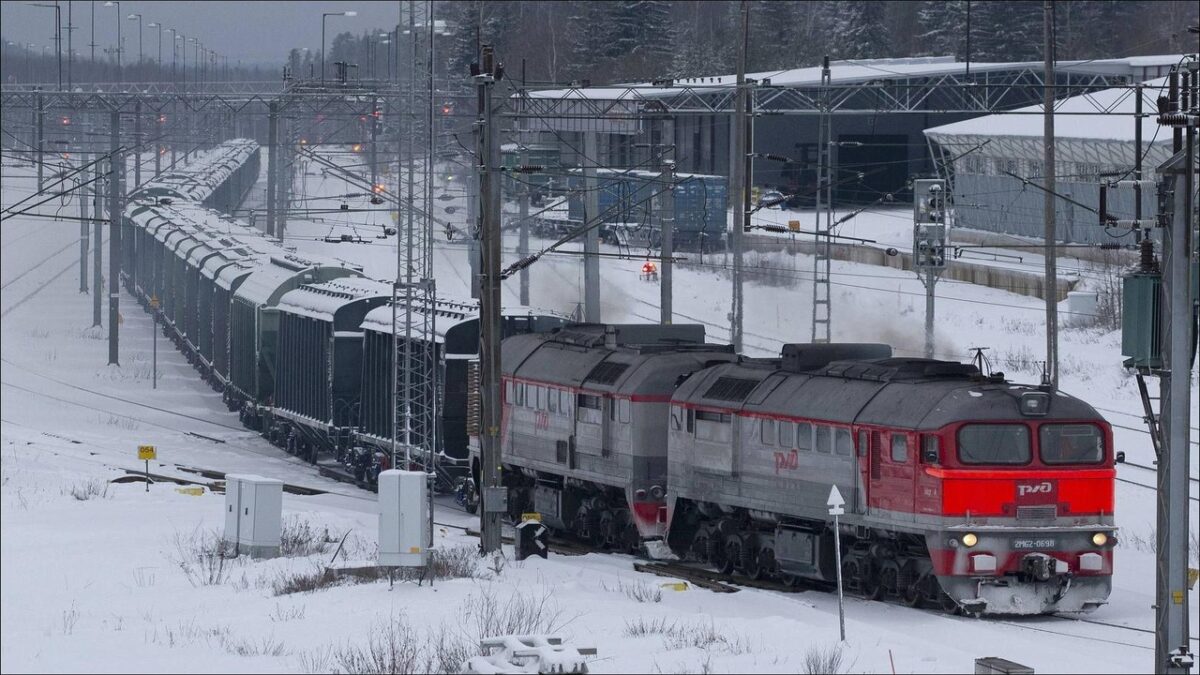
DHL Faces Ethics Questions Over Russian Rail Freight | Mariner News
In the volatile landscape of global logistics, a spotlight has fallen sharply on industry giant DHL, specifically regarding its continued use of Russian rail freight routes. Despite an ongoing and vigorous ethical debate fueled by geopolitical turmoil, DHL’s leadership has found itself navigating a complex moral and operational tightrope. This situation underscores the formidable challenge logistics companies face in balancing commercial imperatives with corporate social responsibility in an era defined by international conflict and sanctions.
The controversy centers on DHL’s strategy for connecting lucrative Asia-Europe trade corridors. While many international companies, including competitor DSV, have decisively curtailed or ceased operations involving Russian territory, DHL maintains a presence. This divergence in approach has sparked considerable discussion within the freight forwarding sector and among stakeholders concerned with ethical business practices. The company’s chief executive, in recent statements, acknowledged the complexities, asserting that DHL has “massively reduced its operations” since the outset of the conflict in 2022, yet the underlying issue of utilizing Russian transit remains a point of contention for many observers.
The Geopolitical Chessboard and Logistics Challenges
The ongoing conflict in Ukraine has fundamentally reshaped global supply chains, forcing logistics providers to confront unprecedented challenges. The imposition of international sanctions against Russia has created a highly intricate environment where every operational decision carries significant ethical, reputational, and financial implications. For companies like DHL, which operate on a global scale, the ability to move goods efficiently and reliably is paramount, yet this must now be weighed against a heightened sense of moral accountability and the expectations of a globalized, ethically conscious consumer base.
Prior to the conflict, Russian rail routes offered a compelling land bridge for container transport between Asia and Europe, lauded for their speed and cost-effectiveness compared to traditional sea routes. This efficiency was a significant draw for businesses looking to optimize their supply chains. However, the subsequent geopolitical shifts rendered these routes highly controversial, pushing many logistics firms to seek alternative pathways or withdraw entirely from services that might indirectly support the Russian economy.
DHL’s Stance and Operational Adjustments
DHL’s leadership has articulated a clear, albeit nuanced, position regarding its operations. The company emphasizes a substantial scaling back of its direct engagement in Russia since the 2022 escalation. “Our position is quite clear,” the chief executive stated, highlighting the extensive measures taken to comply with international sanctions and minimize direct ties to the Russian market. This includes ceasing domestic operations within Russia and significantly reducing its outbound and inbound freight volumes.
However, the continued use of Russian territory for transit, particularly for rail freight moving between Asian and European markets, is where the ethical dilemma for DHL truly crystallizes. The company contends that these transit routes are not directly subject to international sanctions, allowing for the movement of goods that are themselves not sanctioned. This technicality, while legally sound in many cases, does not fully assuage the ethical concerns of critics who argue that any commercial engagement that benefits Russia, directly or indirectly, should be avoided.
The DSV Contrast: A Diverging Ethical Path
The differing approaches of major logistics players like DHL and DSV highlight the industry’s struggle to formulate a unified response to the ethical challenges posed by the Russian conflict. DSV, a prominent global transport and logistics provider, made an unequivocal decision to terminate its use of Russian railways, a move that included shutting down transport links inherited from its acquisition of DB Schenker’s logistics assets. This decisive action by DSV was lauded by many as a strong ethical stance, prioritizing moral considerations over potential commercial benefits from these routes.
DSV’s choice sets a precedent for how global logistics firms might navigate future geopolitical crises. While such decisions can involve significant financial implications and operational restructuring, they signal a commitment to corporate values that resonate with an increasingly socially aware public and investor base. The contrast with DHL’s more conservative stance underscores the absence of a universal playbook for ethical conduct in such complex international scenarios, leaving individual companies to chart their own course.
Navigating Demand and Sanction Realities
Despite the controversy, DHL acknowledges a persistent and even rising demand for transport solutions between Asia and Europe, including via rail routes that traverse Russian territory. This demand is driven by the undeniable efficiency and speed advantages that trans-Siberian rail freight can offer compared to lengthier sea voyages. For many businesses, particularly those with time-sensitive cargo or needing to bypass congested sea lanes, these overland routes remain an attractive, if morally fraught, option. The goods being transported are typically not sanctioned, focusing on general cargo that can legally move through these corridors.
This creates a challenging balancing act for DHL: meeting client demand for efficient supply chain solutions while simultaneously responding to widespread calls for ethical business conduct. The company must operate within the strictures of international law, ensuring compliance with all applicable sanctions, but also consider the broader implications for its brand reputation and stakeholder trust. The commercial viability of these routes, coupled with their technical legality, creates a persistent tension between profit motives and ethical principles in the global freight forwarding industry.
The Ethical Quandary for Global Freight Forwarders
The dilemma faced by DHL extends beyond mere compliance; it delves into the deeper realms of corporate social responsibility. What constitutes ethical business practice when a nation is engaged in international conflict? Is passive transit through a country’s territory, even if not directly sanctioned, a form of tacit support? These are not easy questions, and the answers often reside in a grey area where legal frameworks meet moral convictions. Stakeholders, including investors, employees, and customers, are increasingly scrutinizing how companies manage their operations in regions affected by conflict, demanding transparency and accountability.
For global freight forwarders, the ethical quandary involves not only the direct impact of their operations but also the perception of their actions. In a hyper-connected world, corporate reputation can be built or shattered in an instant, and being perceived as prioritizing profit over principles can have lasting detrimental effects. The debate over DHL’s Russian rail freight operations is a stark reminder that logistics is no longer solely about moving goods from point A to point B; it is deeply intertwined with geopolitical realities and ethical imperatives, influencing public trust and corporate legacy.
Future Outlook: Balancing Profit with Principles
The DHL situation serves as a critical case study for the entire logistics sector, highlighting the evolving expectations placed upon global corporations. As geopolitical tensions continue to simmer and new conflicts potentially emerge, logistics companies will increasingly be forced to make difficult decisions that weigh financial performance against ethical considerations. The trend towards greater corporate accountability and demands for supply chain transparency is unlikely to abate, pushing firms to adopt more robust ethical frameworks and due diligence processes.
Ultimately, the path forward for DHL and its peers will likely involve a continuous re-evaluation of their operational strategies in complex regions. This might include further diversification of routes, increased investment in alternative transport corridors, or even the development of industry-wide ethical guidelines for operating in politically sensitive areas. The era of purely transactional logistics is yielding to one where every shipment, every route, and every operational decision is scrutinized through a lens of both efficiency and ethics, shaping the future of global supply chain management.
In conclusion, the ongoing debate surrounding DHL’s use of Russian rail freight exemplifies the intricate challenges facing international logistics firms today. Balancing the undeniable commercial demand for efficient Asia-Europe transport routes with profound ethical concerns and geopolitical sensitivities requires astute leadership and a clear articulation of corporate values. As the global landscape continues to evolve, the ability of logistics giants to navigate these complexities will define their reputation and long-term sustainability within a world increasingly demanding responsible corporate citizenship.