MEPC 84: US Body on IMO Net Zero Pushback | Mariner News
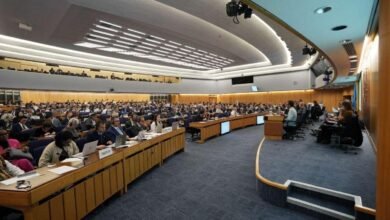
The recent 84th session of the International Maritime Organization’s (IMO) Marine Environment Protection Committee (MEPC 84) has once again put the spotlight on the contentious issue of maritime decarbonization, with the proposed Net Zero Framework (NZF) facing significant opposition. According to the Federal Maritime Commission (FMC), a US maritime body, a ‘silent majority’ of countries is now openly challenging the framework, signaling a potential shift in global shipping policy. This crucial meeting, held in London, aimed to revive the NZF, which previously failed to gain adoption amidst resistance from key nations, including the United States and major oil-producing countries. The discussions at MEPC 84 are pivotal for the future of green shipping, as the industry grapples with ambitious environmental protection goals and the practicalities of implementation. The resistance highlighted by the FMC chairman, Laura DiBella, underscores the complex geopolitical and economic factors at play in developing an effective global strategy for reducing shipping emissions.
The Core of the MEPC 84 Debates and the Net Zero Framework
MEPC 84 was convened with the primary objective of addressing the pressing need for more stringent regulations to achieve maritime decarbonization. Central to these discussions was the IMO Net Zero Framework, a comprehensive proposal designed to guide the shipping industry towards net-zero greenhouse gas emissions. This framework encompasses a range of measures, including technical and economic policies, aimed at fostering the adoption of sustainable maritime practices and cleaner energy solutions. The urgency stems from the international commitment to combat climate change, with the maritime sector’s significant contribution to global emissions making it a key focus area for environmental protection efforts. Stakeholders, from shipowners to environmental advocacy groups, have keenly followed these developments, recognizing the profound impact any adopted framework will have on operational costs, technological investments, and the competitive landscape of global shipping. The debate at MEPC 84, however, revealed deep divisions regarding the feasibility, equitability, and overall approach of the proposed NZF. Many developing nations, in particular, have voiced concerns over the potential disproportionate economic burdens that strict environmental regulations could impose on their growing economies and nascent shipping industries.
These ongoing negotiations reflect the intricate balance between environmental imperative and economic reality. The IMO, as the global standard-setting authority for the safety, security, and environmental performance of international shipping, has the monumental task of forging consensus among its 175 member states. The pathway to effective shipping emissions reduction requires not only robust technical standards but also innovative economic instruments that incentivize the transition to alternative fuels and energy-efficient technologies. Discussions at MEPC 84 delved into various aspects of the NZF, from carbon pricing mechanisms and fuel standards to the implementation timelines and verification processes. The complexity of these issues, coupled with diverse national interests, has led to prolonged negotiations, emphasizing the monumental challenge of achieving universal agreement on a framework that will fundamentally reshape the future of marine transport. The stakes are incredibly high, as the world looks to the IMO to deliver a credible and actionable plan for green shipping.
The “Silent Majority” Finds Its Voice Against IMO Emissions Targets
According to Laura DiBella, Commissioner with the Federal Maritime Commission (FMC), a discernible shift occurred at MEPC 84, where a ‘silent majority’ of countries began to openly express their reservations about the IMO Net Zero Framework. Previously, the narrative was often dominated by a smaller, more vocal bloc of supporters for the aggressive decarbonization agenda. DiBella noted that while proponents of the NZF believed they had engaged broadly with member states, the wider group of nations had, until recently, remained less vocal. This new development signifies a growing pushback against the current trajectory of maritime environmental policy. The concerns articulated by this ‘silent majority’ often revolve around the economic implications of rapid decarbonization, including the availability and cost of alternative fuels, the technological readiness of their fleets, and the potential for competitive disadvantages in global trade. Their collective voice at MEPC 84 underscored a desire for a more pragmatic and inclusive approach to setting shipping emissions targets and implementing global maritime regulations.
This emerging opposition is not necessarily against the principle of maritime decarbonization itself, but rather against the specific mechanisms and timelines proposed within the NZF. Many of these nations advocate for a more gradual transition, one that allows for technological development and economic adaptation without stifling growth or penalizing developing economies. The FMC’s observations suggest that the perceived consensus around the NZF might have been overestimated, and that underlying anxieties about the framework’s practicalities and fairness have now bubbled to the surface. This collective voicing of concerns by a broader group of countries indicates that future discussions on the IMO Net Zero Framework will need to seriously consider these perspectives to achieve widespread buy-in. The challenge for the IMO and its member states is to reconcile these differing viewpoints and craft a global shipping strategy that is both ambitious in its environmental protection goals and equitable in its economic implications for all members.
Shifting Tides in Global Maritime Policy and Decarbonization Strategies
MEPC 84 highlighted a significant shift in the dynamics of global maritime policy discussions, particularly concerning decarbonization strategies. The emergence of the ‘silent majority’ actively opposing the IMO Net Zero Framework indicates that the consensus needed for its adoption remains elusive. This shift is further evidenced by reports suggesting fading support for the original NZF, with delegates now reportedly favoring an alternative framework. Liberia, Argentina, and Panama have collectively submitted a new GFI-based framework, which appears to be gaining traction among member states. This alternative proposal suggests a pivot away from the more prescriptive approach of the NZF, potentially offering a more flexible or regionally adaptable pathway to reducing shipping emissions. Such developments are crucial for understanding the evolving landscape of environmental protection within the shipping industry, as countries explore various options to meet sustainability targets while safeguarding their economic interests and promoting technological innovation.
The move towards a potentially different framework underscores the complex interplay of national sovereignty, economic development, and environmental responsibility. For an international body like the IMO to effectively steer the global shipping industry towards green shipping, any regulatory framework must secure broad agreement. The current resistance to the NZF suggests that its proposed measures might be perceived as too ambitious, too costly, or unfairly distributed in their impact. The alternative GFI-based framework, therefore, represents an attempt to bridge these gaps, offering a potentially more palatable solution for a wider range of member states. This scenario signals a period of intense negotiation and strategic maneuvering as the IMO strives to finalize a credible and universally accepted plan for maritime decarbonization. The success of any future framework will hinge on its ability to address the concerns of all nations, ensuring an equitable and feasible transition for the entire global fleet.
Implications for Future Shipping Decarbonization Efforts
The pushback against the IMO Net Zero Framework at MEPC 84 carries significant implications for future shipping decarbonization efforts. It suggests that a one-size-fits-all approach to reducing shipping emissions may not be feasible or acceptable to a large segment of the global shipping community. The emphasis on a ‘silent majority’ voicing concerns points to a need for more nuanced and adaptable strategies. This could mean a greater focus on regional variations, phased implementation plans, or a portfolio of measures rather than a single, overarching framework. The ongoing deadlock highlights the intrinsic challenges of reconciling the diverse economic realities and development stages of IMO member states with the urgent global imperative to combat climate change. Without broader consensus, the risk of fragmented or less effective environmental protection measures increases, potentially hindering the industry’s ability to meet ambitious sustainability targets.
Moreover, the intensified debate could lead to a re-evaluation of the role of market-based measures and innovative technologies in achieving green shipping goals. If the NZF struggles for adoption, there might be renewed focus on voluntary industry initiatives, technological breakthroughs in alternative fuels, and financing mechanisms that support sustainable maritime infrastructure. The Federal Maritime Commission’s insights provide a critical perspective on the political realities facing international maritime organizations as they navigate this complex terrain. The path forward for maritime decarbonization will likely require more collaborative dialogue, flexible policy instruments, and a deeper understanding of the specific challenges faced by different shipping segments and national economies. The outcome of these discussions at the IMO will undeniably shape investment decisions, technological development, and the overall trajectory of the global shipping industry for decades to come, impacting everything from bunker prices to ship design and operational efficiency.
What’s Next for the Net Zero Framework and Global Shipping?
The immediate future of the IMO Net Zero Framework appears uncertain following the strong pushback at MEPC 84. The current deadlock suggests that significant revisions or the adoption of an entirely new approach, such as the GFI-based framework proposed by Liberia, Argentina, and Panama, may be necessary to achieve a consensus. The IMO’s mandate for environmental protection in shipping remains, but the pathway to achieving its ambitious goals is clearly undergoing a critical reassessment. Member states will likely continue negotiations, focusing on finding common ground that balances environmental urgency with economic feasibility and equity. This process will undoubtedly involve further technical analyses, economic impact assessments, and diplomatic efforts to bridge the divides. The input from bodies like the Federal Maritime Commission will remain vital in understanding the varied perspectives and ensuring a robust, implementable framework.
The global shipping industry now watches closely to see how these debates evolve. The pursuit of green shipping and significant reductions in shipping emissions is non-negotiable for many, driven by public demand, international commitments, and the long-term sustainability of the sector. However, the specific mechanisms for achieving maritime decarbonization are still very much in flux. The ongoing discussions at the IMO and future MEPC sessions will be critical in defining the next steps, whether through a revised NZF, an alternative framework, or a hybrid solution. The goal remains to establish a globally applicable and effective set of regulations that facilitate the transition to a net-zero future for shipping, ensuring both environmental protection and a resilient, competitive maritime industry. The journey towards truly sustainable maritime transport is complex, but the heightened engagement at MEPC 84 signifies a critical juncture in this essential global effort.