NYK’s Autonomous Car Carrier Debuts in Singapore Port | Mariner News
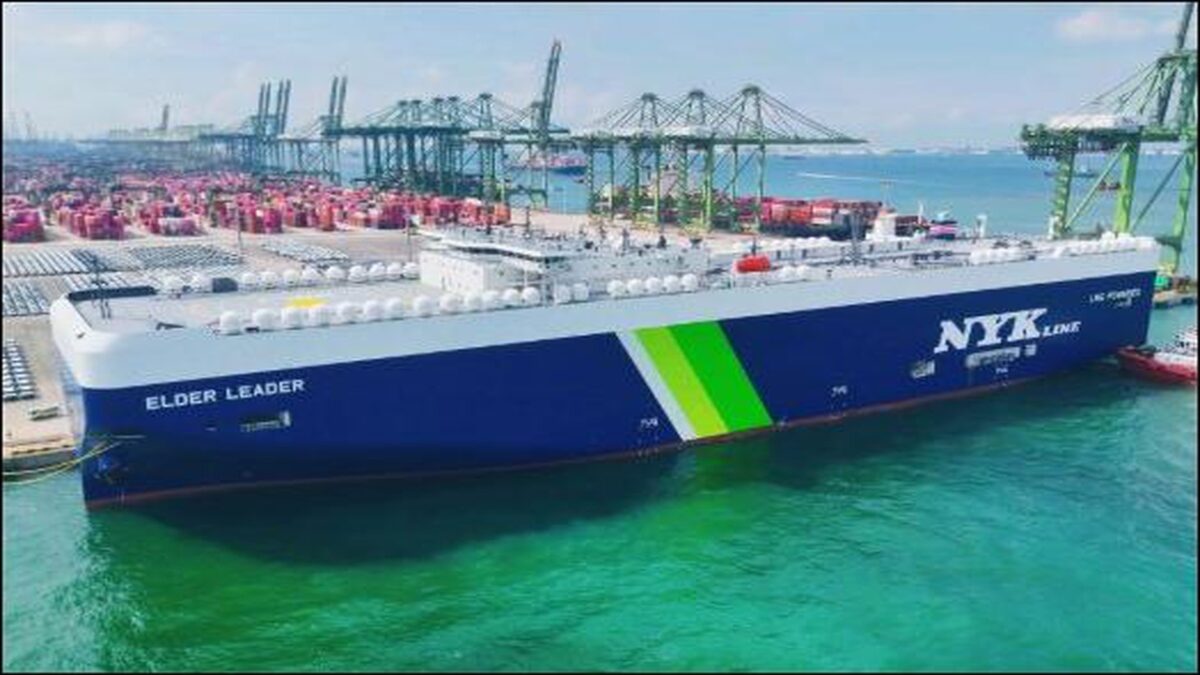
The maritime industry is charting a course towards a future defined by innovation, efficiency, and environmental stewardship. A significant milestone in this journey was recently achieved as NYK, the prominent Japanese shipping firm, introduced its state-of-the-art autonomous car carrier, the Elder Leader, to the global stage with its maiden call at the bustling Port of Singapore. This event marks not just a new chapter for NYK but also serves as a potent symbol of the evolving landscape of shipping, where advanced technology and sustainable practices converge to redefine operational paradigms. The Elder Leader, an LNG-fuelled vessel, epitomizes this forward-thinking approach, combining lower-emission operations with sophisticated digital and automated functions, even while continuing to operate with a full crew onboard to ensure safety and facilitate complex interactions. Its arrival in Singapore underscores the city-state’s pivotal role as a global maritime hub, eager to embrace and test next-generation shipping solutions that promise greater safety, efficiency, and environmental responsibility across the vast ocean network.
Pioneering the Future: NYK’s Elder Leader and Maritime Automation
The Elder Leader’s visit to Singapore was more than just a port call; it was a comprehensive demonstration of the vessel’s advanced capabilities and a crucial step in integrating maritime automation into real-world operations. Developed by NYK, this autonomous-capable car carrier represents a significant investment in the future of shipping, focusing on both technological advancement and environmental sustainability. The vessel’s design incorporates digital solutions aimed at streamlining operations, enhancing navigation accuracy, and improving overall vessel performance. While the concept of fully autonomous ships is still evolving, vessels like the Elder Leader are paving the way by integrating automated functions that assist and augment the capabilities of human crews, thereby creating a safer and more efficient working environment at sea.
This innovative approach positions NYK at the forefront of the smart shipping revolution. By investing in an LNG-fuelled vessel, the company reiterates its commitment to reducing its carbon footprint and adhering to increasingly stringent global environmental regulations. The integration of automated systems is not merely about novelty; it is about precision, optimization, and creating resilient supply chains. This maiden voyage underscores a strategic vision to leverage technology for operational excellence, preparing the maritime sector for a future where digital intelligence and human expertise work in tandem to navigate the complexities of global trade. The Elder Leader serves as a testament to NYK’s proactive stance in addressing the challenges and opportunities presented by the digital age in maritime transport.
Seamless Integration: Bridging Ship Systems with Port Infrastructure
The highlight of the Elder Leader’s maiden call at the Port of Singapore was the extensive series of trials conducted in collaboration with the Maritime and Port Authority of Singapore (MPA). These trials were meticulously designed to assess and validate the seamless interaction between the vessel’s cutting-edge onboard systems and the sophisticated shore infrastructure of Singapore, a leader in maritime innovation. The primary objective was to ensure that advanced autonomous functions could integrate smoothly with existing port operations, enhancing efficiency without compromising safety in one of the world’s busiest maritime arteries. This collaborative effort demonstrates a critical aspect of scaling smart shipping technologies: the necessity for robust interoperability between vessels and their port environments.
During these vital trials, several key areas were rigorously tested. One significant component involved the exchange of route data with traffic management systems, a crucial step for optimizing vessel movements and preventing congestion in crowded shipping lanes. Furthermore, the vessel utilized just-in-time (JIT) arrival tools, which are essential for reducing idling times at anchorages, thereby cutting fuel consumption and associated emissions. This JIT technology is a cornerstone of sustainable port operations, offering substantial environmental and economic benefits. Another critical test involved remote pilotage, conducted alongside PSA Marine, where external personnel remotely guided the vessel, showcasing the potential for enhanced navigational support and operational flexibility. These exercises are instrumental in building confidence and developing best practices for future autonomous and semi-autonomous vessel operations, ensuring that the digital transition is both secure and effective.
Singapore’s Strategic Role in Advancing Maritime Innovation
Singapore’s selection as the port for the Elder Leader’s maiden call and subsequent trials is no coincidence. The city-state has firmly established itself as a leading global maritime hub, renowned for its technological readiness, visionary regulatory framework, and commitment to fostering innovation within the shipping industry. The Maritime and Port Authority of Singapore (MPA) actively champions initiatives that promote digital transformation, sustainable shipping, and maritime automation. By providing a conducive environment for testing and developing next-generation maritime technologies, Singapore plays a crucial role in accelerating the adoption of smart solutions across the Asia-Pacific region and beyond. This strategic partnership with industry leaders like NYK reinforces Singapore’s position as a living laboratory for future maritime concepts, attracting cutting-edge projects and collaborations.
Singapore’s robust port infrastructure and its commitment to digitalizing port operations make it an ideal partner for trials involving advanced vessels. The extensive network of maritime services, coupled with a proactive regulatory stance on innovation, creates a unique ecosystem where emerging technologies can be effectively evaluated and integrated into complex operational environments. The trials with the Elder Leader underscore Singapore’s dedication to not only maintaining its competitive edge but also to setting global benchmarks for smart port management and maritime autonomy. This forward-looking approach ensures that as the maritime industry evolves, Singapore remains at the forefront, contributing significantly to the development and deployment of safe, efficient, and environmentally friendly shipping solutions that will shape the industry for decades to come.
Looking Ahead: The Broader Implications for Sustainable Shipping
The debut of NYK’s autonomous car carrier, Elder Leader, in Singapore represents a pivotal moment with far-reaching implications for the entire maritime sector. This initiative is part of a broader, concerted effort by industry stakeholders to prepare for increasingly advanced vessel operations, with a strong emphasis on ensuring safety, especially in congested port areas. The lessons learned from these trials will be invaluable in formulating future regulations, refining technological standards, and developing new operational protocols for autonomous and semi-autonomous shipping. The move towards maritime automation is not just about replacing human tasks but augmenting human capabilities, improving decision-making through data analytics, and ultimately enhancing the overall safety and reliability of maritime transport. This evolution will necessitate significant workforce training and adaptation, ensuring that maritime professionals are equipped with the skills needed to manage these sophisticated systems.
The adoption of LNG as a fuel source for the Elder Leader further highlights the industry’s drive towards environmental sustainability. As global pressure mounts to decarbonize shipping, LNG offers a viable transitional fuel that significantly reduces sulfur oxides, nitrogen oxides, and particulate matter emissions compared to traditional marine fuels. The convergence of automated functions and lower-emission operations in a single vessel like the Elder Leader provides a powerful template for future fleet designs. This dual focus on technological advancement and environmental responsibility is essential for creating a resilient and sustainable global shipping industry capable of meeting the demands of a growing world economy while minimizing its ecological footprint. The commitment of companies like NYK to push these boundaries is not only commendable but absolutely crucial for guiding the maritime sector into a smarter, greener, and more efficient future.
Ultimately, the Elder Leader’s maiden voyage to Singapore is a powerful testament to the maritime industry’s unwavering pursuit of innovation. It underscores a collective vision where technology and sustainability are not mutually exclusive but rather complementary pillars of progress. This pioneering step by NYK, supported by the forward-thinking Port of Singapore and the MPA, sets a precedent for how future cargo operations might be managed, offering a glimpse into a world of enhanced efficiency, reduced environmental impact, and fortified maritime safety. The journey towards fully autonomous shipping is complex and multifaceted, but events like this illuminate the path forward, demonstrating that with collaborative effort and a commitment to innovation, the maritime industry is well on its way to transforming its operations for the benefit of global trade and the planet alike. Stay informed with Mariner News for more updates on cutting-edge maritime developments.