US Treasury Sanctions Six LPG Carriers Moving Iranian Gas | Mariner News
In a decisive and impactful escalation of its economic pressure campaign, the U.S. Department of the Treasury’s Office of Foreign Assets Control (OFAC) announced the blacklisting of six additional LPG carriers on Friday, June 7, 2026. This significant action targets vessels directly involved in the illicit transportation of Iranian gas, underscoring the ongoing international commitment to dismantle Iran’s sophisticated “shadow fleet” and its complex networks designed to circumvent stringent international sanctions. The blacklisting serves as a stark warning to the global maritime industry, emphasizing the severe repercussions for entities and individuals facilitating Iran’s petroleum industry.
This latest round of sanctions is part of a broader strategy to choke off revenue streams that Iran leverages to fund its regional proxies and destabilizing activities. The vessels identified are crucial components of a logistical chain that enables Iran to bypass trade restrictions, exporting millions of barrels of liquefied petroleum gas (LPG) to Asian markets, often under deceptive pretenses. Such measures highlight the persistent challenges in enforcing maritime compliance and the continuous efforts required from global regulatory bodies to counter intricate schemes of sanctions evasion. The international community, through initiatives like these, seeks to maintain pressure on Iran, limiting its access to global trade and financial systems.
OFAC’s Intensified Crackdown on Illicit Iranian Gas Shipments
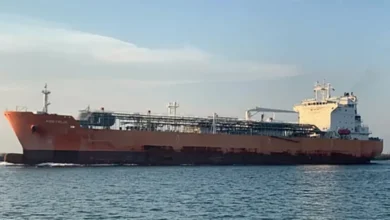
OFAC’s latest declaration specifically names six LPG carriers, each identified with their IMO numbers, signifying their direct involvement in the clandestine movement of Iranian gas. These vessels have been under scrutiny for their consistent role in facilitating Iran’s petroleum exports, often through opaque ownership structures and deceptive shipping practices designed to obscure their true origins and destinations. The vessels sanctioned include the MD 23 (IMO 9158240), which the Treasury states has been actively transporting Iranian LPG since 2023. This carrier, along with others, forms the backbone of Iran’s illicit energy trade operations.
Another significant vessel named is the Glendale (IMO 9139945), which has been implicated in moving millions of barrels of liquefied petroleum gas since as early as 2020. The list further extends to the Amir Gas (IMO 9167409), Gas Lagoon (IMO 9386304), Mile (IMO 8910897), and Gaz GMS (IMO 9131539). The detailed identification of these LPG carriers demonstrates OFAC’s heightened intelligence capabilities and its determination to track and expose every element of Iran’s shadow fleet. These blacklistings are not merely symbolic; they effectively cut these vessels off from the legitimate global maritime financial system, making it exceedingly difficult for them to secure insurance, access port services, or conduct transactions in major currencies. This directly impacts Iran’s ability to market its gas exports globally.
Unmasking Sophisticated Sanctions Evasion Networks
Beyond the physical assets, OFAC’s sanctions also pierced through the intricate web of individuals and front companies that enable these illicit Iranian gas shipments. This latest action specifically targeted energy traders operating out of the United Arab Emirates (UAE)’s free zones, notorious for hosting a multitude of “shadow fleet” shipowners and anonymous trading houses that are instrumental in making Iran’s sanctions-busting exports possible. These free zones, while legitimate business hubs, have unfortunately become conduits for gray-market Iranian and Russian exports, complicating international enforcement efforts.
Among those sanctioned are Afghan national Sarbaz Abdul Zada and Turkish national Mohammad Shakol Mihandoust. These individuals are alleged to operate multiple front companies within the UAE, orchestrating the export of millions of barrels of Iranian LPG into eager Asian markets. Their methods often involve deliberately misrepresenting the origin of these cargoes, frequently labeling them as “Omani” LPG to circumvent stringent sanctions restrictions. Such deceptive practices highlight the sophisticated nature of these sanctions evasion schemes and the lengths to which these networks will go to exploit regulatory loopholes.
Treasury specifically named four of their associated firms: Sahel Star Oil and Gas Company LLC, Butani Trading LLC, Dundlod Trading LLC, and Horizon Maritime Solutions FZE. These entities serve as critical intermediaries, handling the logistics, financing, and paperwork necessary to disguise the true source of the liquefied petroleum gas and facilitate its entry into the global market. This comprehensive approach to targeting both the physical assets (LPG carriers) and the facilitating networks is essential for effective maritime compliance.
“Economic Fury”: A Strategy to Cripple Iran’s Economic Lifelines
The underlying philosophy driving these intensified sanctions was articulated by Secretary of the Treasury Scott Bessent, who stated, “Iran’s economy is floundering and its military is decimated. Through Economic Fury, Treasury will continue to sever Iran’s shadow fleet, shadow banking networks, and access to global trade.” This “Economic Fury” doctrine represents a robust strategy aimed at systematically dismantling every facet of Iran’s illicit financial and trade infrastructure. By targeting LPG carriers and associated trading networks, the U.S. aims to directly impact Iran’s ability to generate revenue from its vast natural gas resources, which are critical for funding its geopolitical agenda.
The crippling of Iran’s shadow fleet is a multi-pronged effort. It not only involves identifying and blacklisting vessels but also disrupting the intricate financial mechanisms and legal frameworks that support their operations. This includes exposing shadow banking networks that process payments for these illicit transactions and severing Iran’s access to the legitimate global trading system. The cumulative effect of these actions is intended to exacerbate Iran’s economic woes, thereby diminishing its capacity to project power and engage in destabilizing activities across the Middle East and beyond. These measures serve as a powerful deterrent, forcing other participants in global maritime trade to reassess their involvement with any Iranian-linked entities.
The Enduring Challenge of Iran’s Petroleum Sanctions and Maritime Security
The history of sanctions against Iran’s oil and gas sector is long and complex, marked by continuous adaptation and counter-adaptation from both sides. For decades, Iran has developed sophisticated methods to bypass international restrictions, ranging from ship-to-ship (STS) transfers at sea to the manipulation of Automatic Identification System (AIS) signals, and the use of shell companies for opaque vessel ownership. The emergence and persistence of the “shadow fleet”—a vast network of older vessels, often operating under flags of convenience and with obscured ownership—is a testament to these ongoing efforts to maintain petroleum exports.
The international community, led by the U.S., has consistently sought to tighten the net, utilizing advanced intelligence, satellite tracking, and financial forensics to identify and sanction entities engaged in sanctions busting. This ongoing cat-and-mouse game has significant implications for maritime security and the integrity of global supply chains. Legitimate shipping companies, insurers, and financial institutions face immense pressure to conduct thorough due diligence to avoid inadvertently facilitating illicit Iranian gas shipments or falling foul of secondary sanctions. The vigilance required to police such a dynamic and geographically dispersed threat necessitates continuous innovation and collaboration among international partners.
A Call for Heightened Global Maritime Vigilance and Future Outlook
These latest sanctions against LPG carriers and their facilitators serve as a critical reminder of the pervasive nature of sanctions evasion and the imperative for heightened global maritime vigilance. The U.S. Treasury’s actions underscore a resolute stance against those who seek to undermine international peace and security through illicit financial flows. For the maritime industry, this means an increased focus on robust compliance programs, enhanced vessel tracking technologies, and rigorous counterparty due diligence.
The future outlook suggests a continued aggressive approach by OFAC and its allies to target every link in Iran’s shadow fleet and associated illicit trade networks. As Iran continues to seek avenues for revenue generation, the international community will likely respond with further actions, including the potential for broader secondary sanctions on countries or entities that knowingly engage with sanctioned Iranian entities. The long-term goal remains to sever Iran’s economic lifelines, thereby preventing its ability to fund destabilizing activities, and fostering greater transparency and accountability in global maritime commerce.