MB Energy Secures Hamburg Ammonia Import Terminal Permit | Mariner News
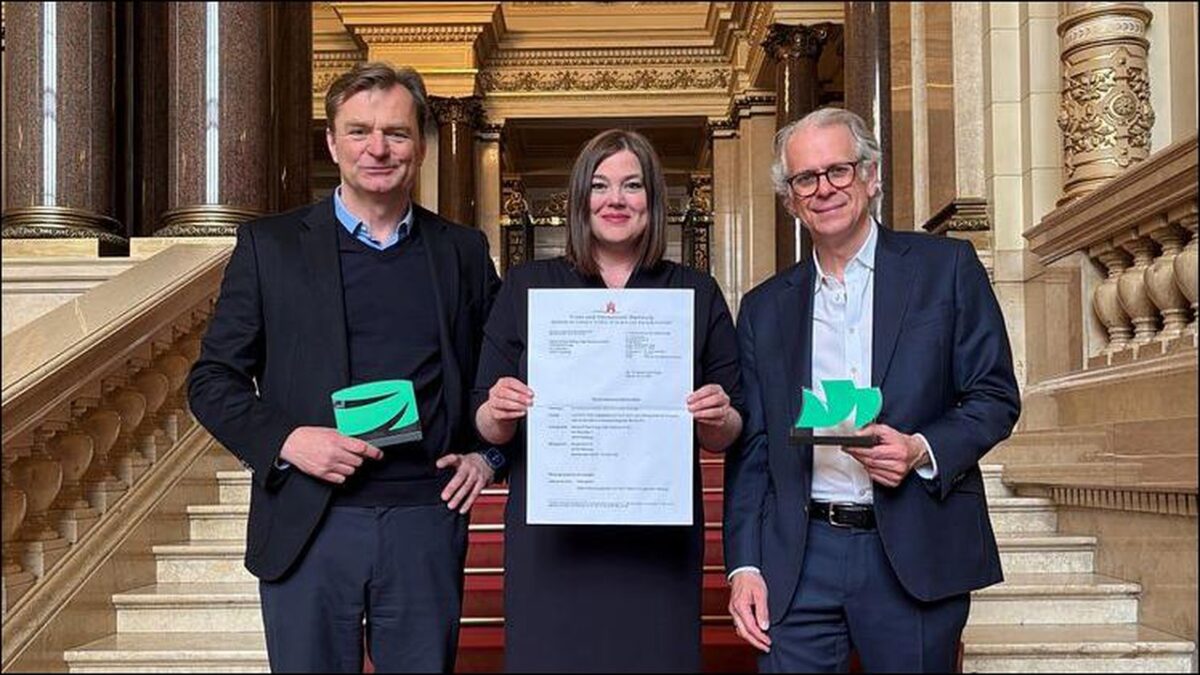
MB Energy has secured a pivotal government permit for its state-of-the-art Hamburg ammonia import terminal, marking a significant milestone in Germany’s ambitious journey towards a sustainable energy future and the decarbonization of global shipping. This crucial approval by Hamburg’s Authority for Environment, Climate, Energy and Agriculture paves the way for the construction and operation of a facility poised to become a cornerstone of the burgeoning hydrogen economy in Europe. The planned terminal, located at the strategic Blumensand tank terminal site within the vibrant Port of Hamburg, underscores the region’s commitment to fostering green energy infrastructure and positions Hamburg as a leading hub for the import and redistribution of low-carbon ammonia, a versatile molecule essential for both industrial processes and as a groundbreaking alternative marine fuel.
This momentous announcement, detailed by MB Energy, reveals plans for a facility capable of handling an impressive ammonia throughput of up to 600,000 metric tons per year. Such capacity is not merely a number; it represents a substantial commitment to scaling up the infrastructure necessary for a widespread energy transition. The terminal is designed to facilitate the seamless import and redistribution of ammonia, recognizing its dual role as a critical storage medium for hydrogen and a potent industrial raw material. More crucially for the maritime sector, it is being developed with an eye towards its potential as a future-proof alternative fuel for shipping, thereby directly supporting the industry’s imperative to reduce carbon emissions and achieve ambitious net-zero targets. The strategic importance of this project extends beyond local impact, promising to bolster the domestic ammonia market and establish a robust foundation for a scalable hydrogen economy across the continent.
Hamburg’s Pivotal Role in the Green Energy Transition
Hamburg, as one of Europe’s largest and busiest ports, is strategically positioned to play a leading role in the global energy transition. Its extensive maritime infrastructure, deep-rooted industrial base, and proactive environmental policies make it an ideal location for pioneering projects like MB Energy’s ammonia import terminal. The city-state’s commitment to sustainability is evident in its embrace of innovative solutions that address climate change while simultaneously fostering economic growth and securing its long-term industrial competitiveness. The permit for this advanced ammonia facility is a testament to Hamburg’s forward-thinking approach, recognizing that investing in next-generation fuels and energy carriers is vital for future prosperity.
The Port of Hamburg is already a hub for various commodities and a critical gateway for trade into Central and Eastern Europe. Adding a dedicated green ammonia import and bunkering terminal significantly enhances its strategic value, transforming it into a vital link in the emerging hydrogen value chain. This development will not only serve regional industrial demands for ammonia but also cater to the increasing global demand for low-carbon marine fuels. By facilitating the import of sustainable ammonia, Hamburg is actively contributing to the diversification of energy sources and reducing reliance on fossil fuels, aligning with Germany’s broader energy security objectives and climate protection goals. This move reinforces Hamburg’s reputation as a leader in maritime innovation and environmental stewardship, paving the way for a more sustainable future in shipping and logistics.
The Rise of Ammonia as a Sustainable Marine Fuel
Ammonia (NH3) is rapidly gaining traction as a leading candidate for a sustainable marine fuel due to its high energy density, ease of liquefaction, and zero-carbon combustion potential when produced renewably. Unlike hydrogen, which requires extremely low temperatures for liquefaction, ammonia can be stored as a liquid at relatively moderate pressures and temperatures, making its handling and bunkering more feasible with existing port infrastructure and ship designs. When derived from renewable electricity (green ammonia) or from natural gas with carbon capture and storage (blue ammonia), it offers a credible pathway to significantly reduce greenhouse gas emissions from the shipping sector, which is under intense pressure to decarbonize.
Beyond its utility as a direct fuel, ammonia plays a crucial role as a hydrogen carrier. Transporting hydrogen as ammonia is often more economical and efficient over long distances, as it allows for denser storage and simpler logistics. Once at the destination terminal, ammonia can be converted back into hydrogen or used directly as fuel or feedstock. This flexibility makes ammonia an indispensable component of the emerging hydrogen economy. The maritime industry’s adoption of ammonia as a fuel will require significant investment in new vessel designs, engine technologies capable of burning ammonia, and robust bunkering infrastructure. MB Energy’s terminal in Hamburg is a critical step in building out this essential supply chain, ensuring that the necessary infrastructure is in place to support the next generation of eco-friendly vessels. This strategic investment signals confidence in ammonia’s long-term viability as a key player in the decarbonization of international shipping.
MB Energy’s Vision: The Blumensand Terminal Project
MB Energy’s choice of the Blumensand tank terminal site within the Port of Hamburg is highly strategic, leveraging existing industrial land and connectivity while minimizing new environmental impact. The plan to develop a facility with a throughput capacity of up to 600,000 metric tons of ammonia annually underscores the company’s ambitious vision and long-term commitment to the low-carbon energy transition. This substantial capacity will enable the terminal to meet significant industrial demand while simultaneously establishing a robust supply chain for future ammonia bunkering operations, critical for vessels adopting this innovative fuel.
Beyond simply importing and storing, MB Energy aims to integrate ammonia bunkering services into its offerings, positioning the Hamburg terminal as a multi-faceted hub. This foresight aligns with the evolving needs of the shipping industry, which requires not only supply but also efficient and safe refueling infrastructure. The permit from Hamburg’s Authority for Environment, Climate, Energy and Agriculture is a testament to the thoroughness of MB Energy’s planning and its adherence to stringent environmental and operational standards. This approval is not just a regulatory hurdle overcome; it is an affirmation of the project’s technical feasibility and its positive environmental potential. The facility will be designed with state-of-the-art safety protocols and environmental safeguards, ensuring responsible operations within the sensitive port environment. MB Energy is thus not just building a terminal; it is constructing a vital piece of the future energy landscape, designed to serve both terrestrial industries and the global maritime fleet with sustainable energy solutions.
Fueling the Hydrogen Economy and Decarbonizing Shipping
The MB Energy Hamburg ammonia import terminal represents a significant leap forward for both the European hydrogen economy and the decarbonization efforts within the shipping industry. By facilitating the import of large volumes of ammonia, the terminal directly supports the scaling up of hydrogen production and distribution, an essential element for transitioning away from fossil fuels. Ammonia, in its capacity as a hydrogen carrier, makes global hydrogen trade economically viable, overcoming many of the logistical challenges associated with transporting pure hydrogen. This infrastructure investment in Hamburg will therefore unlock new possibilities for industrial decarbonization, empowering sectors reliant on hydrogen as a clean energy source or feedstock.
For the maritime sector, the terminal’s future bunkering capabilities are transformative. Shipping accounts for a significant portion of global greenhouse gas emissions, and the adoption of alternative fuels like ammonia is paramount for achieving the International Maritime Organization’s (IMO) ambitious emission reduction targets. By providing a reliable supply of green or blue ammonia, MB Energy’s facility will accelerate the transition of vessels from conventional fuels to cleaner alternatives. This transition is not only an environmental imperative but also an economic opportunity, driving innovation in shipbuilding, engine technology, and maritime logistics. The availability of low-carbon ammonia in a major bunkering port like Hamburg will incentivize shipowners to invest in ammonia-fueled vessels, creating a positive feedback loop that further propels the decarbonization of global trade routes. This long-term strategic investment is expected to profoundly support the energy transition in shipping, making sustainable voyages a tangible reality.
Economic and Environmental Benefits for the Region
The construction and operation of the MB Energy Hamburg ammonia import terminal promise to deliver substantial economic and environmental benefits to the Hamburg region and beyond. Economically, the project will generate direct and indirect employment opportunities throughout its lifecycle, from the construction phase through to ongoing operations and maintenance. This includes jobs in engineering, logistics, terminal management, and related support services, fostering local expertise in green energy infrastructure. Furthermore, the terminal will attract further investments in the surrounding industrial ecosystem, stimulating growth in related sectors that benefit from a reliable supply of low-carbon ammonia and hydrogen. This includes chemical industries, power generation, and other sectors seeking to reduce their carbon footprint. The enhanced logistics infrastructure will also bolster Hamburg’s position as a premier global port, attracting more shipping traffic and trade, thereby strengthening the regional economy.
Environmentally, the terminal is a cornerstone of Hamburg’s and Germany’s efforts to meet climate targets. By enabling the import and distribution of sustainable ammonia, the facility directly contributes to reducing greenhouse gas emissions from both industrial processes and the maritime sector. The reduction in reliance on fossil fuels, facilitated by ammonia as an alternative energy carrier, will lead to cleaner air quality in port areas and along shipping routes, improving public health and ecosystem vitality. This project aligns perfectly with Germany’s broader decarbonization strategy, demonstrating tangible progress towards a net-zero future. The investment in such critical green infrastructure showcases a commitment to balancing economic development with environmental stewardship, positioning Hamburg as a leader in sustainable innovation for the global maritime and energy industries. The terminal embodies a forward-looking approach, ensuring that economic growth is intrinsically linked to environmental responsibility and the pursuit of a cleaner planet for future generations.