

Singapore and PTP accelerate expansion to break transhipment gridlock
Severe congestion in Southeast Asia is forcing PSA Singapore and PTP to rush new berths and equipment into service to protect transhipment flows.
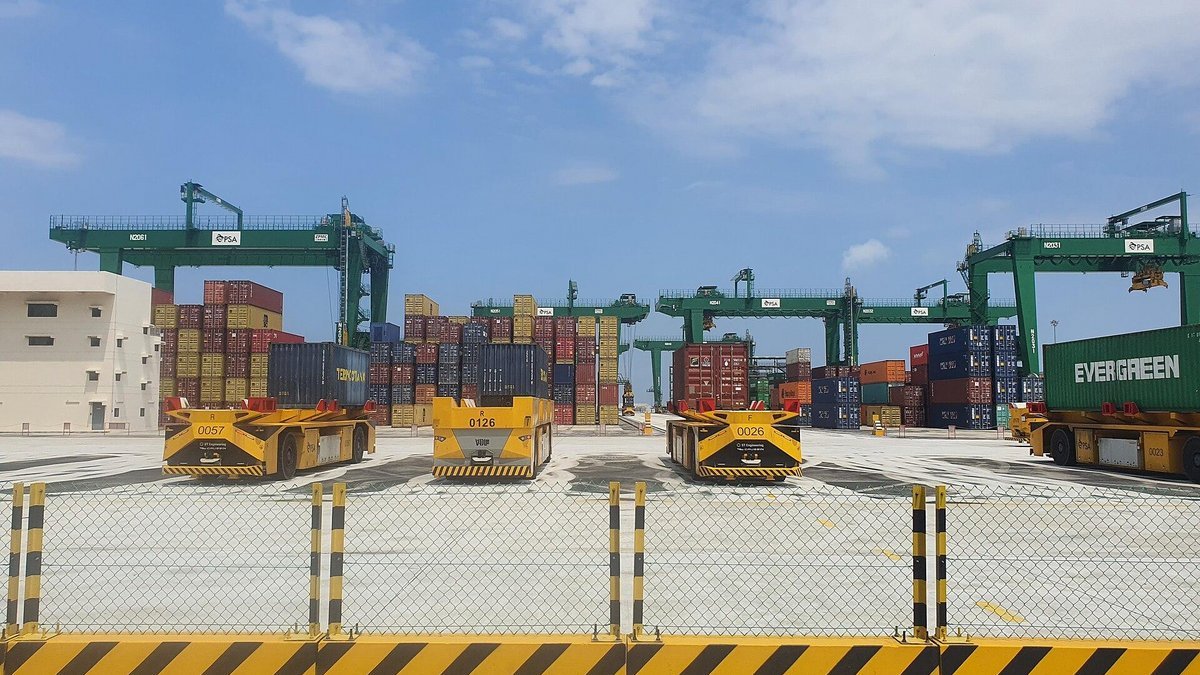
Severe congestion at Singapore and Tanjung Pelepas is forcing a rapid acceleration of terminal expansion as the region’s transhipment hubs struggle to absorb the double blow of the Strait of Hormuz crisis and Chinese weather delays.
Singapore’s average vessel waiting time hit 3.1 days in September, with Kuehne+Nagel reporting berth waits of up to five days at PSA Singapore terminals in early October. The port handled 34.47 million TEU in the first nine months of 2026, a 3.8% year-on-year increase that puts it on track to surpass last year’s record throughput of 44.66 million TEU.
PSA Singapore plans to commission four additional berths at the automated Tuas Port by the end of 2026, bringing the total to 18 and annual capacity to 20 million TEU. Meanwhile, Port of Tanjung Pelepas (PTP) handled a record 14.03 million TEU in 2025, driven by cargo flows from the Gemini Cooperation between Maersk and Hapag-Lloyd.
PTP is responding with a sustained equipment investment programme, including 10 Sany STS cranes and 58 eRTGs. The Malaysian terminal has also subscribed to 16 GWh of renewable electricity per month through the Green Electricity Tariff programme to source 100% of its power from renewable energy through 2027.
Why it matters
The transhipment model relies on precision, and that precision is currently broken. When berth waits reach five days, the cost of missed connections and yard congestion falls directly on carriers and cargo owners. This is not a temporary spike; the 5.6% year-on-year increase in vessel arrivals at Singapore shows that the network is being structurally reshaped by diversions and schedule disruptions.
The expansion at Tuas and PTP is a defensive necessity. Singapore’s move to consolidate all operations at Tuas, starting with the relocation of Tanjong Pagar, Keppel and Brani by 2027, is the only way to handle the 65 million TEU future capacity required to stay ahead of regional competitors. Indonesia’s pursuit of its own international transhipment hub adds a new layer of competitive risk if the established hubs cannot restore schedule reliability.
For PTP, the Gemini Cooperation has turned the port into a high-volume pressure cooker. The investment in 52 electric prime movers and renewable energy blocks is a direct response to the need for lower operating costs and emissions. By reducing operating costs by 57% compared with conventional units, PTP is attempting to protect its margins even as it scales up to meet a 16 million TEU target by 2029.
What to watch
The commissioning of four new berths at Tuas Port by the end of 2026 and the start of construction on Finger 3 in 2028, which will mark the beginning of the mega-terminal’s second phase.
Source: World Cargo News