Saudi & UAE Question IMO Net-Zero Framework for Shipping | Mariner News
Saudi Arabia and the United Arab Emirates (UAE) have voiced significant concerns over the International Maritime Organization’s (IMO) proposed Net-Zero Framework (NZF), arguing that its current design could disproportionately affect long-haul trade and remote economies. This critical intervention by two major oil producers underscores the complexities and economic challenges inherent in global shipping decarbonization efforts. Their submission to the IMO highlights a fundamental disagreement on how maritime emissions reduction costs should be distributed, pushing for alternative solutions that ensure greater equity across the diverse landscape of the international shipping industry.
The core of the objection from Saudi Arabia and the UAE centers on the premise that a uniform global compliance cost, as envisioned by the IMO Net-Zero Framework, would not translate into an even economic burden. They contend that freight markets and trade demands are inherently non-uniform, leading to varied cost incidences across different shipping routes, commodities, and nations. This perspective suggests that while the goal of achieving net-zero emissions is universally accepted, the method of implementation must account for real-world economic disparities to avoid inadvertently penalizing specific regions or trade patterns. The forthcoming inter-sessional meetings in September and November, leading up to MEPC 85, are expected to be pivotal in addressing these pressing concerns and shaping the future trajectory of maritime sustainability regulations.
Challenging the IMO Net-Zero Framework: A Call for Equity in Shipping Decarbonization
The joint submission from Saudi Arabia and the UAE represents a crucial moment in the ongoing global dialogue about environmental regulations in shipping. Their primary argument revolves around the concept of economic justice within the decarbonization transition. While the ambition to achieve net-zero emissions from shipping is broadly supported, the practical implications of the IMO Net-Zero Framework’s current structure are under scrutiny. The two nations emphasize that imposing a ‘one-size-fits-all’ financial mechanism could lead to unfair disadvantages for countries heavily reliant on long-distance maritime transport for their economic viability. This highlights the need for a nuanced approach to maritime emissions reduction that considers the varying capacities and geographical realities of member states.
Their concerns are not merely theoretical; they project tangible consequences for global supply chains and the competitiveness of certain economies. The debate around the IMO NZF failed to reach adoption last October, partly due to similar pressures from a US-led bloc, indicating that the concerns about the framework’s equity and practical implementation are widespread. This recurring theme underscores a broader challenge within international environmental policy: balancing ambitious climate targets with the diverse economic interests and operational realities of a global industry. Effective shipping decarbonization requires solutions that are both environmentally robust and economically viable for all participants, preventing unintended negative impacts on developing economies or those geographically distant from major markets.
Understanding the Uneven Burden of Maritime Emissions Regulations
The central thesis presented by Saudi Arabia and the UAE is that the IMO Net-Zero Framework’s design fails to adequately address distributional outcomes, resulting in uneven real-world burdens. They argue that compliance costs are directly linked to fuel consumption and voyage distance, meaning longer shipping routes inherently incur higher costs. This ‘geographic asymmetry’ embedded within the proposed framework would disproportionately penalize long-haul trade, which is vital for many remote economies and global commodity flows. For instance, countries heavily involved in transcontinental trade, or those geographically isolated, would face significantly higher operational expenses compared to those primarily engaged in shorter regional routes.
This uneven distribution of costs could lead to several negative outcomes. It could elevate freight rates for specific goods and routes, potentially increasing consumer prices, impacting trade competitiveness, and hindering economic development in certain regions. Furthermore, it raises questions about the principle of common but differentiated responsibilities, a cornerstone of international environmental law. The call for alternatives isn’t an outright rejection of maritime emissions reduction goals but rather an insistence on a more equitable mechanism that recognizes the varied impacts across the global shipping ecosystem. Finding a balance between ambitious environmental targets and the practical economic realities of global trade remains a critical challenge for the IMO and its member states.
Geographic Asymmetry and Compliance Costs: Impact on Global Trade
The argument concerning geographic asymmetry is particularly compelling, as it touches upon the fundamental structure of global trade. The IMO Net-Zero Framework, by embedding distance-based cost increases, risks creating an economic divide in the global shipping industry. Longer voyages naturally consume more fuel, and if compliance costs are directly tied to fuel consumption or distance traveled, then shipping routes spanning vast oceans will inevitably incur greater financial penalties. This could place an undue burden on nations that rely on these extended supply lines for essential imports and exports, including raw materials, energy, and finished goods.
Such a scenario could lead to a restructuring of trade routes, potentially favoring shorter, regional shipping at the expense of global connectivity. This might undermine the very interconnectedness that defines modern international commerce. Moreover, it could disincentivize trade with remote economies, exacerbating existing inequalities and making it harder for these nations to participate fully in the global marketplace. The implications extend beyond just direct shipping costs, potentially affecting commodity prices, industrial competitiveness, and ultimately, the livelihoods of millions. A truly effective and sustainable solution for maritime decarbonization must mitigate these risks, ensuring that environmental progress does not come at the cost of equitable economic participation and development globally.
Searching for Sustainable and Equitable Alternatives for Future Shipping
Saudi Arabia and the UAE are not merely critiquing the IMO Net-Zero Framework; they are also implicitly calling for the exploration of alternative solutions that could achieve the desired emissions reductions without creating disproportionate economic burdens. This push for alternative mechanisms suggests a desire for a framework that considers factors beyond just uniform global compliance costs. Potential alternatives could include differentiated compliance mechanisms, financial support for vulnerable economies, or innovative technological solutions that are tailored to various operational contexts. The current discussions around a global fuel standard or a market-based measure could be modified to incorporate these equity considerations.
One pathway could involve the development of a ‘basket’ of compliance options, allowing countries or shipping companies to choose methods that best suit their operational profiles while still meeting overall emissions reduction targets. Another might involve a fund established from compliance fees, specifically earmarked to support technology adoption and infrastructure development in remote or developing economies that face higher decarbonization costs. The emphasis is on flexibility and fairness, ensuring that the transition to green shipping is a shared responsibility with differentiated impacts. The ongoing dialogues during the inter-sessional meetings will be crucial in exploring these viable alternatives and fostering a collaborative environment where diverse proposals can be evaluated for their potential to foster a truly sustainable and equitable future for the maritime sector.
The Path Ahead: IMO Meetings and the Future of Maritime Sustainability
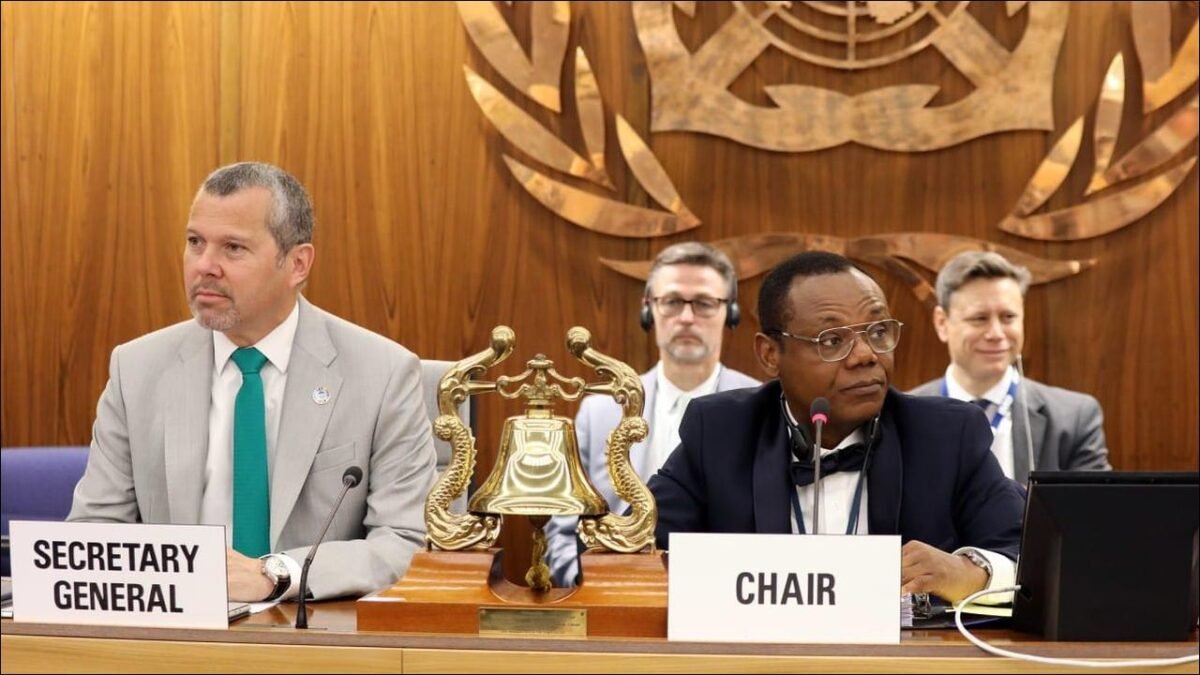
The upcoming two inter-sessional meetings, scheduled for September 1-4 and November 23-27, are paramount for the future of the IMO Net-Zero Framework and the broader agenda of maritime sustainability. These meetings will serve as critical forums for member states to address the concerns raised by Saudi Arabia, the UAE, and others. The objective will be to find common ground and refine the proposed framework, ensuring that it is both ambitious in its environmental goals and fair in its economic implications. The deliberations will set the stage for MEPC 85, scheduled for November 30-December 3, where crucial decisions on the final shape of the IMO’s decarbonization strategy are expected to be made.
Success in these discussions will require a balanced approach, integrating diverse perspectives on climate action, economic development, and international trade. The global shipping industry is at a pivotal juncture, navigating the imperative to drastically reduce its carbon footprint while maintaining its role as the backbone of global commerce. The outcome of these negotiations will not only determine the specifics of the IMO Net-Zero Framework but also signal the level of commitment and collaboration among nations towards achieving truly sustainable maritime transport for future generations. All stakeholders are keenly watching these developments, hoping for a robust, equitable, and effective path forward for shipping decarbonization.