Maersk Container Ship Bunkers Methanol in Zhoushan | Mariner News
The maritime industry is undergoing a transformative shift towards decarbonization, with significant milestones in alternative marine fuel adoption. A pivotal moment recently unfolded in China, as a Maersk Boxship completed its first methanol bunkering operation in Zhoushan. This landmark event underscores A.P. Moller-Maersk’s commitment to sustainable shipping and marks a crucial advancement for green maritime infrastructure in Asia. The operation, involving the Maersk Flinders, signifies a tangible step in reducing shipping’s environmental footprint and embracing cleaner energy solutions. This strategic move highlights methanol’s growing viability as an alternative fuel, setting a new precedent for vessel operations within Zhoushan and beyond. It represents a collective effort across the supply chain, from shipowners to classification societies and port authorities, all working to accelerate the global fleet’s energy transition.
A New Chapter in Green Shipping: The Zhoushan Milestone
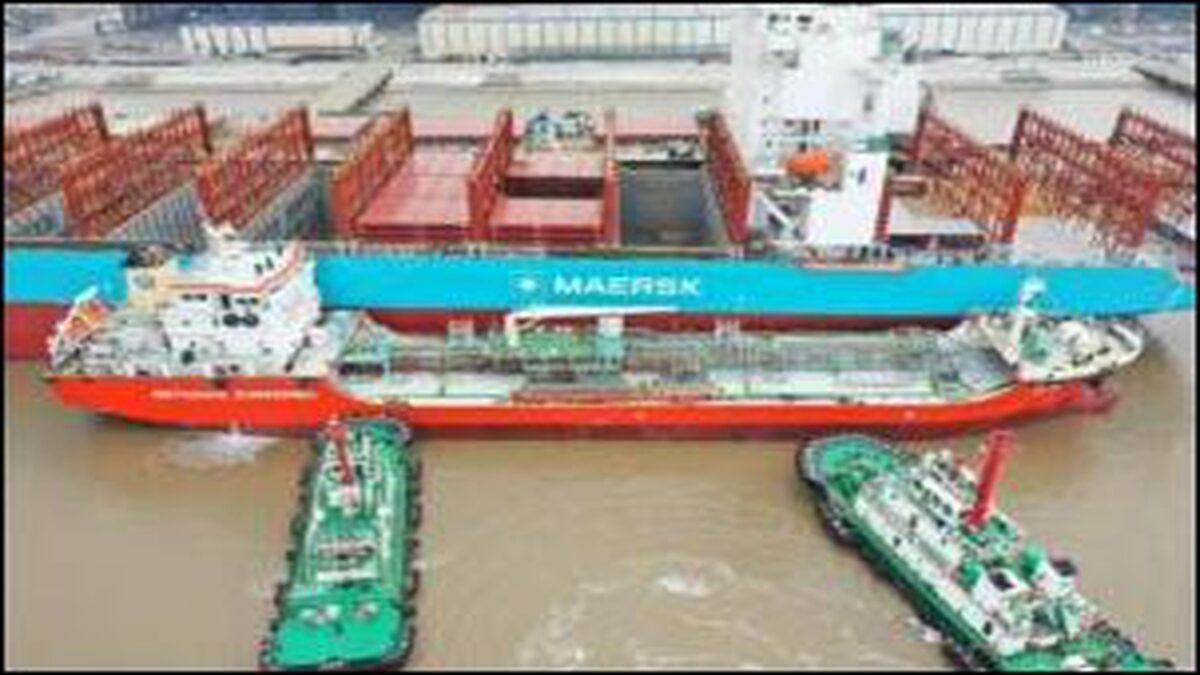
The historic ship-to-ship (STS) methanol bunkering operation took place on June 27. The methanol bunker vessel Jia Chen 17 successfully supplied 795 metric tonnes of methanol to the dual-fuel container ship Maersk Flinders. This intricate procedure unfolded at Tsuneishi Group (Zhoushan) Shipbuilding, a key facility in China’s Zhejiang province. This operation holds immense significance as it was the inaugural STS methanol bunkering for a newbuild vessel at any shipyard within the Zhejiang region, solidifying its place in maritime history. The entire process, from safety inspections to fuel transfer, was meticulously managed, concluding efficiently in approximately 5.5 hours. Safety checks confirmed bunkering system and emergency protocols adhered to stringent requirements, ensuring a seamless and secure transfer of this low-carbon fuel.
This successful bunkering event elevates Zhoushan’s global maritime status, establishing it as only the second port in China, after Shanghai, capable of routinely conducting STS methanol bunkering operations. Such capabilities are vital for expanding infrastructure to support the growing fleet of methanol-enabled vessels. According to the China Classification Society (CCS), a pivotal organization in maritime safety, a mere 15 ports worldwide currently offer dedicated methanol bunkering services. This limited number underscores the groundbreaking nature of Zhoushan’s new capacity and its strategic importance in advancing global availability of this sustainable marine fuel. The collaboration between Maersk, bunker vessel operators, the shipyard, and the CCS exemplifies the coordinated effort required to bring such complex and innovative operations to fruition, paving the way for wider adoption of alternative fuels across the maritime sector. This accomplishment testifies to the forward-thinking vision applied in transforming sustainable shipping from concept to reality, impacting future global trade and environmental stewardship.
Maersk’s Vision for Decarbonization and Alternative Fuels
A.P. Moller-Maersk has long been recognized as a frontrunner in the maritime industry’s drive towards environmental sustainability and carbon neutrality. The successful methanol bunkering in Zhoushan of the Maersk Flinders directly manifests the Danish shipping giant’s ambitious decarbonization strategy. Maersk has set bold targets to achieve net-zero emissions by 2040 across its entire business, a goal heavily reliant on accelerated adoption of green fuels and innovative vessel technologies. The company’s significant investment in a fleet of methanol-enabled container vessels underscores its conviction that methanol, among other bio- and e-fuels, will play a critical role. These dual-fuel vessels are designed to operate on conventional marine fuels as well as green methanol, offering operational flexibility while significantly reducing greenhouse gas emissions.
Maersk’s approach isn’t merely about acquiring new ships; it’s about pioneering an entire ecosystem for green shipping. This includes actively engaging in projects that secure sustainable methanol supply, forging partnerships with fuel producers, and collaborating with ports globally to develop essential bunkering infrastructure. The introduction of vessels like the Maersk Flinders is not just about complying with future regulations; it’s about leading the industry into a new era of environmentally responsible shipping. While the transition presents considerable challenges, including green methanol availability in sufficient quantities and at competitive prices, Maersk’s proactive stance demonstrates a clear pathway forward. The dual-fuel technology provides a vital bridge, allowing vessels to operate with existing infrastructure while green methanol supply chains mature. This strategic foresight ensures Maersk remains at the forefront of the marine fuel transition, setting benchmarks for sustainable practices within the global shipping landscape. Their commitment signals to the wider industry the feasibility and necessity of embracing low-carbon solutions for a sustainable future.
The Growing Importance of Methanol as a Marine Fuel
Methanol is rapidly gaining traction as one of the most promising alternative marine fuels in shipping’s quest for decarbonization. Its appeal lies in several key advantages, making it attractive compared to other future fuels. Firstly, methanol is liquid at ambient temperatures and pressures, simplifying its storage and handling on board vessels and at bunkering facilities. This ease of handling contrasts sharply with complexities of storing and transferring cryogenic fuels like LNG or highly volatile fuels like ammonia and hydrogen. Secondly, methanol offers a cleaner burning profile, significantly reducing emissions of sulfur oxides (SOx), nitrogen oxides (NOx), particulate matter (PM), and contributing to substantial reductions in greenhouse gas (GHG) emissions when produced from renewable sources (green methanol). It is a powerful tool for meeting stringent environmental regulations and ambitious climate targets.
The successful methanol bunkering operation in Zhoushan further highlights the operational viability and safety protocols established for this fuel. As more ports like Zhoushan and Shanghai develop STS methanol bunkering capabilities, the global network required to support a methanol-fueled fleet will expand, mitigating concerns about fuel availability and range. While grey methanol (produced from fossil fuels) still dominates the market, increasing demand from shipping is driving investment in green methanol production, utilizing renewable electricity, biomass, or captured carbon dioxide. This shift towards green production is crucial for realizing methanol’s full environmental benefits. Collaborative efforts between classification societies, shipyards, and port authorities are instrumental in developing necessary safety standards, operational guidelines, and training programs to ensure the safe and efficient adoption of methanol. As the industry progresses, methanol is poised to become a cornerstone of the sustainable shipping revolution, offering a practical and environmentally sound pathway to a cleaner maritime future, reshaping global marine fuel supply chains and operational practices.
Global Collaboration and the Future of Sustainable Maritime Operations
The achievement of the Maersk Boxship methanol bunkering in Zhoushan is not merely a technical feat; it is a testament to the power of global collaboration in driving maritime sustainability. The complex endeavor required seamless cooperation among multiple stakeholders, including A.P. Moller-Maersk as the vessel owner, Tsuneishi Group (Zhoushan) Shipbuilding, the operator of the bunker vessel Jia Chen 17, and the China Classification Society (CCS). Organizations like CCS play a crucial role in validating safety standards, providing technical expertise, and certifying new operational procedures, thereby instilling confidence in novel fuel technologies. This multi-faceted partnership highlights a burgeoning trend within the maritime sector where traditional rivalries are often set aside for collective action to address the urgent challenge of climate change.
Looking ahead, the future of sustainable maritime operations hinges on continued and expanded collaboration across the entire value chain. This includes shipowners, shipbuilders, engine manufacturers, fuel suppliers, port authorities, and regulatory bodies. The International Maritime Organization (IMO) has set ambitious targets for greenhouse gas emission reductions by 2030 and 2050, necessitating rapid acceleration in zero and near-zero emission technologies and fuels. While methanol offers a compelling pathway, challenges remain, particularly in scaling up the production and distribution of truly green methanol to meet the projected demand of a transitioning global fleet. Economic considerations, such as initial capital investment in new vessel technologies and bunkering infrastructure, along with the price premium for green fuels, also present hurdles that require innovative financial solutions and supportive policy frameworks. However, events like the Zhoushan bunkering demonstrate the industry is firmly on this path. The lessons learned from such pioneering operations will inform future best practices, accelerate technological advancements, and inspire further investments in a greener, more sustainable maritime industry worldwide. The journey towards a fully decarbonized shipping sector is long and complex, but each successful operation involving alternative fuels brings the global fleet closer to achieving its environmental aspirations, fostering a legacy of environmental stewardship.
Conclusion
The successful Maersk Boxship methanol bunkering in Zhoushan represents a significant leap forward in the maritime industry’s pursuit of decarbonization. This groundbreaking operation not only showcases Maersk’s proactive leadership in adopting sustainable marine fuels but also elevates Zhoushan’s status as a critical hub for green bunkering services. The shift towards alternative fuels like methanol is indispensable for achieving ambitious emission reduction targets and ensuring a sustainable future for global shipping. As the industry continues to innovate and collaborate, the operational experience gained from such pioneering efforts will be invaluable. This milestone serves as a powerful testament to the industry’s commitment to transforming its energy landscape, demonstrating that with strategic vision, technological advancement, and robust partnerships, a cleaner, more environmentally responsible maritime sector is well within reach. The path ahead requires continued investment, policy support, and unwavering dedication, but the journey towards zero-emission shipping has undeniably gained substantial momentum.