

Maersk confirms 26-vessel order as industrial demand lifts 2026 guidance
Maersk confirms a 26-vessel dual-fuel order and raises its 2026 guidance, citing industrial demand from AI and energy infrastructure.
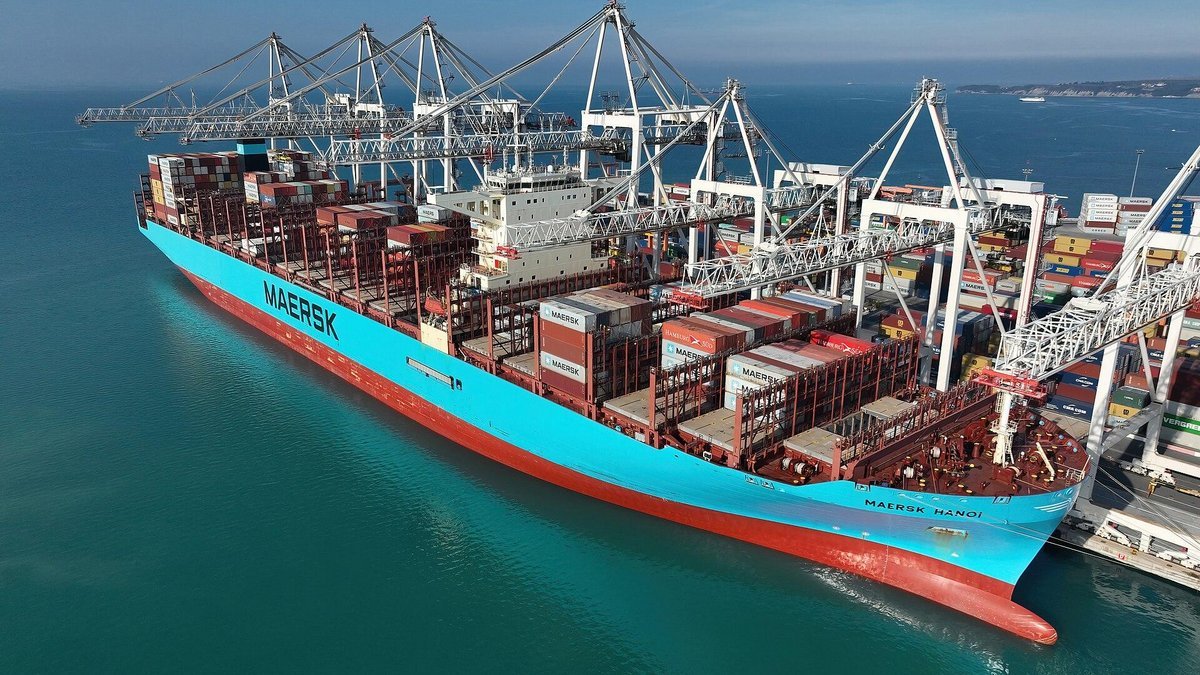
Maersk has confirmed a massive order for 26 dual-fuel container vessels while significantly raising its 2026 financial guidance, signaling a pivot toward fleet expansion supported by a shift in global trade drivers. The Danish carrier now expects an underlying EBITDA of between $14 billion and $14.5 billion for the year, a sharp increase from its previous projection of $10.5 billion to $12.5 billion.
The newly confirmed newbuilding program consists of 18,600 TEU vessels scheduled for delivery in 2029 and 2030. This investment follows weeks of market speculation and suggests that the carrier is moving to secure long-term capacity despite ongoing geopolitical volatility and the deceleration of Far East exports observed in mid-2026.
Industrial Cargo Replaces Consumer Slack
While container shipping is traditionally tied to consumer retail cycles, Maersk CEO Vincent Clerc identified a fundamental shift in the types of cargo sustaining current volumes. Demand is increasingly being propelled by industrial flows related to the energy transition and the global buildout of artificial intelligence infrastructure, including electrification and energy investments.
This development implies that the container market may be becoming less sensitive to traditional consumer sentiment in developed economies. In the United States, economic activity remains robust due to business investment in AI, helping to offset sluggish domestic demand in China, where recent fiscal measures have provided only limited relief.
Segment Performance and Regional Divergence
The company’s third-quarter revenue rose 27% to $18.1 billion, with growth distributed across its Ocean, Logistics & Services, and Terminals segments. The Ocean division benefited from higher freight rates and steady volumes, while Terminals achieved record-high revenue. Maersk reported that its fleet is currently operating at full capacity, with demand exceeding available space on several key routes.
Regional growth patterns show a distinct divergence. While Europe saw softer demand, Africa, Latin America, and North America all recorded growth exceeding 5%. This geographic variance, combined with the rise of industrial cargo, suggests a rebalancing of trade lanes where infrastructure-heavy regions are providing the primary momentum for volume growth.
Source: Shipping Telegraph